Key Takeaways
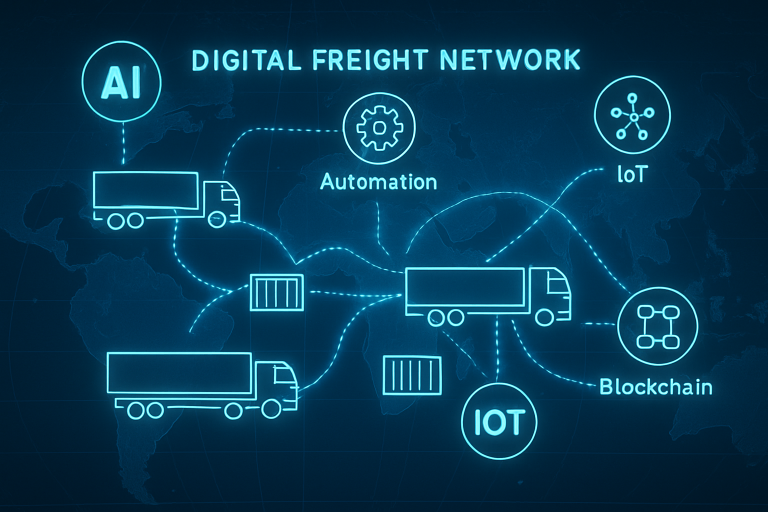
- Automation slashes processing times, eliminates manual errors, and simplifies complex brokerage workflows.
- Data analytics and AI enhance decision-making, identify optimal shipments, and predict market fluctuations.
- IoT devices provide real-time shipment visibility, enhancing reliability and facilitating prompt issue resolution.
- Blockchain ensures transparency and trust in freight transactions, reducing risks and disputes.
- Digital platforms and AI-driven tools make brokerage more agile, sustainable, and accessible for all.
Table of Contents
- Automation Enhancing Operational Efficiency
- Advanced Analytics Driving Decision-Making
- Integration of IoT Devices
- Blockchain Technology for Enhanced Transparency
- AI Disrupting Truck Brokerage
- Digital Platforms and AI-Driven Tools
- Future Implications and Trends
In the rapidly evolving logistics industry, technology is dramatically streamlining freight brokerage, facilitating greater speed, accuracy, and transparency across the supply chain. From automation to artificial intelligence (AI), digital transformation is not just a competitive advantage—it’s a necessity for freight brokers aiming to maximize efficiency while delivering top-tier service. As technology adoption becomes more pervasive, solutions like LoadPilot embody the cutting-edge systems that are shaping tomorrow’s freight brokerage landscape. These platforms drive operational improvements and ensure better connections between shippers and carriers, marking a significant leap forward in how business gets done.
Technology’s impact extends well beyond optimizing transactions. It creates authentic value by reducing manual errors, improving real-time decision-making, and boosting reliability across routes and shipments. This advancement is crucial as brokers and logistics providers face increasing market pressures and the growing complexity of global supply chains. Ensuring seamless integration with AI-driven tools, IoT devices, and blockchain technology, freight brokers now have the power to shape a smarter, safer, and more flexible logistics network for all stakeholders.
Automation Enhancing Operational Efficiency
Automation is a game-changer for freight brokers. Key processes such as invoicing, load tracking, and document management can be fully automated, removing bottlenecks that often plague traditional methods. By leveraging Robotic Process Automation (RPA), brokers can handle more transactions in less time while reducing costly mistakes. This leads directly to faster turnaround, happier clients, and fewer headaches for brokerage teams. Automation also allows brokers to reallocate resources to value-added activities, driving long-term business growth and resilience.
Advanced Analytics Driving Decision-Making
Harnessing the full potential of big data is critical in modern freight brokerage. Advanced analytics provide vital insights by evaluating everything from fuel prices to carrier performance and regional shipment patterns. Predictive analytics, underpinned by AI, help anticipate disruptions like weather events or shifts in consumer demand, empowering brokers to respond proactively. These analytics tools also facilitate smarter pricing, risk management, and customer communication—giving brokers an edge in a fluctuating market.
In this landscape, selecting the right freight broker software becomes pivotal, as leading solutions integrate data analytics tools directly into daily workflows, enabling actionable insights and real-time optimization without siloed information.
Integration of IoT Devices
IoT technology is bringing a new degree of real-time visibility to freight brokerage. Sensors installed in fleet vehicles and shipping containers continuously monitor shipment conditions, location, and security. This real-time data enhances accountability and provides early warning when issues—such as delays, temperature deviations, or route changes—arise. Enhanced by traffic and weather data, IoT-based monitoring ensures that shippers and receivers are informed at every step, reducing disruptions and improving customer satisfaction. According to Forbes, IoT is rapidly becoming indispensable for companies seeking end-to-end supply chain visibility.
Blockchain Technology for Enhanced Transparency
Blockchain technology offers robust solutions for securing and authenticating freight transactions. By leveraging a decentralized, immutable ledger, all parties—shippers, carriers, and brokers—gain access to transparent records that are resistant to tampering or fraud. Smart contracts automate agreements, enforce conditions, and disburse payments only when all contractual requirements are met. This minimizes administrative overhead, reduces disputes, and shortens settlement times, creating a high-trust environment for all stakeholders. Major industries are already exploring blockchain’s applications to transform logistics and create new industry standards, according to Supply Chain Dive.
AI Disrupting Truck Brokerage
AI is at the forefront of today’s truck brokerage revolution. Complex algorithms can now analyze vast networks of shippers and carriers nearly instantaneously, matching shipments to available trucks based on criteria such as location, timing, and historical performance. AI streamlines quoting, automates tedious administrative tasks, and dynamically optimizes pricing in response to changing demand. This not only leads to faster load matching and reduced transportation costs but also enhances shipment reliability. AI-driven decision support ultimately frees brokers to focus on building strategic partnerships and tackling supply chain challenges head-on.
Digital Platforms and AI-Driven Tools
Digital freight marketplaces and mobile apps are unlocking new opportunities for brokers, shippers, and carriers alike. These tools democratize access to freight transactions, empower smaller carriers to bid for loads directly, and eliminate the need for negotiation time. AI and machine learning further refine these platforms, predicting shipment needs, optimizing backhauls, and reducing the industry’s environmental footprint by minimizing empty miles. The shift to digital platforms also fosters collaboration and scalability, enhancing overall resilience in an ever-changing global market.
Future Implications and Trends
The next phase of freight brokerage will be defined by deeper integration of AI and machine learning. These technologies promise to automate even more complex decision-making, including dynamic load pricing and real-time supply and demand forecasting. As regulatory landscapes evolve and customer expectations rise, brokers who fully embrace these advancements will lead the way in building supply chains that are not only efficient and transparent but also adaptable to future disruptions.
In summary, technology is rewriting the rules of freight brokerage—from speeding up workflows and raising transparency standards to enabling predictive insights and unlocking sustainability gains. By adopting innovative platforms and staying current with technology trends, brokers can ensure competitiveness in a digital-first era.

Lynn Martelli is an editor at Readability. She received her MFA in Creative Writing from Antioch University and has worked as an editor for over 10 years. Lynn has edited a wide variety of books, including fiction, non-fiction, memoirs, and more. In her free time, Lynn enjoys reading, writing, and spending time with her family and friends.