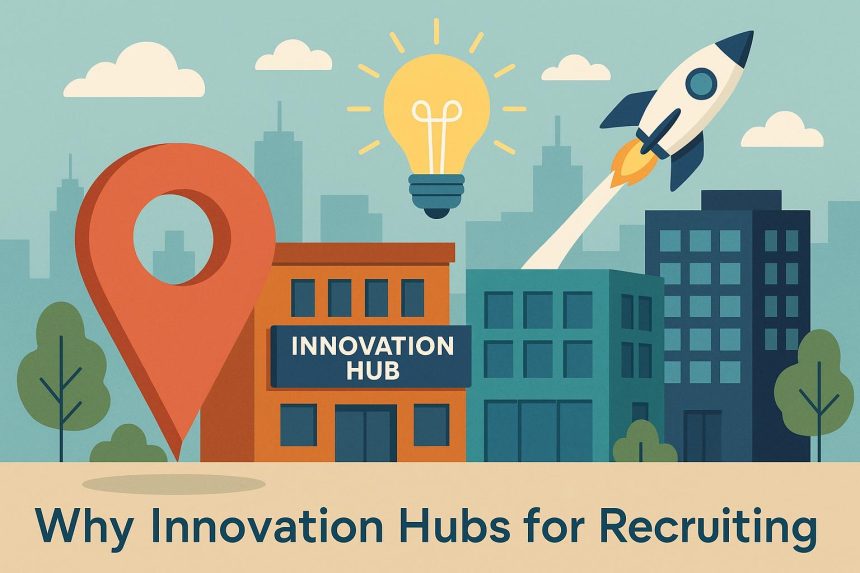
Innovation hubs play an increasingly central role in shaping how companies attract, develop, and retain elite engineering talent. Steven Cash Nickerson, an accomplished executive, attorney, and educator, offers a professional background that spans human capital strategy, complex negotiations, and workforce dynamics across industries. As former president and CFO of PDS Tech, Inc.—one of the nation’s largest engineering staffing firms—Mr. Nickerson oversaw global development, recruitment operations, and organizational growth. His work supporting engineering teams across aerospace, manufacturing, and technology provides direct insight into how talent ecosystems influence hiring outcomes. Today, Steven Cash Nickerson serves in leadership roles across business, real estate, and legal consulting while teaching business lawyering and negotiation at Washington University in St. Louis. Drawing from decades of experience working with engineers, innovators, and corporate partners, he offers a grounded perspective on why innovation hubs have become essential to engineering recruitment and organizational competitiveness.
Why Innovation Hubs Matter for Recruiting Talent
Innovation hubs shape how companies within the United States develop and retain engineering talent. As the number of technology-driven companies in sectors such as advanced manufacturing, autonomous systems, clean energy, and AI increases, organizations are relying on dense, knowledge-rich ecosystems where people, capital, and ideas can move freely.
These innovation hubs often cluster high-growth startups, corporate R&D centers, and research universities, generating powerful network effects that deepen local talent pools and ensure continuous skill development. Understanding how these ecosystems operate and their importance helps organizations seeking to secure sustainable competitive advantage in engineering recruitments.
When specialized recruiters, startups, small companies, and engineering talent decide to form an ecosystem, it becomes easier for employers to find skilled matches faster and with a better cultural fit. A dense network of talent can help reduce search friction, often through hackathons, alumni connections, and referrals. Studies have shown that the top tech talent markets attract highly skilled workers, giving employers in those areas enough choice.
Further, proximity to research and development also contributes to skill supply within an ecosystem. Research universities and federal labs have served as anchor sources of engineers. Innovative districts usually accelerate campus recruiting, sponsored research, and industry-based practicals, ensuring companies recruit candidates who already know local employers and problems.
Key parts of engineering, such as hardware prototyping, domain knowledge, and systems design, depend on tacit knowledge. In-person interaction in innovative ecosystems supports learning and rapid skill diffusion, which, in turn, improves the local talent pool.
Additionally, innovation hubs shape employer brand and the overall candidate experience. Top engineering talent looks beyond salary and evaluates the full environment a company offers, including the team culture, technical mission, and growth opportunities. Innovation hubs naturally enhance these perceptions by providing cafés, cultural activities, convenient transit, and vibrant coworking spaces.
Innovation hubs encourage collaboration across disciplines, an essential practice in modern engineering. Complex challenges across software, hardware, data science, and product design require teams that can work fluidly across specialties. By placing these communities close to one another, hubs create an environment where knowledge sharing happens naturally. Engineers gain exposure to different ways of thinking and become more versatile in their approach to problem-solving. Companies that hire in these regions benefit from talent with broader skill sets and stronger communication skills, leading to faster, more effective innovation.
These hubs also create a sense of belonging that keeps engineers anchored in a region. People tend to stay where they find mentorship, supportive professional circles, and social networks that align with their personal and career goals. When engineers feel connected to their community, they form deeper commitments to their employers. This stability allows companies to focus on long-term growth, invest in employee development, and build cohesive teams. Over time, this results in stronger performance and lower turnover, giving employers a meaningful advantage in competitive markets.
While innovation hubs attract highly skilled professionals, they also come with higher costs for employers. Companies in major hubs face steeper expectations around salaries, benefits, equity, and lifestyle support. For many organizations, this reality opens the door to secondary hubs and emerging districts. Some American cities offer growing tech talent pools with more manageable expenses. These markets give employers access to high-quality engineers while enabling them to scale operations cost-effectively.
About Steven Cash Nickerson
Steven Cash Nickerson is a seasoned executive, attorney, and educator whose career spans leadership roles in human capital strategy, engineering workforce development, and corporate operations. As former president and CFO of PDS Tech, Inc., he helped oversee one of the nation’s largest engineering staffing organizations, supporting major clients in aerospace, manufacturing, and technology sectors. He later led North American operations for AKKA Technologies following its acquisition of PDS. Mr. Nickerson holds a JD and MBA from Washington University in St. Louis, where he also serves as a visiting professor teaching negotiation and business lawyering. A published author, community advocate, and founder of David’s Cure, he continues to contribute thought leadership on workforce trends, negotiation, and organizational performance.

Lynn Martelli is an editor at Readability. She received her MFA in Creative Writing from Antioch University and has worked as an editor for over 10 years. Lynn has edited a wide variety of books, including fiction, non-fiction, memoirs, and more. In her free time, Lynn enjoys reading, writing, and spending time with her family and friends.