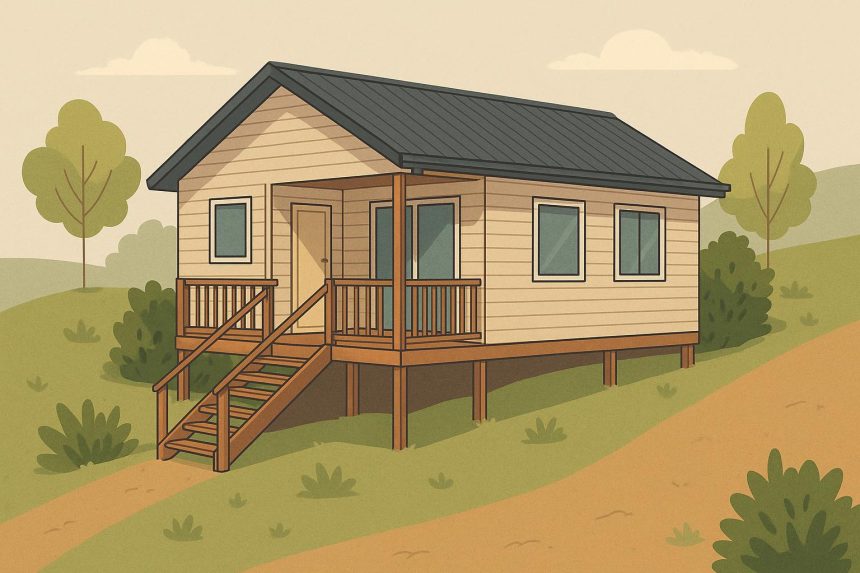
Building a granny flat on a sloping or otherwise challenging block can feel daunting — but the right floor plan can transform a tricky site into an asset. When designed thoughtfully, these blocks allow for creative layouts, improved natural light and better integration with the landscape.
Below are some of the most effective floor plan strategies for sloping, narrow, irregular or restricted blocks — and why they work so well.
Smart Floor Plans for Sloping Blocks
A sloped site often requires strategic planning, but clever floor plan choices can reduce excavation costs and enhance liveability.
1. Use Split-Level Designs for Moderate Slopes
Split-level layouts naturally step with the land. This approach helps to:
- create separate zones for living and sleeping
- reduce the need for cut-and-fill
- enhance natural views
- add architectural character
A split-level plan makes the interior feel larger and more dynamic while working with the terrain instead of against it.
2. Elevate the Granny Flat on Piers for Steeper Land
When the slope is more significant, raising the structure is often the most efficient solution. Elevated granny flats allow you to:
- avoid costly earthworks
- improve natural ventilation
- optimise water drainage
- capture more sunlight
Bonus: the understructure can be used for additional storage or a shaded outdoor retreat.
3. Add Decks or Terraces to Maximise Outdoor Living
Sloping blocks often offer elevated outlooks — perfect for outdoor platforms. Decks and terraces can:
- expand the usable living area
- frame views beautifully
- create smoother indoor–outdoor transitions
These features make the most of height differences while adding lifestyle appeal.
Floor Plans for Narrow or Irregular Blocks
Blocks that are tight, angled or oddly shaped benefit from floor plans that minimise wasted space and optimise flow.
1. Choose a Linear, Narrow-Footprint Layout
A straightforward linear design is ideal for blocks with limited width. This layout style:
- maximises internal space efficiently
- reduces unnecessary hallway space
- improves access to natural light
It’s a smart choice for narrow suburban or urban-style lots.
2. Use L-Shaped Layouts for Awkward or Angled Sites
L-shaped granny flats can be positioned neatly into corners or irregular boundaries. They offer:
- strong privacy separation
- the opportunity for a sheltered courtyard
- flexibility in zoning bedrooms and living areas
This layout adapts well when the block shape creates design challenges.
3. Enhance Privacy With Thoughtful Window and Entry Placement
On narrow or irregular sites, privacy between the main home and granny flat is crucial. This can be achieved by:
- positioning entrances at non-direct angles
- locating bedrooms away from close boundaries
- using highlight or clerestory windows to bring in light without overlooking
These simple adjustments help the dwelling feel independent and secluded.
Floor Plans for Blocks With Limited Access or Site Restrictions
Some sites come with added constraints, such as easements, fire zones or restricted access for trades and equipment.
1. Opt for a Smaller Footprint With Flexible Living Areas
Open-plan zones and versatile bedroom layouts allow the granny flat to stay compact while still feeling comfortable and spacious.
2. Simplify the Building Form
Simple shapes — rectangles, squares or L-shapes — are much easier and more cost-effective to build on restricted sites. This also streamlines approval processes and reduces construction complexity.
3. Choose a Custom Floor Plan When Conditions Are Complex
A bespoke design may be needed if your block includes:
- easements
- steep cross-falls
- heritage considerations
- bushfire compliance requirements
Custom designs ensure the granny flat fits the land properly while meeting all relevant regulations.
Bringing It All Together: Functional Designs for Challenging Blocks
The most successful granny flat floor plans for sloping or difficult sites share these fundamental principles:
- work with the land’s natural contours
- reduce excavation and engineering needs
- maximise natural airflow and daylight
- maintain strong privacy from the main home
- favour simple, efficient building shapes
- future-proof the design for long-term use
Whether your block is steep, narrow, irregular or access-restricted, the right floor plan can turn it into a highly functional, comfortable and well-designed granny flat site.

Lynn Martelli is an editor at Readability. She received her MFA in Creative Writing from Antioch University and has worked as an editor for over 10 years. Lynn has edited a wide variety of books, including fiction, non-fiction, memoirs, and more. In her free time, Lynn enjoys reading, writing, and spending time with her family and friends.