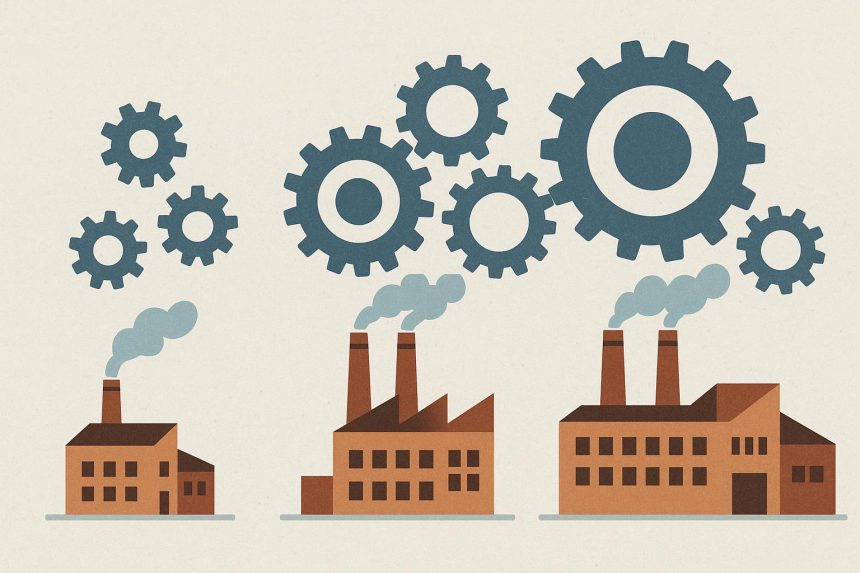
The concept of preventive maintenance in manufacturing is simple: do routine work on time so that avoidable failures do not disrupt operations. The challenge is scale. As plants add more assets, shifts, and production commitments, preventive maintenance stops being a basic scheduling activity. Instead, it becomes an operating discipline that has to hold up under real production pressure.
In larger environments, preventive maintenance software for manufacturing is often used to keep preventive maintenance schedules, asset records, and work completion consistent across lines and sites. When operations scale, what matters most is how preventive work is defined and followed through in day-to-day execution.
What Changes First as Manufacturing Grows
The first change is volume. More equipment means more preventive maintenance, more inspections, more parts consumption, and a greater risk of small misses accumulating.
The second change is variability. A scaled operation typically involves different machine models, duty cycles, and production rhythms. A one-size-fits-all approach that worked on a single production line often breaks down when applied across multiple lines with different demands.
As manufacturing grows, preventive maintenance needs clear rules around scope, verification, and deferral. Without them, execution becomes inconsistent despite sustained effort.
Supervisors also lose direct visibility. Decisions move across shifts, teams, and sites, increasing handoffs and assumptions. Small gaps add up when work is interpreted differently, or follow-up is missed. Over time, planning becomes less accurate, deferrals increase, and production teams begin to question whether preventive maintenance is actually being completed as planned.
Execution Is Harder Than Planning
Preventive maintenance plans are usually sound. Breakdowns occur during the execution phase, particularly as operations expand.
When production pressure increases, routine work is delayed or shortened. Maintenance windows are missed, deferred tasks accumulate, and the backlog grows. Over time, schedules stop reflecting what actually happens on the floor.
Stronger operations respond by setting clear completion standards, coordinating maintenance with production, and tracking deferrals openly instead of letting them slip away.
Even when priorities are clear, execution breaks down when task effort is underestimated. Jobs take longer than expected, pushing work into the next shift. To keep up, teams rush closeouts or move tasks without updating plans. Over time, the schedule looks fine on paper but does not match what teams can realistically complete.
Why Work Quality Matters More Than Task Completion
As operations scale, preventive maintenance is often evaluated based on coverage, including scheduled and closed tasks. These numbers can appear strong even as work quality declines.
The real measure is whether preventive maintenance is performed to a consistent standard. Tasks must be clearly defined and verifiable. Instructions like “check the pump” leave too much to interpretation and lead to uneven results across shifts.
Clear, standardized work is what keeps preventive maintenance reliable as teams change, contractors rotate, and sites expand. Without clear quality standards, preventive maintenance turns into task completion without assurance. Work is closed even when key steps are missed. Over time, this weakens maintenance records, hides early issues, and makes planning decisions harder to trust.
Follow-Through Determines Preventive Maintenance Results
Preventive maintenance often reveals early signs of failure during routine inspections and servicing. These can include abnormal wear, minor leaks, vibration outside normal limits, loose connections, or early fatigue of machined components. Identifying these conditions does not, by itself, improve reliability.
In scaled operations, the difference lies in what happens next. In weaker systems, these observations are noted and closed as part of routine work, and the same issues appear again later. In stronger programs, the findings lead to corrective action with clear ownership and priority, especially when patterns repeat.
Preventive Maintenance Must Reflect Asset Risk
As manufacturing operations grow, applying the same preventive maintenance approach to every asset becomes inefficient. Expert teams adjust maintenance intensity based on risk, including safety impact, downtime cost, quality consequences, and historical failure patterns.
Higher-risk equipment may require tighter intervals or additional checks. Lower-risk assets can move to usage-based schedules or simpler routines. The goal is not to reduce preventive maintenance, but to apply it where it delivers the most value.
Systems Become Crucial as Preventive Maintenance Scales
As manufacturing operations scale, preventive maintenance can no longer rely on informal coordination. More assets, more shifts, and more handoffs require systems to manage schedules, asset records, and work visibility across the operation.
These systems help teams see whether preventive maintenance is being completed as planned. They bring structure to scheduling, consistency to asset records, and visibility to overdue work.
However, systems do not compensate for weak operating discipline. If maintenance durations are unrealistic, work will still be deferred. If production does not respect maintenance windows, schedules will continue to slip.
Final Thoughts
As manufacturing operations grow, preventive maintenance must keep pace. More assets, tighter schedules, and changing shifts require clearer work standards, realistic planning, and consistent follow-through.
Programs that work at scale are those that keep routine work repeatable, make deferrals visible, and address issues as and when they arise. As operations become harder to manage, scaling preventive maintenance is less about adding complexity and more about ensuring discipline.

Lynn Martelli is an editor at Readability. She received her MFA in Creative Writing from Antioch University and has worked as an editor for over 10 years. Lynn has edited a wide variety of books, including fiction, non-fiction, memoirs, and more. In her free time, Lynn enjoys reading, writing, and spending time with her family and friends.