When most homeowners think about improving their outdoor spaces, they naturally gravitate toward lush gardens, colorful flower beds, and perfectly manicured lawns. While these softscape elements certainly add beauty and charm, there’s another crucial component that provides the bones and structure to your outdoor living areas: hardscaping. These permanent fixtures not only define your landscape’s functionality but also create the foundation for everything else to shine.
Hardscaping encompasses all the non-living elements in your yard, from walkways and patios to retaining walls and driveways. Think of it as the architecture of your outdoor space. Just as a home needs strong walls and a solid foundation, your landscape requires these durable features to create zones, manage water flow, and provide usable areas for relaxation and entertainment.
Starting with the Foundation
Every successful hardscaping project begins with proper planning and groundwork. Before any materials are laid or structures are built, the site must be carefully prepared. This involves grading the land to ensure proper drainage, removing existing vegetation or structures, and compacting the soil to create a stable base. Skipping these foundational steps is like building a house on sand—eventually, everything will shift, crack, or settle unevenly.
Professional concrete services play a vital role in many hardscaping projects. Whether you’re installing a new driveway, creating a patio space, or building retaining walls, concrete often serves as either the primary material or the underlying support structure. Quality concrete work requires expertise in mixing ratios, proper curing techniques, and understanding how different weather conditions affect the installation process.
Pathways and Walkways
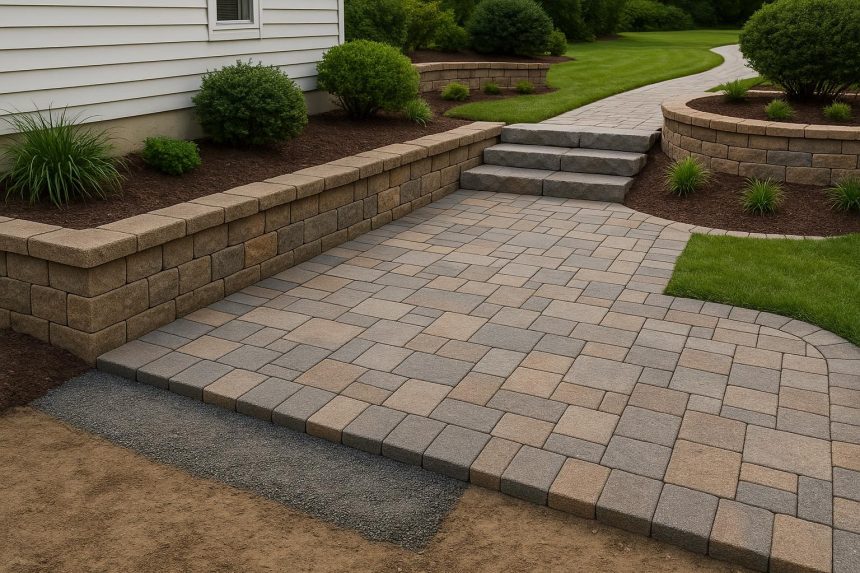
One of the most transformative hardscaping elements you can add to your property is a well-designed pathway system. These walkways do more than just provide a route from point A to point B. They guide visitors through your garden, protect your lawn from wear patterns, and add visual interest with curves, materials, and borders.
Popular materials for pathways include natural stone, pavers, brick, and decorative concrete. Each option brings its own aesthetic and practical benefits. Natural stone offers timeless elegance and unique character, while pavers provide versatility in patterns and colors. Stamped or stained concrete services can create the look of expensive materials at a fraction of the cost, making high-end design accessible to more homeowners.
Patios and Outdoor Living Spaces
The heart of outdoor entertaining is typically a well-designed patio. This hardscaped area serves as an extension of your indoor living space, providing a stable, level surface for furniture, grills, and gatherings. The size and layout of your patio should reflect how you plan to use the space. Will you host large parties, enjoy quiet morning coffee, or need room for outdoor dining?
Modern patio design has evolved far beyond simple concrete slabs. Today’s homeowners can choose from an array of materials including natural stone, porcelain pavers, and interlocking concrete units. Many opt for professional concrete services that incorporate decorative finishes like exposed aggregate, colored concrete, or intricate stamped patterns that mimic the appearance of slate, flagstone, or even wood planks.
Retaining Walls and Terracing
For properties with slopes or elevation changes, retaining walls serve both functional and aesthetic purposes. These structures prevent soil erosion, create level planting beds, and can transform an unusable hillside into terraced gardens or usable lawn areas. Building retaining walls requires careful engineering, especially for taller structures that must withstand significant soil pressure.
Materials for retaining walls range from stacked natural stone and timber to concrete blocks designed specifically for this purpose. The choice depends on the height of the wall, the style of your home, and your budget. Regardless of material, proper drainage behind the wall is critical to prevent water buildup and eventual structural failure.
Driveways and Parking Areas
Your driveway is often the first hardscaping feature visitors notice, making it an important element of your home’s curb appeal. Beyond aesthetics, driveways must be built to withstand the weight of vehicles and the stress of daily use. Quality concrete services ensure your driveway is properly reinforced with the right thickness and includes control joints to manage inevitable cracking.
Consider widening your driveway to create parking pads or adding a decorative apron at the entrance. These enhancements not only improve functionality but also add value to your property.
Water Features and Drainage Solutions
Hardscaping also addresses practical concerns like managing rainwater runoff. French drains, dry creek beds, and channel drains are all hardscape solutions that prevent water damage to your home’s foundation while adding interesting visual elements to your landscape. Some homeowners incorporate these drainage solutions into decorative water features, turning a necessity into a focal point.
The Finishing Touches
Once the major hardscaping elements are in place, finishing touches bring everything together. Landscape lighting highlights architectural features and improves safety along pathways. Edging creates clean transitions between hardscape and softscape areas. Decorative elements like fire pits, outdoor kitchens, or built-in seating transform functional spaces into true outdoor living rooms.
Professional hardscaping creates the permanent framework that supports and enhances everything else in your landscape. From foundation to finish, these essential services turn ordinary yards into extraordinary outdoor spaces that you’ll enjoy for decades to come.

Lynn Martelli is an editor at Readability. She received her MFA in Creative Writing from Antioch University and has worked as an editor for over 10 years. Lynn has edited a wide variety of books, including fiction, non-fiction, memoirs, and more. In her free time, Lynn enjoys reading, writing, and spending time with her family and friends.