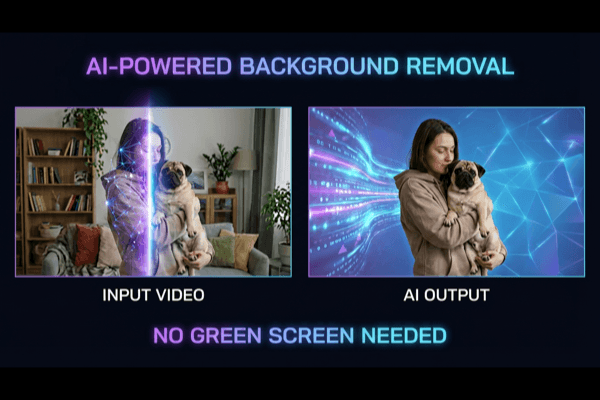
Video demand keeps rising while editing resources stay limited
Video is now a core asset for product marketing, social growth, onboarding, and customer education. Most teams are publishing more frequently than ever, but editing resources usually do not scale at the same speed. This mismatch creates pressure on production timelines and campaign execution.
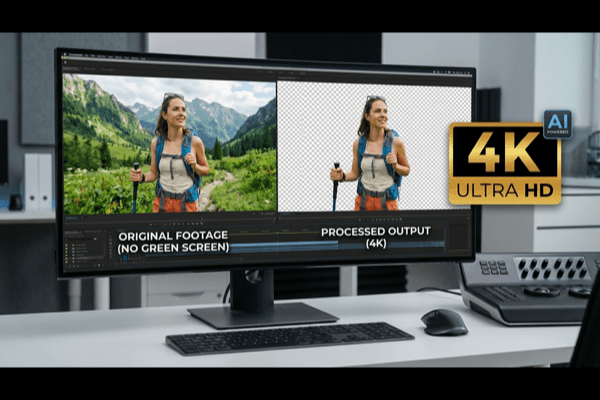
One of the biggest bottlenecks is background cleanup. Many teams record in offices, home studios, or shared workspaces where visual distractions are unavoidable. Manual editing can fix this, but it often takes too long when teams need fast iteration. For teams looking for practical speed without heavy post-production overhead, using the best video background remover workflow can significantly reduce turnaround time and improve consistency.
Why traditional editing pipelines become expensive
Classic post-production methods can still produce strong results, but they are difficult to scale for high-frequency publishing. Frame-level masking, edge cleanup, and repeated render checks add up quickly, especially when one source clip must be adapted into multiple formats.
Common friction points include:
- Long delays between recording and final publish
- Heavy reliance on specialist editors for routine tasks
- Inconsistent quality across campaign variants
- Slow creative testing cycles for performance teams
When these issues accumulate, teams lose agility and ship fewer experiments.
Practical use cases across modern content operations
Background removal is no longer only for advanced creators. It is now part of everyday workflows in many organizations:
- SaaS teams creating feature demos and launch videos
- E-commerce teams producing product-first ad creatives
- Social teams adapting one message into multiple visual versions
- Customer success teams building onboarding and support clips
- Agencies delivering multi-client content under tight deadlines
In all these scenarios, the objective is simple: keep audience attention on the message, not on distracting environments.

A repeatable process that works for lean teams
Most teams can get reliable results by standardizing a lightweight workflow:
- Record with stable lighting and clear foreground-background contrast
- Run a short test clip before processing full-length footage
- Inspect edge quality around hair, hands, and high-motion sections
- Export in destination-ready formats for each channel
- Validate playback quality on desktop and mobile before publishing
This approach catches issues early and avoids costly rework close to launch windows.
Quality still depends on source footage
Even strong tools rely on input quality. Teams usually get cleaner outputs when they follow simple capture rules:
- Avoid low-bitrate or heavily compressed source files
- Reduce clutter and visual noise behind the subject
- Keep exposure and white balance consistent
- Minimize sudden camera movement during recording
These small recording improvements have a direct impact on final edge stability and visual polish.
Mistakes teams should avoid
A few recurring mistakes can hurt output quality and waste budget:
- Processing long clips before validating short test segments
- Expecting perfect cutouts from noisy source footage
- Over-sharpening exports and creating halo artifacts
- Skipping QA checks on the devices viewers actually use
A short pre-publish checklist is often enough to prevent these problems.
Final takeaway
Fast background workflows are now an operational requirement, not a nice-to-have. Teams that simplify this step can publish faster, run more experiments, and maintain stronger brand consistency across channels.
The most effective strategy is straightforward: improve source capture, validate quality early, and standardize processing plus QA. Over time, this creates a scalable video pipeline that supports growth without adding unnecessary production complexity.

Lynn Martelli is an editor at Readability. She received her MFA in Creative Writing from Antioch University and has worked as an editor for over 10 years. Lynn has edited a wide variety of books, including fiction, non-fiction, memoirs, and more. In her free time, Lynn enjoys reading, writing, and spending time with her family and friends.