You need one thing from a shop three miles away. Walking there and back will take most of an hour. Driving should be quick, but first you have to find the keys, get into traffic, and hope there is somewhere to park.
It is not a big journey. That is exactly why it feels so irritating.
Short trips take up a surprising amount of daily life: the gym, a quick appointment, coffee with a friend, or a small grocery run. They are close enough to make driving feel excessive but far enough that walking is inconvenient.
Why Short Trips Become Car Trips
Cars make distance disappear. They are less good at making short journeys feel simple.
For a trip of only a few miles, the time spent getting into traffic, finding parking, and walking from the parking space can be almost as long as the drive. Public transport may not help much either. The route might require a transfer, or the bus may arrive every thirty minutes.
A regular bicycle solves some of that, but it introduces other questions. Is there a hill? Will you arrive sweaty? Will the return trip feel harder with groceries?
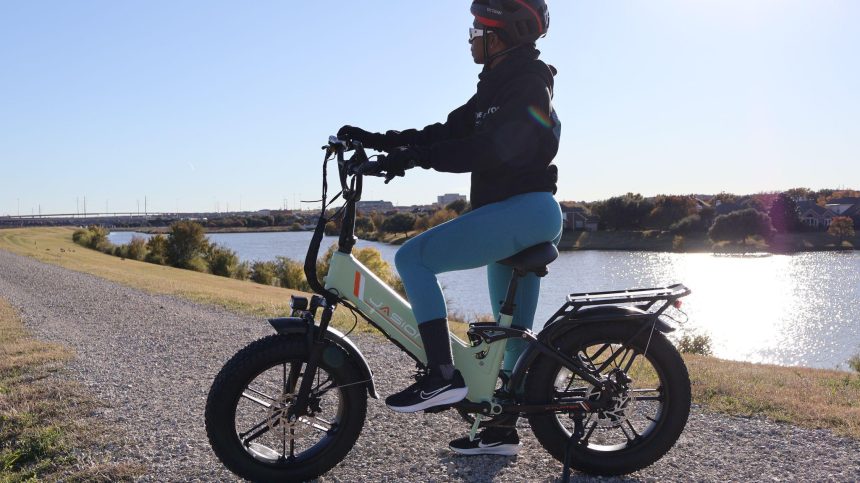
An electric bike changes the calculation. It keeps the directness of cycling while taking away much of the effort that makes a short ride easy to postpone. The benefit is not simply speed. It is being able to leave without turning the trip into an event.
(Jasionbike X-Hunter ST)
The Real Advantage Is Less Friction
E-bikes are often discussed in terms of motors, range, and top speed. Those figures matter, but they are not what makes one useful on an ordinary Tuesday afternoon.
There is no timetable to check. Parking is usually closer to the destination. A moderate hill no longer changes the route. A rider can wear normal clothes without planning to change on arrival.
That ease changes behavior. A trip that might have been postponed gets done immediately. Someone who would never cycle to work every day may still use an e-bike to pick up dinner or visit a friend without starting the car.
When the Ride Does Not Start at Home
Not every bike journey begins at the front door.
Someone may drive to the edge of a crowded downtown area, then ride the last few miles. An RV traveler may want a simple way to move around a campground or nearby town. A family visiting the coast may prefer to park once and use bikes for the rest of the day.
This is where a foldable electric bike becomes more than a space-saving novelty. It is useful when the bike needs to travel before the ride begins, particularly for people combining driving, camping, public transport, or limited indoor storage.
A folding model can slide into the back of an SUV, sit inside an RV, or take up less room in an apartment. It does not make the bike weightless, however. A folded e-bike may still be heavy enough that lifting it into a trunk takes real effort. Folding solves the shape of the bike more reliably than it solves the weight.
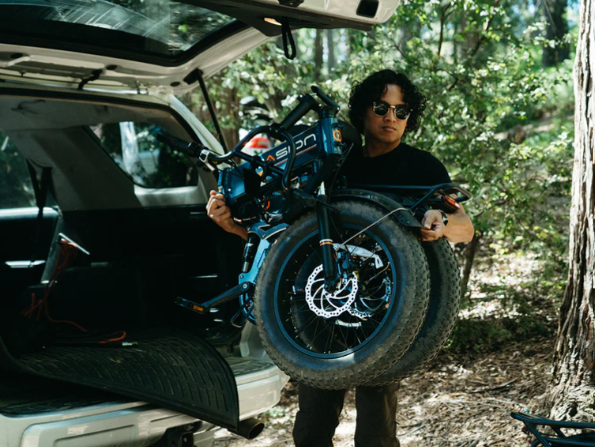
(Jasionbike Hunter Pro)
Storage Is Part of the Journey
Bike advertisements usually focus on what happens while the rider is moving. For many owners, the more important question is what happens after the ride.
A person with a garage can roll a bike inside and forget about it. Someone in a small apartment may need to carry it through a narrow hallway every time it is used. At work, there may be no secure outdoor parking.
A folding frame can allow the bike to sit under a stairwell, inside an office, or behind a car seat rather than outside on a rack. That is not glamorous, but it affects how often the bike gets used.
Brands such as JasionBike offer folding, commuter, step-through, and wider-tire models because the practical problems differ from one rider to the next. The right style is the one that creates the fewest problems before and after the ride.
The Second-Car Question
Many households do not need a second car for every journey. They need a second way to get around.
One person may take the family car to work while someone else needs to reach a gym, grocery store, or appointment nearby. Two adults may have destinations that make sharing a car inconvenient. A teenager or older family member may need more independence without another parking space and another set of vehicle expenses.
An e-bike cannot carry several passengers, handle a week’s worth of groceries, or make every trip comfortable in bad weather. But it can cover many of the small journeys that create the feeling that a second car is necessary.
That matters in neighborhoods where most destinations are within a few miles but not comfortably walkable. The bike becomes less of a recreational purchase and more of a household tool.
What Makes a Short-Trip Bike Easy to Live With?
The features that matter most on short journeys are rarely the ones printed largest on a product page.
A rear rack matters when carrying a laptop or groceries. Integrated lights matter when an afternoon errand takes longer than expected. A removable battery matters when the bike is stored far from an outlet. A step-through frame can make frequent stops easier.
Weight matters too. A heavy model can be awkward to guide through a doorway or push up a ramp. A folding bike should also be simple enough to fold that the owner will actually do it. A clever mechanism is not useful if operating it feels like a small engineering project.
The best short-trip bike is usually the one that disappears into the routine. It should not require special clothing, a long setup, or a careful plan every time someone needs milk.
The Trips That Still Belong to the Car
There is no need to pretend an e-bike can replace every journey.
Heavy rain, icy roads, large shopping trips, multiple passengers, and routes without a safe place to ride still favor the car. A transportation option is only useful when the rider feels comfortable using it.
The point is not to eliminate driving. It is to notice how often a car is used for trips that barely require one.
Even replacing a few short drives each week can make daily life feel less dependent on parking and traffic.
Making Small Trips Small Again
The value of an e-bike is easiest to see on an unimportant journey: a few groceries, a quick visit, or an appointment across town. These trips are rarely important enough to plan carefully, but they happen often enough to shape how people move.
For the right rider, an e-bike does not replace every car journey. A folding model does not solve every storage problem either. What both can do is remove some of the effort from trips that sit awkwardly between walking and driving.
Sometimes that is enough. The car stays parked, the errand gets done, and a five-mile trip feels like five miles instead of a project.

Lynn Martelli is an editor at Readability. She received her MFA in Creative Writing from Antioch University and has worked as an editor for over 10 years. Lynn has edited a wide variety of books, including fiction, non-fiction, memoirs, and more. In her free time, Lynn enjoys reading, writing, and spending time with her family and friends.