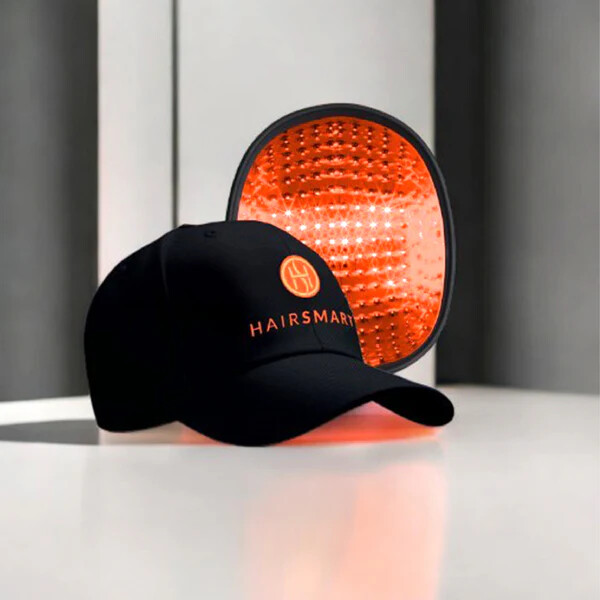
When you think about hair loss treatment, what’s the first thing that pops into your head? Minoxidil, transplants, PRP, or Finasteride. Or maybe you think about oils and serums for a softer approach. Most people have no idea about a completely risk-free, clinically proven treatment that can fit into an everyday schedule and needs just 6 minutes a day: Low-Level Laser Therapy for hair loss.
Low-level laser therapy is a non-invasive, clinically validated hair loss treatment slowly gaining recognition because of its real effects. It’s suitable for almost all kinds of hair loss and can actually help regrow hair after chemo-induced hair loss and in later stages of androgenetic alopecia. It’s time LLLT got the attention it actually deserves.
What LLLT Is, and Why It’s Still Under the Radar
LLLT, or low-level laser therapy, was discovered almost 70 years ago as a way to speed up wound healing and reduce joint inflammation. Later, it was discovered that it could regrow hair. After many clinical trials and studies, almost 20 years ago, the technology was approved by the FDA, and from there, LLLT devices for hair growth became popular and are now considered one of the best treatments available.
Part of the reason LLLT stayed under the radar is that it doesn’t fit the usual dramatic narrative. There’s no dramatic before-and-after moment, no single pill with a catchy name, and it’s still not marketed like a miracle cure. Doctors recommend it, and it works quietly and gradually, through light exposure rather than chemical intervention.
People seeking hair loss treatments want quick results and often go for the options full of loud claims; quiet and gradual doesn’t always get noticed. That doesn’t make it less effective. It just makes it less marketed.
Why LLLT Works for Nearly Every Age Group
One of the most underappreciated aspects of LLLT is how broadly applicable it is. Unlike hormonal treatments, which are typically most relevant for pattern hair loss in adults, LLLT works on a cellular mechanism, stimulating follicle activity and improving circulation, that isn’t tied to a specific age or hormonal profile.
This means it can be a reasonable option for younger adults noticing early thinning, middle-aged men and women dealing with pattern loss, and older adults looking for a gentle, low-risk way to support existing hair, without the concerns that come with more aggressive treatments later in life. The common types of hair loss that can be treated by LLLT are:
Androgenetic alopecia: The most common form of hair loss in both men and women, it responds well to LLLT because the therapy works directly on follicle activity and blood flow, both relevant regardless of the hormonal trigger.
Diffuse thinning: In men and women, hair thinning linked to stress or hormonal shifts benefits from LLLT’s ability to stimulate dormant follicles back into an active growth phase across the whole scalp, not just isolated areas.
Post-stress or post-illness shedding: Hair loss after a specific triggering event like childbirth, chemotherapy, or menopause can also respond well, since LLLT supports the underlying recovery process at the follicle level, helping the scalp bounce back more efficiently.
LLLT tends to be less effective in areas where hair has been fully dormant for many years, which is why timing matters. It works best as an early-to-moderate stage intervention, not a last resort.
What the Data Suggests About the Effectiveness of LLLT
Clinical studies on LLLT have generally shown improvements in hair density and reduced shedding among participants using the therapy consistently over several months.
A 16-week, multicenter, randomized, double-blind trial testing a helmet-type LLLT device found that participants using the device saw a meaningful jump in hair density by the end of the study, while the sham-device control group saw almost no change and even lost some hair thickness. No adverse effects were reported, supporting LLLT’s safety profile alongside its effectiveness.
A separate meta-analysis pooling seven double-blinded, randomized controlled trials of FDA-approved home-use LLLT devices found a statistically significant increase in hair density among people using LLLT compared to sham devices, with the effect holding up across both comb-type and helmet-type devices and in both men and women. The researchers noted that the benefit was consistent regardless of device design, reinforcing that it’s the light-based mechanism itself, not the form factor, driving the results.
While results vary by individual, the overall pattern in available research points toward LLLT as a legitimate, evidence-supported option, not just an alternative therapy riding on hope.
Making LLLT Part of a Realistic Hair Regrowth Routine
Given its broad applicability across ages and hair loss types, along with its non-invasive nature and minimal reported side effects, LLLT arguably deserves a more prominent place in mainstream hair loss conversations.
An LLLT laser cap isn’t recommended as a complete replacement for other approaches, but it is a wonderful complementary addition that can speed up the hair growth process. Blended with a complete hair growth system of topicals, vitamins, and DHT-blocker supplements, a laser cap’s light-based cellular stimulation can realistically turn hair loss into visible growth.
But LLLT isn’t a quick fix and typically requires consistent use, several sessions a week over a period of months before density improvements become visible. What it offers instead is a low-risk, well-supported way to actively work on hair health without the trade-offs associated with more aggressive treatments.
A Therapy Worth a Second Look
If LLLT hasn’t come up in your research so far, it’s worth a closer look, especially if you’re someone inclined toward a more natural and risk-free approach to hair growth. It has virtually no side effects and works across a wider range of ages and hair loss patterns. HairSmart’s laser cap and complete hair regrowth system is built around this same idea, offering a research-backed, non-invasive option for people who want to actively support their hair, without the risks that come with more intense interventions.
Sometimes the most effective solutions are the ones that don’t shout the loudest.

Lynn Martelli is an editor at Readability. She received her MFA in Creative Writing from Antioch University and has worked as an editor for over 10 years. Lynn has edited a wide variety of books, including fiction, non-fiction, memoirs, and more. In her free time, Lynn enjoys reading, writing, and spending time with her family and friends.