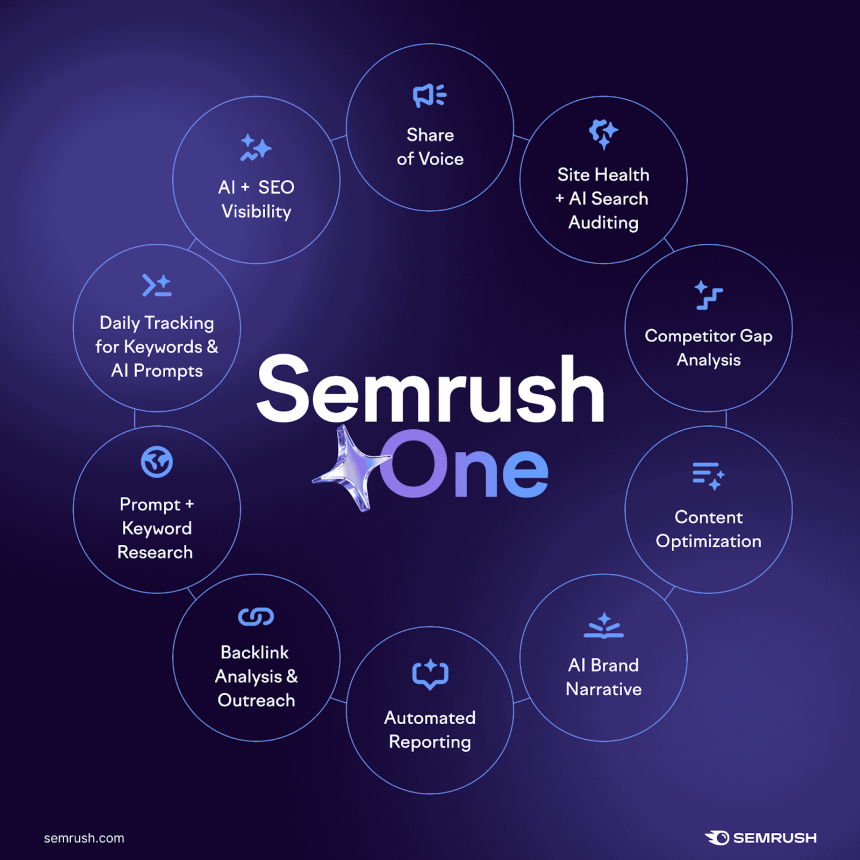
This post is sponsored by Semrush. When you purchase through links in this article, we may earn an affiliate commission from Semrush.
Start measuring how often AI systems mention, recommend, or trust your brand. Explore Semrush One and discover your AI Citation Authority score today.
The search landscape is undergoing the most dramatic shift since the birth of Google. As ChatGPT usage has tripled and Google’s share of general search has dropped more than six percentage points in just six months, marketers cannot rely on traditional traffic-driven SEO alone. Discovery is no longer confined to SERPs; it has migrated into multi-platform AI ecosystems such as ChatGPT, Perplexity, Gemini, and emerging AI browsers.
In this new environment, visibility is no longer determined by rankings. It is determined by AI Citation Authority—how often large language models cite, reference, or recommend your brand. This is a structural shift from Search Engine Optimization (SEO) to Generative Engine Optimization (GEO). Marketers who optimize for citations instead of clicks will be the ones who maintain relevance as user search behaviors evolve.
Why Authority in AI Systems Matters
AI systems do not reward traffic, keyword density, or click-through rates. They reward trust. When a model like ChatGPT answers a query, it references sources it considers authoritative. If your brand is not part of those trusted citations, you may be invisible—regardless of how strong your SEO performance has been.
This means that influence has decoupled from traffic. Marketers are now competing in an environment where AI’s perception of brand authority determines whether they surface in answers, recommendations, summaries, and product suggestions.
Market Pain Point 1: No Established GEO Playbook
Traditional SEO has decades of guidance. GEO has none. Even marketers who have mastered structured data, schema markup, and on-page optimization still remain invisible in AI-generated responses. There is no standardized metric, method, or timeline for improving AI visibility. Without a roadmap, teams experiment blindly, wasting time and resources.
Market Pain Point 2: AI Hallucinations Are a Brand-Level Risk
Large language models hallucinate. They misattribute product features, fabricate claims, and spread incorrect brand details. This is no longer a technical bug—it is a reputation threat. One false statement generated repeatedly across AI platforms can misinform thousands of potential customers.
Brands urgently need systems that detect, track, and correct hallucinated mentions before misinformation becomes entrenched.
Market Pain Point 3: Measurement Framework Gaps
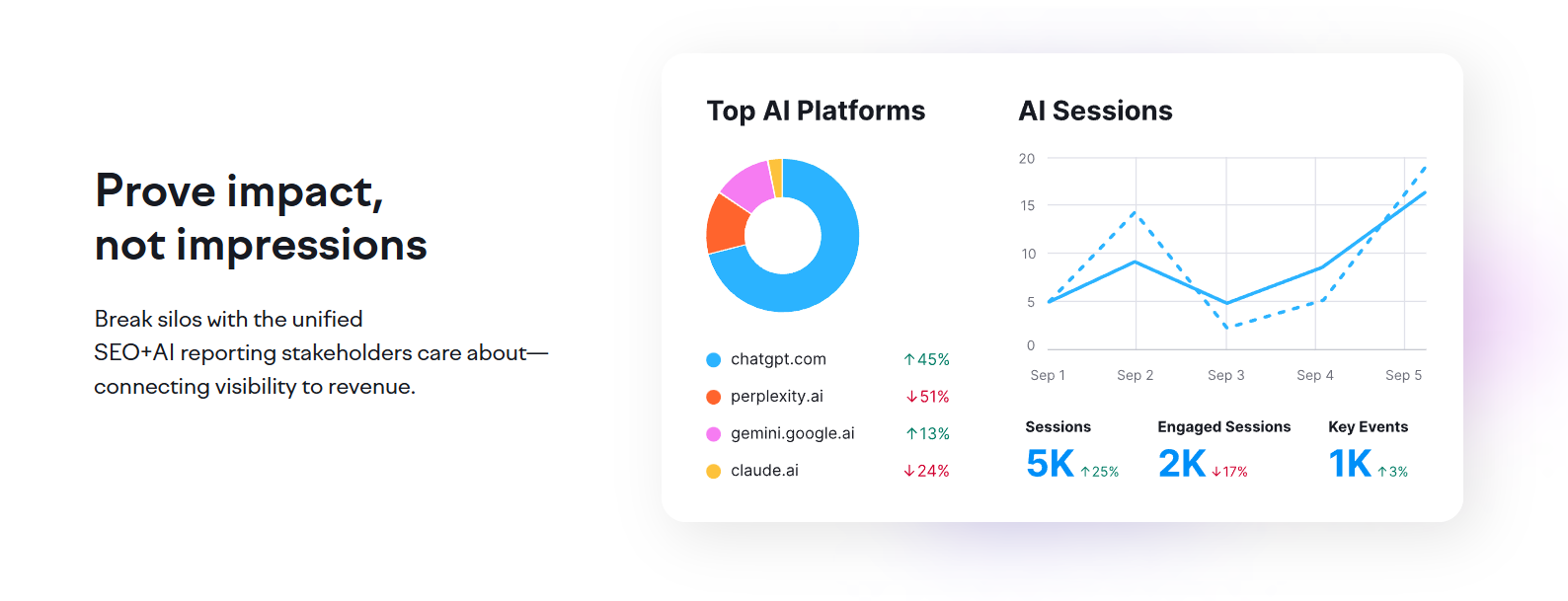
Traditional analytics track sessions, clicks, and impressions. But AI search often delivers answers without ever sending traffic to a website. That means discovery may be happening—but existing analytics fail to capture it. Marketers need ways to measure:
- AI citation frequency
- Sentiment across AI-generated answers
- Cross-platform visibility in ChatGPT, Google AI Mode, Perplexity, and Gemini
- Topic associations that AI links to their brand
Without new analytics models, brands risk underestimating their true visibility and missing insight into how AI systems actually perceive them.
How Semrush One Solves These Challenges
Semrush One introduces the AI Visibility Toolkit, the first system built to measure, track, and operationalize AI Citation Authority.
Key Capabilities
1. Cross-Platform AI Mention Detection
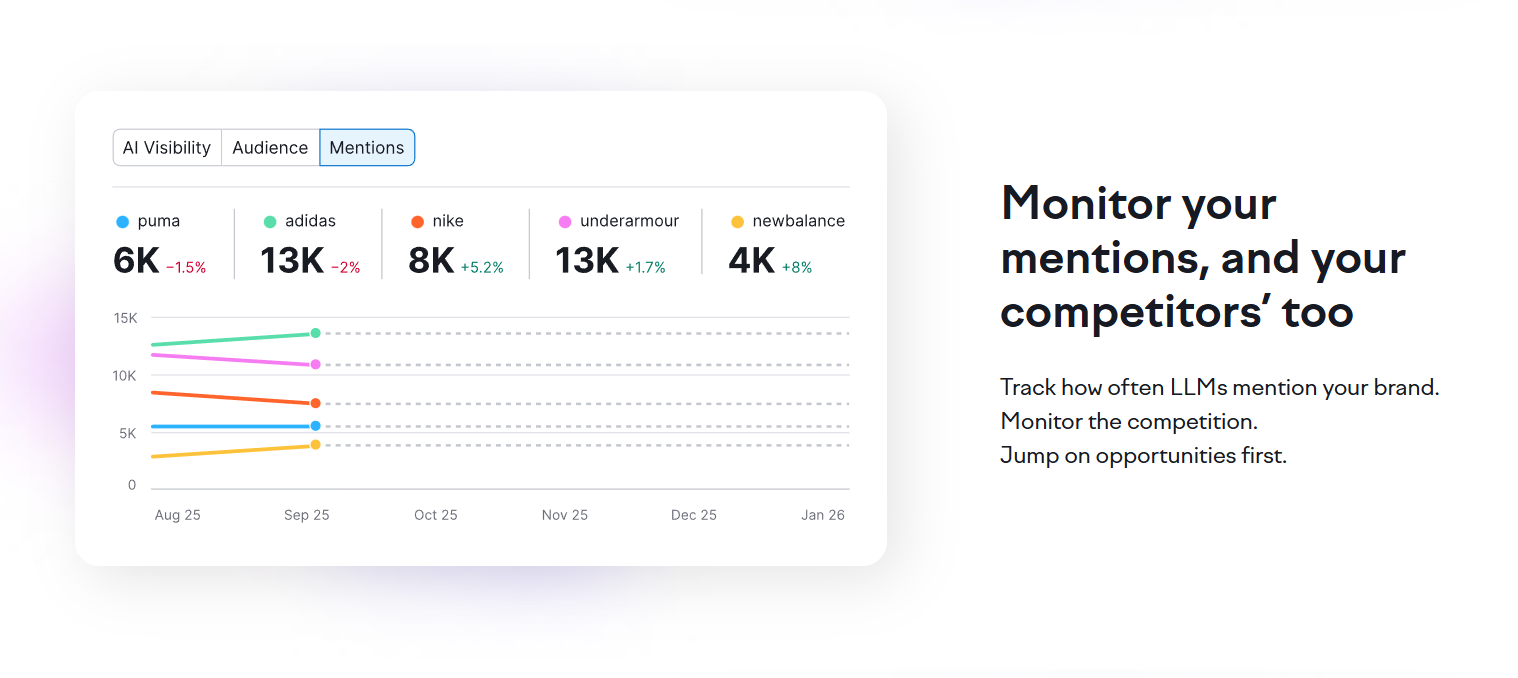
The toolkit identifies brand references across ChatGPT, Perplexity, Gemini, and more, offering marketers a unified view of how AI perceives and cites their brand.
2. Citation Frequency, Sentiment, and Topic Association Analysis
These metrics form a quantifiable AI Authority Score, showing not only whether your brand is cited, but how it is framed and in what context.
3. Hallucination and Misinformation Monitoring
The system detects inaccurate or fabricated mentions, helping brands protect their reputation and respond before misinformation spreads.
4. A Standardized Framework for GEO Measurement
Instead of guessing, marketers get a repeatable, data-driven methodology for improving AI visibility—replacing uncertainty with clarity.
The Outcome
Marketers gain a visibility layer across AI ecosystems that finally allows them to understand where their brand stands, why AI models interpret them the way they do, and how to increase trust-based citations systematically.
Strategic Reframing: Why GEO is the New Competitive Edge
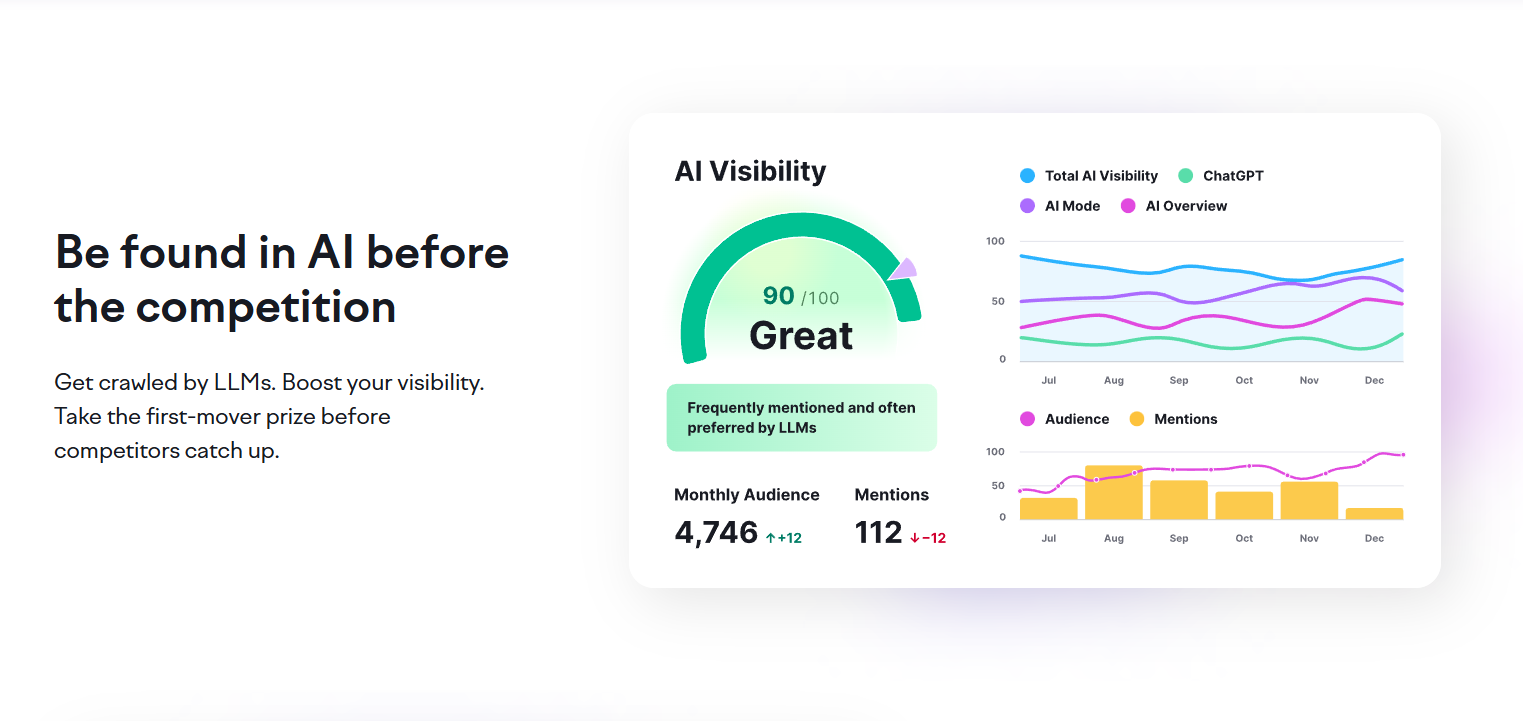
The shift from SEO to GEO requires rethinking what authority means.
1. From Traffic to Trust
Traffic is now a lagging indicator. The real leading indicator is citation probability—how likely AI systems are to reference your brand when a user asks a question.
2. Filling the GEO Playbook Gap
Early adopters have been experimenting, but Semrush One establishes the first structured framework that includes entity optimization, passage-level relevance, and trust signal development across AI platforms.
3. Hallucination Defense as Brand Protection
AI misinformation is poised to become one of the most significant threats to brand reputation. Semrush One’s monitoring system acts as a first line of defense.
Evidence That This Shift Is Already Here
Industry experts have already validated this movement:
- Matt Diggity reported Google’s decline from 73 percent to 66.9 percent, confirming users’ migration to AI search.
- Murat Yatağan emphasized that brands must build “undeniable authority” to become AI-trusted entities.
- Aleyda Solís confirmed Google AI Mode’s rollout to more than 40 countries, expanding the influence of AI-generated search results.
- Marketers report real commercial outcomes from being cited positively in ChatGPT product recommendations.
These insights illustrate a clear trajectory: AI-driven discovery is accelerating, and brands that fail to adapt will be left behind.
Conclusion
Discovery no longer happens on a single search engine. It happens inside AI systems that prioritize authority, trust, and relevance. To thrive in this environment, marketers must move beyond traditional SEO and adopt a GEO-driven, citation-focused approach.
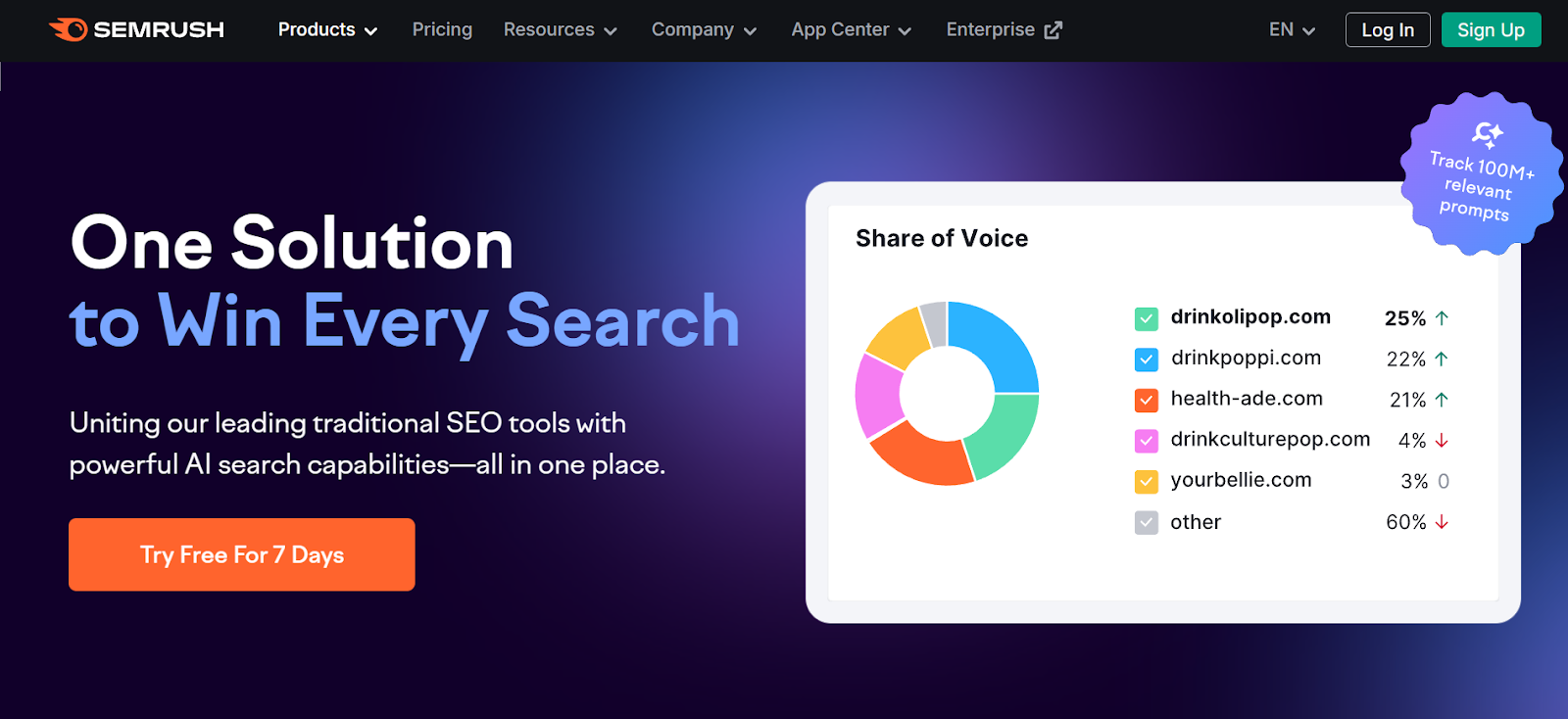
Semrush One provides the tools needed to track AI visibility, correct misinformation, benchmark authority, and build a strategy that aligns with how modern discovery works.
Take control of your AI presence. Explore Semrush One to measure your AI Citation Authority and strengthen your brand’s visibility across today’s AI-powered search landscape.

Lynn Martelli is an editor at Readability. She received her MFA in Creative Writing from Antioch University and has worked as an editor for over 10 years. Lynn has edited a wide variety of books, including fiction, non-fiction, memoirs, and more. In her free time, Lynn enjoys reading, writing, and spending time with her family and friends.