Matthew Ryan is a seasoned executive in the engineering and transportation consulting sectors, currently serving as CEO and board member of Traffic and Mobility Consultants in Orlando, Florida. With a career spanning leadership roles at firms such as S&ME Inc. and HDR, he has overseen large-scale operations, strategic planning, and organizational growth across multiple regions and industries. A graduate of George Mason University with BS and MBA degrees in Finance, Matthew Ryan brings a structured, analytical perspective to complex systems. While his professional background centers on infrastructure and planning, the same principles of observation, environment, and behavior apply to recreational fishing. Understanding how systems function, whether in engineering or natural ecosystems, provides a foundation for interpreting fish habits and habitats effectively.
Understanding Fish Habits and Habitats for Recreational Fishing
Recreational fishing often appears simple on the surface. Yet, success on the water depends largely on understanding how fish behave and where they choose to live. According to the Missouri Department of Conservation, fish habits include feeding, spawning, and mobility. At the same time, habitat provides food, shelter, and adequate water. Anglers who understand behavior-habitat relationships make better location and timing judgments.
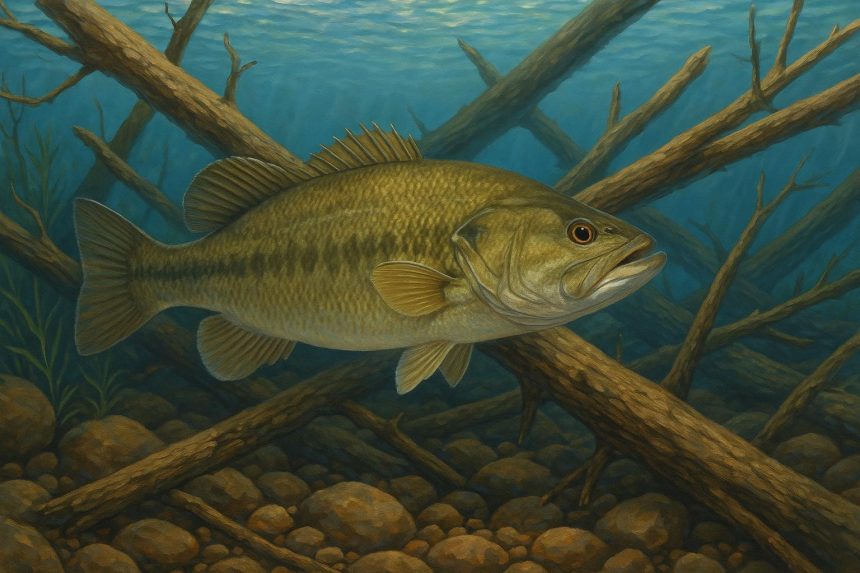
Fish do not distribute themselves randomly within lakes, rivers, or reservoirs. Many species cluster around food and shelter. Freshwater fish gather among submerged logs, aquatic vegetation, rocky outcrops, and drop-offs for protection from predators and currents, according to the Victorian Fisheries Authority. These structures attract smaller species, providing them with feeding opportunities. Fishermen can interpret underwater life by understanding how physical characteristics affect fish distribution.
Water temperature plays a significant role in shaping fish habits. Because fish are cold-blooded, water conditions affect their metabolism. According to Your Fish Guide, feeding intensity increases within species-specific temperature ranges. Some fish slow down and move to deeper water, where temperatures remain steady during colder months. Thus, seasonal changes affect fish distribution and active food pursuit.
Light levels and time of day also affect fish movement. Anchored Outdoors points out that many species graze more in low light, such as at dawn or dusk. Fish may travel into shallower regions when light decreases because they feel less threatened. Conversely, intense sunshine may drive some species into deeper water or shade. Observing these daily patterns helps anglers predict feeding times rather than rely on chance.
Food availability remains one of the strongest drivers of fish behavior. Fish seek meals around bug hatches, baitfish schools, or current seams with floating creatures. The Missouri Department of Conservation notes that knowing what a target animal consumes can affect bait and placement. Anglers can attract fish by mimicking natural feeding behaviors.
Water movement adds another layer of complexity. Fish often hold in rivers and streams where currents bring food while reducing energy expenditure. The Victorian Fisheries Authority says eddies, pools, and downstream structures cause such circumstances. Fish can relax in calmer water while waiting for prey. Recognizing these tiny flow patterns is often more useful than casting repeatedly into uniform water.
Modern tools have changed how anglers interpret habitat. Digital fishing maps show depth contours, underwater structures, and bottom composition changes not visible from above. Anglers can find holding places before casting by evaluating these features. Technology improves the matching of fish behavior with underwater elements, but it does not replace fish habits.
Spawning behavior introduces another seasonal influence on fish location. Many species migrate to particular habitats during breeding periods, often favoring shallow, protected areas with suitable substrate. Your Fish Guide describes how these movements can temporarily concentrate fish in predictable zones. However, spawning can also reduce feeding activity in some species. Recognizing the biological purpose behind these shifts provides context for the fluctuations in catch rates throughout the year.
Habitat health ultimately affects fish populations and recreational opportunities. Vegetation, clean water, and stable shorelines support the aquatic food chain, based on insects and smaller species. The Victorian Fisheries Authority stresses that deteriorated habitats affect fish counts. Anglers who understand this relationship may see conservation initiatives as practical ways to preserve fishing experiences.
Understanding fish habits and habitats for recreational fishing entails understanding how temperature, structure, light, food sources, and seasonal cycles affect aquatic life. Informed fishermen view fishing as an observation and interpretation process rather than a gamble.
About Matthew Ryan
Matthew Ryan is the CEO and a board member of Traffic and Mobility Consultants in Orlando, Florida, where he leads strategic planning and operations in transportation engineering and planning. He previously served as CEO and Board Chair of S&ME Inc. and held executive leadership roles at HDR. His experience spans project management, organizational development, and growth strategy. Ryan earned BS and MBA degrees in Finance from George Mason University and is active in professional organizations.

Lynn Martelli is an editor at Readability. She received her MFA in Creative Writing from Antioch University and has worked as an editor for over 10 years. Lynn has edited a wide variety of books, including fiction, non-fiction, memoirs, and more. In her free time, Lynn enjoys reading, writing, and spending time with her family and friends.