As an IT director, your day likely starts with a plan that quickly derails. Managing a complex, multi-location IT infrastructure often drains internal resources and slows down core business operations. Instead of focusing on strategic initiatives, your top engineers are stuck resetting passwords, fixing routing issues, or tracking down latency problems across branch offices.
Generic, out-of-the-box IT support models simply don’t work for modern, regulated, or distributed companies. These rigid contracts fail to address the specific compliance requirements and security postures required by enterprise-level organizations. You end up paying for a service that forces your team to do half the work anyway.
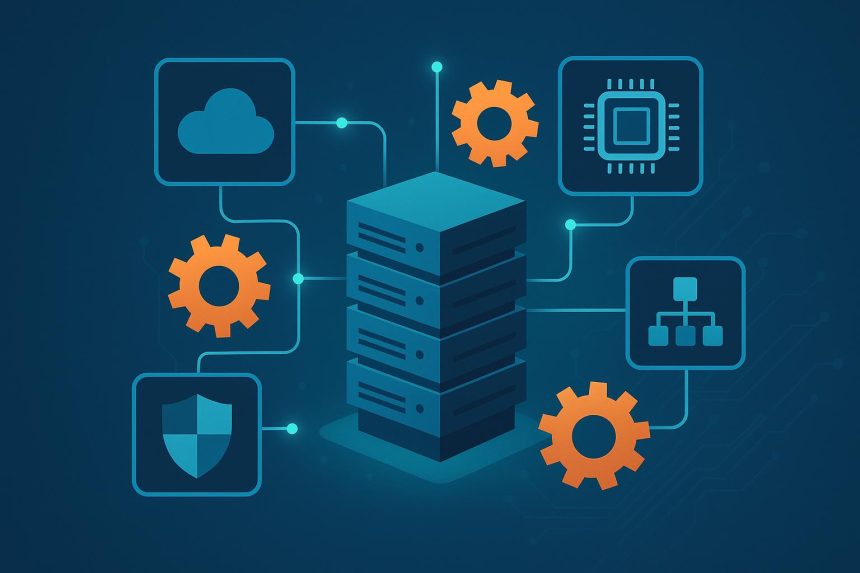
To stop troubleshooting and get back to driving growth, modern businesses need an IT service partner that acts as an extension of their team, providing customizable solutions to optimize your network, server, voice, and cloud operations. Moving beyond generic support requires a deep dive into your infrastructure. In this guide, we will break down exactly how to optimize the four core pillars of your IT environment to build a cohesive, scalable system.
Key Takeaways
- Generic support fails modern businesses: Relying on standard helpdesk packages creates friction. Co-managed and fully managed tailored models provide the flexibility internal IT teams actually need.
- Proactive monitoring protects the bottom line: Remote Monitoring and Management (RMM) stops the massive financial bleeding associated with unexpected server downtime.
- Modern networks require modern architecture: Optimizing your network with WLAN and SD-WAN technologies creates the scalable, secure foundation required for distributed workforces.
- Voice integration drives productivity: Upgrading legacy telephony to Unified Communications as a Service (UCaaS) modernizes communication and heavily boosts team collaboration.
The Trap of “One-Size-Fits-All” IT Support
True IT optimization is more than just keeping the lights on. It means integrating disparate systems into a cohesive, high-performing environment where your network, servers, and cloud instances communicate seamlessly. When systems are isolated, your IT staff wastes hours manually bridging the gaps.
This is where rigid, “one-size-fits-all” IT support models create massive friction. A generic Managed Service Provider (MSP) often operates on a strict checklist that completely ignores your company’s specific regulatory compliance rules or unique operational workflows. If your provider cannot adapt to your specific security frameworks, they become a bottleneck rather than a resource.
To break free from this trap, organizations are turning to flexible engagement models. A fully managed IT model offloads the entire infrastructure burden, while a co-managed model strategically fills the gaps in your existing department. These customized approaches empower internal IT teams to focus on revenue-generating projects rather than replacing them altogether.
Optimizing the Core: Server Health and Proactive Monitoring
Server outages are not just frustrating technical glitches. They are massive financial liabilities that bring core business operations to an immediate halt. When an unexpected outage occurs, employee productivity plummets, customer transactions fail, and reputational damage begins to accumulate.
The hidden costs of these disruptions add up faster than most executives realize. Relying on a reactive, break-fix support model—where you only call for help after a system crashes—is a dangerous gamble with your company’s bottom line.
To guarantee system stability, IT leaders must shift to proactive Remote Monitoring and Management (RMM). RMM tools continuously scan your server environment for hardware degradation, storage thresholds, and unusual traffic patterns. By identifying and resolving these anomalies before they cause a crash, proactive monitoring minimizes disruptions and keeps your workforce productive.
| Support Model | Methodology | Financial Impact | Best Use Case |
|---|---|---|---|
| Break-Fix (Reactive) | Fix issues only after a failure occurs. | High costs due to prolonged downtime and emergency fees. | Non-critical, isolated hardware. |
| RMM (Proactive) | Continuous monitoring and automated patching. | Predictable costs, massive savings by avoiding outages. | Enterprise servers and core business networks. |
Networking for a Distributed Workforce
The traditional office perimeter no longer exists. Today’s remote workforces and multi-office expansions have created unique, highly complex connectivity challenges. Employees expect seamless access to corporate applications, whether they are sitting at headquarters, in a branch office, or working from a home network.
To meet this demand, organizations must optimize network performance using advanced technologies. Implementing robust Wireless Local Area Network (WLAN) setups ensures high-speed, secure wireless access within physical office spaces. Meanwhile, Software-Defined Wide Area Network (SD-WAN) solutions intelligently route traffic across multiple locations, prioritizing critical application data and ensuring secure, reliable access for all remote employees.
Managing these complex network layers manually is a logistical nightmare. Centralized network management platforms alleviate this burden by giving IT teams a single pane of glass to view the entire network topology. This visibility drastically reduces the daily troubleshooting burden on internal staff, allowing them to push global policies and updates with a single click.
Scaling with Confidence: Cloud Migration and Operations
Cloud optimization is no longer just a trend. It is the foundational bedrock for modern data strategies, enterprise security, and long-term scalability. Without a properly configured cloud environment, businesses struggle to deploy new applications or protect their data from modern cyber threats.
The enterprise shift toward cloud infrastructure is happening at a staggering pace. However, simply moving data to a public server is not enough; the environment must be actively managed to prevent ballooning costs and security vulnerabilities.
A successful cloud strategy requires actionable best practices tailored to specific environments. When migrating to platforms like Microsoft Azure or private cloud setups, you must assess your current workloads and right-size your virtual machines to avoid paying for unused compute power. For productivity suites like Microsoft 365, strict access controls and continuous data backups are mandatory to protect against accidental deletion and ransomware.
Here are a few core best practices for managing modern cloud operations:
- Implement Identity and Access Management (IAM): Enforce multi-factor authentication and the principle of least privilege across all cloud resources.
- Establish Cloud Governance: Create clear policies for resource provisioning to prevent “cloud sprawl” and runaway billing.
- Automate Backups: Never rely on default data retention policies. Use third-party cloud-to-cloud backup solutions to ensure total data recoverability.
Unifying Team Collaboration with Modern Voice Solutions
Fragmented, traditional enterprise telephony systems hold modern workforces back. Desk phones tied to copper lines simply cannot support employees who need to jump from a client call to a video conference while working remotely. These legacy systems are expensive to maintain, difficult to scale, and completely disconnected from the rest of your IT stack.
The industry has recognized these limitations, prompting a massive migration toward unified platforms. Companies are abandoning the PBX closet in favor of software-driven communication. Unified Communications as a Service (UCaaS) completely modernizes enterprise voice. Tools like Microsoft Teams Calling integrate voice, video, file sharing, and instant messaging into a single, intuitive application. This integration dramatically improves team productivity by allowing employees to communicate seamlessly from any device, anywhere in the world, without jumping between disparate applications.
Finding a Partner to Act as an Extension of Your Team
Selecting the right Managed Service Provider requires looking past surface-level marketing. You need a partner that aligns directly with your strategic operational goals. Key criteria include industry-specific expertise, a proven track record of proactive security, and the ability to offer flexible engagement models that fit your exact needs.
The right partner completely changes the day-to-day reality of your internal team. By offloading Tier-1 helpdesk tickets, routine patching, and network monitoring to an external team, your internal IT staff finally gets room to breathe. They can pivot away from the daily troubleshooting burden and focus entirely on high-level, revenue-generating projects that push the business forward.
Ultimately, a true MSP partnership feels like a seamless extension of your internal IT department. They should sit in on your strategic planning meetings, understand your specific business objectives, and provide transparent reporting. You aren’t just hiring an outsourced vendor; you are gaining a dedicated team of experts invested in your company’s success.
Conclusion
Thriving in today’s demanding business landscape requires more than just functional technology. It requires integrating and fully optimizing your network, server, voice, and cloud systems into a single, cohesive engine. Fragmented infrastructure creates bottlenecks that ultimately limit your company’s growth potential.
Moving away from generic, reactive support toward tailored, proactive management is the only way to protect your bottom line. By embracing tools like RMM for server health, SD-WAN for connectivity, and UCaaS for communication, you actively improve team productivity and secure your competitive edge.
Take a hard look at your current IT operations. If your team is constantly putting out fires instead of building the future, it is time to assess your bottlenecks. Seek out a customizable IT partnership that fits your unique needs and get your technology working for you, not against you.

Lynn Martelli is an editor at Readability. She received her MFA in Creative Writing from Antioch University and has worked as an editor for over 10 years. Lynn has edited a wide variety of books, including fiction, non-fiction, memoirs, and more. In her free time, Lynn enjoys reading, writing, and spending time with her family and friends.