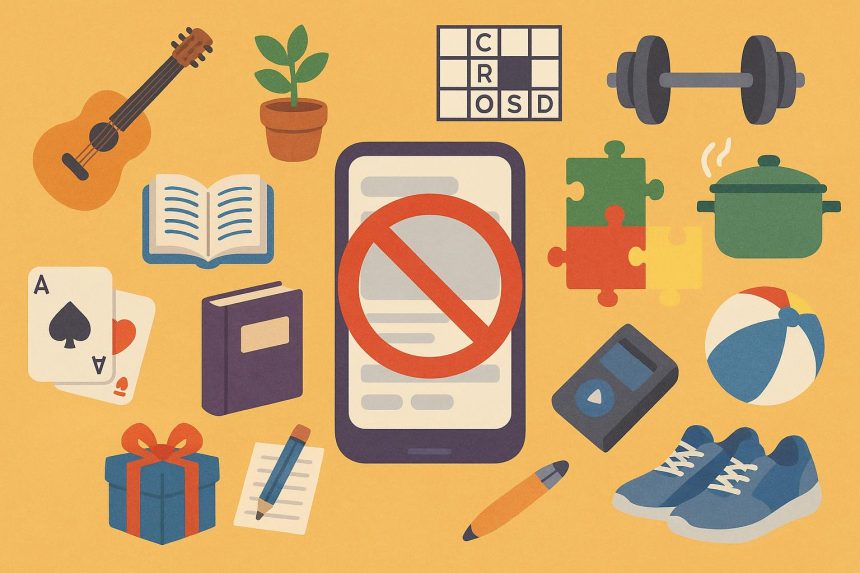
Have you ever put your phone down after an hour of scrolling and somehow felt more tired than before you picked it up? That hollow feeling is familiar to most people. The endless feed promises entertainment, but rarely delivers the kind of rest that actually recharges you, and a day off is too valuable to spend in a loop of content you didn’t choose and won’t remember.
Stepping away doesn’t have to mean staring at the ceiling. From reading a book to playing online games, there are more ways to spend your free time well than most people realize. Here are sixteen worth trying.
1) Pick a Film and Commit to It
Put your phone in another room. Pick something you’re genuinely curious about, not just something that’s on. There’s a real difference between a film you watched and a film you had on while you were on your phone, and most people know which one they’ve been doing.
2) Let Someone Else Do the Talking
A good podcast or audiobook travels well: dishes, stretching, a balcony coffee, a commute you’ve already mentally checked out of. The backlog of things you’ve been meaning to listen to for months isn’t going to clear itself.
3) Spend an Hour on Something Interactive
Not all screen time works the same way. Console games, mobile puzzles, and online games ask something of you; passive scrolling doesn’t. When you try Roulette online, for example, you’re making choices, reacting, and paying attention. That distinction matters more than it sounds.
4) Pick Up Something New in an Hour
Whether you’re interested in a language phrase, a beginner guitar chord, or a Photoshop tool you’ve always skipped past, an hour is genuinely enough to pick up one small thing. The goal isn’t mastery; it’s the specific pleasure of knowing something tonight that you didn’t know this morning. It’s a low bar, but one small thing is still one more than zero.
5) Prep Your Meals for the Week
A Sunday afternoon of chopping and cooking pays back across the whole week: fewer decisions, less takeout, a fridge that’s actually stocked. It’s productive in the moment and useful for days afterward, which is a combination most leisure activities can’t claim.
6) Tidy the Mess That Bothers You Most
The desk, the drawer, the corner of the kitchen that’s been like that for three weeks; pick one, set a timer for an hour, and stop when it goes off. The goal isn’t a clean house, but rather finishing something small.
7) Get It Out of Your Head
Twenty minutes of writing—journaling, free writing, or simply jotting down a list of things you keep meaning to do—tends to clarify things that have been sitting in the background unprocessed. There’s no format required; most people find they have more to say than they expected.
8) Walk Until Your Head Clears
Leave the step counter out of it. A slow walk through a park or along a quiet street is enough to reset something that screen time doesn’t touch. All you need is twenty minutes, no destination necessary.
9) Explore the Neighborhood Like a Tourist
There’s almost certainly a café, market, museum, or neighborhood street nearby that you’ve passed a dozen times and never actually visited. Novelty doesn’t require a flight. It just requires a slightly different decision about one afternoon.
10) Do Some Light Stretching
Fifteen minutes of stretching releases tension that accumulates quietly across a sedentary work week. Most people don’t realize how much they’re carrying until they start moving. Free guided sessions exist everywhere; the barrier is basically zero.
11) Try a Recipe You’ve Been Putting Off
A new dish is part puzzle, part sensory experience. Following unfamiliar steps, smelling things, tasting as you go: it’s grounding in a way that’s hard to explain until you’re doing it. Also, it ends with food.
12) Draw Something, Badly if Necessary
Twenty minutes of sketching or doodling engages a different part of the brain: slow, spatial, not particularly goal-oriented. You don’t need to be good at it. Keep a sketchbook somewhere you’ll actually see it.
13) Give the Foliage a Little Attention
Water something. Repot a flower. Plant a few herbs on a windowsill. It’s quiet and tactile and asks very little. It also gives you something small to check on each morning, which is a more satisfying habit than it sounds.
14) Sit with Something Longer Than a Caption
Long-form reading, whether it involves a book, a long essay, or an investigative feature, trains attention in the opposite direction of a social feed. Physical books work especially well for this. There are no notifications and no autoplay, just the page.
15) Call Someone You’ve Been Meaning to Catch Up With
There’s always someone on your mental list, whether it be an old friend, a cousin, or a family member who would appreciate a real conversation over a liked post. A phone call is different from a DM in ways that are obvious the moment you’re actually on one.
16) Sit and Do Absolutely Nothing
This one sounds easy, but it isn’t. Fifteen minutes with a cup of coffee, no phone, no background noise, no agenda: most people will find this harder than any other item on the list, which is usually the clearest sign it’s worth doing.
The Content Will Still Be There Later
A day off doesn’t need a productivity quota to feel worthwhile. What makes it feel wasted, more often than not, is just the sense that you weren’t the one deciding how it went.
Sixteen options are just a start. Pick one and see what happens with the rest of the afternoon.

Lynn Martelli is an editor at Readability. She received her MFA in Creative Writing from Antioch University and has worked as an editor for over 10 years. Lynn has edited a wide variety of books, including fiction, non-fiction, memoirs, and more. In her free time, Lynn enjoys reading, writing, and spending time with her family and friends.