Are you in the planning stages of a new roof investment? If so, you might already have shortlisted the versatile and durable Colorbond roofing solution. This means that the next step in the process is to decide on the most practical colour.
In addition to being more than a simple design feature, the Colourbond metal roofing Melbourne locals trust is excellent for shielding your home against the harsh elements of Australian weather. This post shares a few clever tips that will help you choose a Colourbond colour that’s both functional and practical.
The Perfect Shade Ensures Long-Term Functionality
The roof on your home accounts for about 60% of your home’s exterior visual profile. This means that it’s essential to get the colour choice right from the outset. With this in mind, our team of roofing experts have compiled a few tips that will help you navigate the Colorbond palette and choose the perfect shade for your property.
1. Understand What Thermal Performance is
In a country that’s well-known for its scorching and unpredictable climate, our experts want to point out that roof colour is a functional choice rather than an aesthetic one. This is because darker colours absorb more heat, while lighter colours reflect it.
Colorbond has been designed with solar absorption in mind. Colours are categorised by specific Solar Absorption (SA) ratings and can be defined as follows:
- Lighter shades (such as Surfmist, Shale Grey, and Dover White): These specially designed colours boast a low SA rating. With Surfmist, a near-white shade is popular because it reduces attic space temperatures by up to 15°C. This is in stark comparison to dark roofs, which in turn drastically cuts your summer cooling bills.
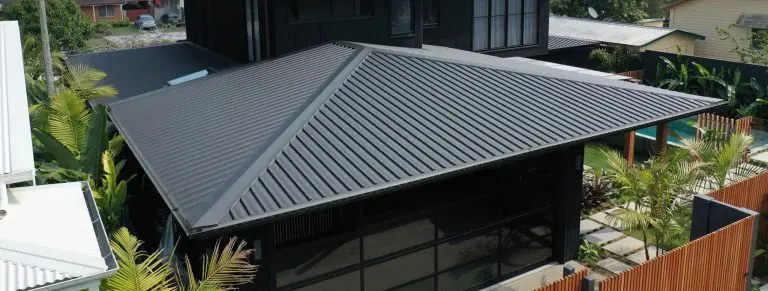
- Darker Shades (such as Monument and Night Sky): With higher SA ratings, these colours absorb more heat. Not only do these colours look modern and striking, but they are also better suited to cooler southern climates such as parts of Victoria. Homes with top-tier insulation and roof ventilation systems will also benefit from these shades.
Some of the Colourbond shades also boast Thermatech solar reflectance technology. This innovative concept helps reflect more heat regardless of the shade. However, a lighter colour will still fundamentally outperform a dark one thermally.
2. Consider the Local Council and Estate Rules
When redoing your roof, it can be tempting to opt for a favourite colour or even one that complements or accentuates your existing design style. However, it’s essential to point out that your local council or housing estate may have specific guidelines for colour choices. In housing estates, this is often done to maintain uniformity.
In addition to this, many local councils in bushfire-prone zones enforce strict regulations on roof colours. Some require light roofs for energy targets, while others ban highly reflective colours (such as Surfmist) to prevent glare issues for neighbours, demanding mid-to-dark tones instead. Speak to your local roofing team to help with these guidelines.
3. Consider the Three-Colour Palette Concept
Another helpful pointer to keep in mind is that your roof doesn’t have to be one boring colour. Experts recommend opting for a three-part exterior colour rule to create curb appeal.
This is how this concept works:
- The Dominant Colour (60%): This is the primary colour and covers the main wall cladding or brickwork.
- The Secondary Colour (30%): This refers to the colour used for the roof, garage door, and gutters. Some homeowners even add the fence or boundary walls to this category.
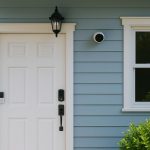
- The Accent Colour (10%): This is the colour that is used on the front door, window frames, or timber features, and is usually a shade that pulls the other colours together.
4. Always Review the Colour Shades in Person
Online catalogues are an excellent way to choose many features and accessories for your home. However, choosing wall or roof paint shouldn’t be one of them. The main reason for this is that this can be deceptive. Factors such as lighting can seriously affect a colour’s true shade.
Avoid the distortions that viewing a colour shade digitally can create by doing the following:
- Check for real metal swatches: It’s essential to view all the colours on your shortlist in person. This can be done by visiting a local hardware store or ordering a large swatch from the Colorbond supplier. A professional roofer will also be able to assist with real-life samples.
- Perform the 24-hour test: Another expert tick involves gathering a sample and then taping it outside against your home’s walls. Look at them at 8:00 AM, 12:00 PM, and 5:00 PM. Here you want to check how the undertones reflect in the light.
Final Thoughts
Choosing the right colour for your Colourbond roof is more than a practical choice based on your favourite hue. Factors such as thermal performance, current architectural style, and local council and estate rules are all essential in helping you find a colour that will keep your home comfortable for years to come!

Lynn Martelli is an editor at Readability. She received her MFA in Creative Writing from Antioch University and has worked as an editor for over 10 years. Lynn has edited a wide variety of books, including fiction, non-fiction, memoirs, and more. In her free time, Lynn enjoys reading, writing, and spending time with her family and friends.