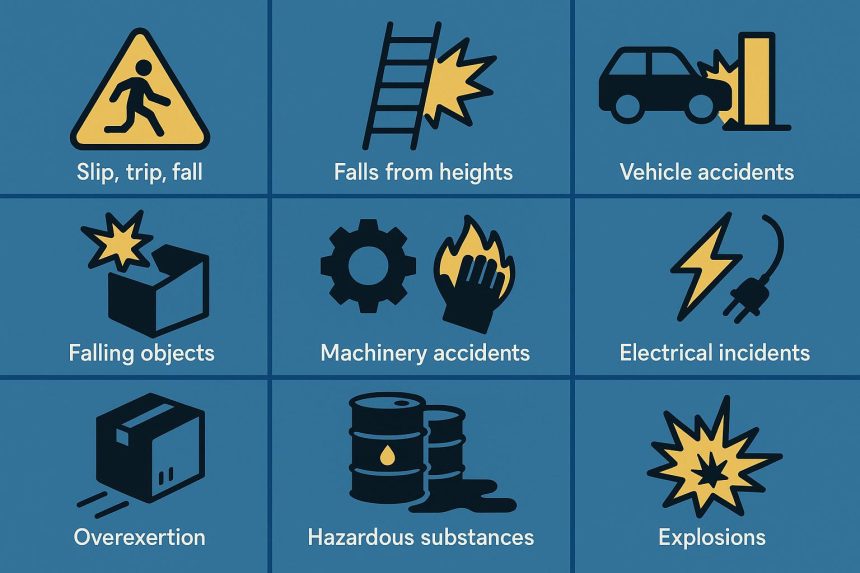
Workplace accidents can happen in any industry, from construction sites and warehouses to offices and healthcare facilities. While job environments differ, many workplace injuries share common root causes. Understanding these causes is critical for both employers and employees, as prevention starts with awareness. Accidents not only impact physical health but can also lead to lost wages, reduced productivity, and long-term career disruption.
Across industries, workers’ accidents are often the result of preventable hazards, insufficient training, or breakdowns in safety procedures. Identifying these patterns helps organizations implement stronger safety measures and empowers workers to protect themselves. Here are the most common causes of workers’ accidents and why addressing them is essential for creating safer work environments.
Slips, Trips, and Falls in the Workplace
Slips, trips, and falls are among the most common causes of workplace injuries across nearly all industries. Wet floors, uneven surfaces, poor lighting, cluttered walkways, and unsecured cords can quickly turn routine movements into serious accidents. These incidents often lead to sprains, fractures, head injuries, and long-term mobility issues.
What makes these accidents particularly concerning is how easily they can be overlooked. Employers may assume minor hazards are harmless, while workers may feel pressured to continue working despite unsafe conditions. Questions such as can you still get workers comp if you go back to work often arise after a fall-related injury, especially when employees attempt to return before fully recovering.
Preventing slips and falls requires consistent housekeeping, proper signage, regular inspections, and appropriate footwear. Addressing small hazards proactively can significantly reduce injury rates and protect workers across all industries.
Overexertion and Repetitive Motion Injuries
Overexertion is a leading cause of workplace accidents, particularly in industries that involve lifting, carrying, pushing, or repetitive movements. These injuries often develop gradually, making them harder to detect and address early. Common examples include back strains, shoulder injuries, and repetitive stress conditions like carpal tunnel syndrome.
Workers may push themselves beyond safe limits due to workload demands or lack of ergonomic support. Without proper training on lifting techniques or task rotation, overexertion injuries become more likely. These injuries can lead to chronic pain and extended time away from work if not managed properly.
Preventive measures include ergonomic assessments, mechanical lifting aids, regular breaks, and employee education. Reducing overexertion not only improves worker safety but also enhances productivity and long-term workforce sustainability.
Equipment and Machinery-Related Accidents
Machinery and equipment accidents are common in construction, manufacturing, warehousing, and transportation industries. These incidents often occur due to improper use, lack of maintenance, or insufficient training. Injuries can range from minor cuts to severe crush injuries or amputations.
Many machinery-related accidents happen when safety guards are removed, procedures are rushed, or equipment is used incorrectly. In some cases, outdated or poorly maintained machines increase the risk of malfunction.
Proper training, routine maintenance, and strict enforcement of safety protocols are essential to reducing equipment-related injuries. When workers understand how to operate machinery safely and employers prioritize maintenance, the likelihood of serious accidents decreases significantly.
Exposure to Hazardous Substances
Exposure to hazardous chemicals, fumes, or biological agents is a major cause of workplace injuries, particularly in healthcare, manufacturing, and cleaning industries. These exposures can lead to burns, respiratory conditions, skin irritation, or long-term illnesses.
Accidents often occur when protective equipment is unavailable, improperly used, or when workers are not fully informed about the risks involved. Inadequate ventilation and improper storage of hazardous materials further increase danger.
Preventing exposure-related injuries requires clear labeling, proper training, personal protective equipment, and compliance with safety regulations. Awareness and preparation are key to protecting workers from both immediate and long-term health risks.
Falls from Heights
Falls from heights are especially prevalent in construction, roofing, maintenance, and warehouse environments. Ladders, scaffolding, platforms, and elevated work areas present serious risks when safety measures are lacking.
These accidents often result from unstable equipment, lack of fall protection, or failure to follow safety procedures. Injuries from height-related falls tend to be severe, including head trauma, spinal injuries, and fractures.
Preventing falls from heights involves proper training, use of safety harnesses, equipment inspections, and strict adherence to safety standards. When working at elevated levels, even small precautions can save lives.
Vehicle and Transportation-Related Accidents
Workers who drive as part of their job face significant risks, whether operating delivery vehicles, forklifts, or heavy machinery. Transportation-related accidents can occur due to fatigue, distracted driving, poor vehicle maintenance, or unsafe work environments.
These incidents often affect logistics, construction, and delivery workers but can also occur on large job sites or parking areas. Collisions and vehicle rollovers can cause serious injuries or fatalities.
Reducing transportation-related accidents requires driver training, vehicle inspections, realistic scheduling, and clear traffic control measures. Promoting safe driving habits protects both workers and the public.
Lack of Training and Safety Awareness
A lack of proper training is one of the most preventable causes of workers’ accidents. When employees are unsure how to perform tasks safely or respond to hazards, accidents become far more likely.
Insufficient onboarding, outdated training programs, and poor communication contribute to unsafe behaviors. New employees and temporary workers are particularly vulnerable when safety expectations are unclear.
Ongoing training, clear procedures, and a strong safety culture significantly reduce workplace accidents. When workers feel empowered to speak up about hazards and receive consistent guidance, safety becomes a shared responsibility rather than an afterthought.
Poor Workplace Housekeeping and Organization
Poor housekeeping is a frequently overlooked cause of workplace accidents. Cluttered workspaces, blocked exits, unsecured tools, and improperly stored materials create unnecessary hazards that can lead to serious injuries. Across industries, workers are injured daily due to items left in walkways, spills that aren’t cleaned promptly, or materials stacked unsafely.
Disorganized environments increase the risk of slips, trips, falls, and struck-by injuries. In fast-paced workplaces, workers may not notice hazards until it’s too late. Poor housekeeping also slows response times during emergencies, increasing the severity of injuries.
Preventing these accidents requires consistent housekeeping protocols, regular inspections, and clear responsibility for maintaining clean work areas. When organization is treated as a safety priority rather than an afterthought, accident rates drop significantly. A clean, organized workplace protects workers and improves overall efficiency.
Fatigue and Long Working Hours
Worker fatigue is a major contributor to accidents across all industries. Long shifts, overtime, night work, and physically demanding tasks reduce alertness and reaction time. Fatigued workers are more likely to make mistakes, overlook hazards, or misjudge situations.
Fatigue-related accidents often involve machinery errors, vehicle collisions, or falls. In many cases, workers may not recognize how exhausted they are until an incident occurs. Chronic fatigue can also worsen the severity of injuries and slow recovery times.
Addressing fatigue requires realistic scheduling, adequate rest breaks, and workload management. Employers who prioritize worker well-being reduce accident risks while improving morale and productivity. Managing fatigue is essential for maintaining a safe and sustainable work environment.

Lynn Martelli is an editor at Readability. She received her MFA in Creative Writing from Antioch University and has worked as an editor for over 10 years. Lynn has edited a wide variety of books, including fiction, non-fiction, memoirs, and more. In her free time, Lynn enjoys reading, writing, and spending time with her family and friends.