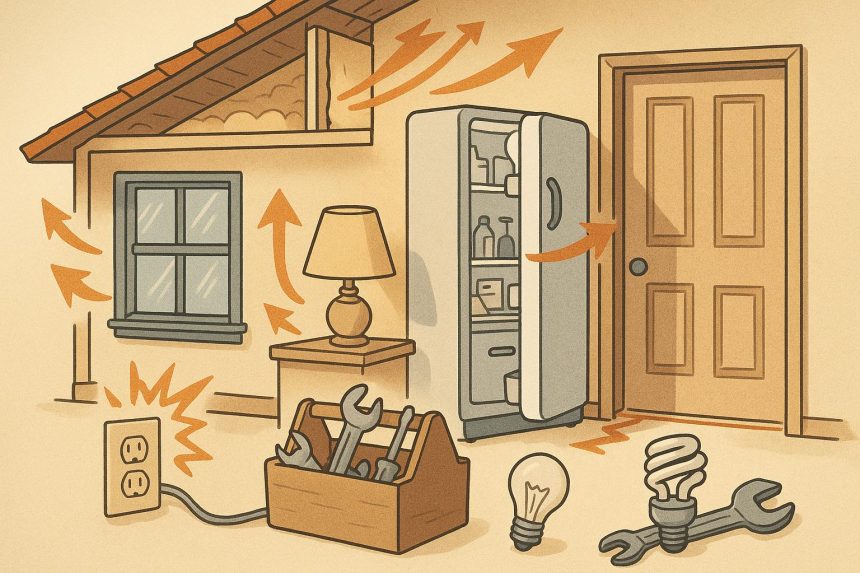
Every month, when that electricity bill arrives, you might wonder why it’s so high. You’ve been diligent about turning off lights and unplugging your phone charger, yet the numbers keep climbing. The truth is, your home is probably hemorrhaging energy in ways you’ve never considered. These hidden energy drains are silently working against your wallet and the environment, but once you know where to look, fixing them is surprisingly straightforward.
The Phantom Power Problem
Walk through your home right now and count how many small lights are glowing. Your television’s standby light, the microwave clock, the cable box, your laptop charger plugged into the wall. These devices are drawing power even when they’re not actively being used, a phenomenon called phantom power or vampire energy. Studies suggest that phantom power can account for up to 10% of your home’s electricity use. That’s like paying for an entire month of electricity every year for absolutely nothing.
The solution is simple but requires a shift in habits. Use power strips for entertainment centers and home office setups, then switch them off when you’re done for the day. For devices you rarely unplug, like that microwave, the drain is minimal enough to accept. But for everything else, make it a practice to cut the power completely.
Your HVAC System’s Secret Struggles
Your heating and cooling system is likely the biggest energy consumer in your home, but most people don’t realize they’re making it work twice as hard as necessary. Dirty air filters are one of the worst culprits. When filters get clogged with dust and debris, your system has to struggle to push air through, consuming significantly more energy in the process.
Replace or clean your filters every one to three months depending on usage. This simple fifteen-dollar fix can reduce your HVAC energy consumption by up to 15%. Similarly, leaky ductwork is throwing away conditioned air before it ever reaches your living spaces. If your ducts run through unconditioned areas like attics or crawl spaces, having them professionally sealed can dramatically improve efficiency.
The Ceiling Fan Misconception
Many homeowners make a critical mistake with their ceiling fans, particularly in rooms like the dining room where family gatherings happen regularly. They’ll leave their dining room ceiling fan running all day, thinking it’s cooling the room in their absence. Here’s the thing: ceiling fans don’t actually cool rooms. They cool people by creating a wind chill effect on your skin. An empty room with a running fan is just wasting electricity.
The real magic happens when you use a dining room ceiling fan. In summer, run them counterclockwise to create a downdraft that makes you feel cooler, allowing you to raise your thermostat a few degrees. In winter, reverse the direction so they run clockwise at low speed, which pushes warm air down from the ceiling. But remember, they should only run when people are in the room to feel the benefit.
Water Heater Waste
Your water heater is quietly consuming energy around the clock, keeping water hot whether you need it or not. Most water heaters are set to 140 degrees Fahrenheit by default, but 120 degrees is perfectly sufficient for most households. This simple adjustment can reduce water heating costs by up to 10%.
Additionally, if your water heater is warm to the touch, it’s losing heat to the surrounding air. An insulating blanket costs about thirty dollars and can pay for itself within a year. For even better efficiency, insulate the first few feet of hot water pipes coming out of the heater. This prevents heat loss as water travels through your home.
Window and Door Inefficiencies
Your windows and doors are supposed to keep the outside out and the inside in, but they often fail at this basic job. Small gaps and cracks around frames might seem insignificant, but collectively they can equal leaving a window wide open. During extreme weather, your HVAC system runs constantly trying to compensate for the conditioned air escaping through these leaks.
Weatherstripping and caulking are weekend projects that cost less than fifty dollars and can reduce your energy bills by up to 20%. Pay special attention to doors you use frequently, as weatherstripping wears out over time. For windows, thermal curtains add another layer of insulation and can make a noticeable difference in rooms that get harsh sun exposure or winter winds.
The Refrigerator Reality Check
Your refrigerator runs 24/7, making it one of the top energy consumers in your home. If it’s more than ten years old, it’s likely using twice the electricity of modern models. But even newer fridges can be inefficient if the door seals are worn or if the coils are covered in dust.
Test door seals by closing the door on a dollar bill. If you can pull it out easily, the seal needs replacing. Clean the condenser coils at least twice a year by vacuuming them gently. Also, keep your fridge and freezer reasonably full, as the mass of cold items helps maintain temperature better than empty space.
These hidden energy drains add up to real money over time. By addressing them systematically, most households can reduce their energy consumption by 20-30% without sacrificing comfort. Start with the easiest fixes first, and you’ll see the difference in your next utility bill.

Lynn Martelli is an editor at Readability. She received her MFA in Creative Writing from Antioch University and has worked as an editor for over 10 years. Lynn has edited a wide variety of books, including fiction, non-fiction, memoirs, and more. In her free time, Lynn enjoys reading, writing, and spending time with her family and friends.