Introduction
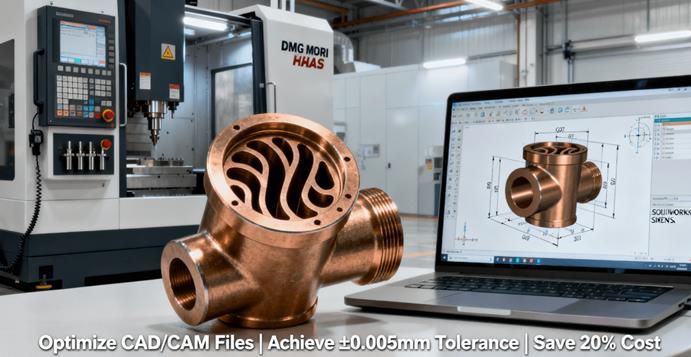
In the field of precision manufacturing, bronze CNC machining is highly favored for its excellent mechanical properties and corrosion resistance. However, a widespread pain point severely constrains its full potential: insufficient CAD/CAM file readability. Industry reports indicate that nearly 30% of issues in bronze part machining stem not from equipment or materials, but from information loss or errors during the data conversion and interpretation of universal file formats like STEP or IGES. This directly leads to machining precision deviations, material scrap, and project delays. Traditional file processing methods reliant on manual intervention lack standardized workflows, making it difficult to meet extremely high tolerance requirements such as ±0.005mm.
This article will systematically explain how manufacturing enterprises can significantly improve the success rate of their bronze CNC machining projects and achieve cost savings of up to 20% by optimizing file readability, refining process documentation, and enhancing technical content usability.
Why is CAD/CAM File Readability Crucial for Bronze CNC Machining?
CAD/CAM file readability is the cornerstone of seamless integration between digital design and physical manufacturing. For CNC machining bronze, files are the sole authoritative medium for conveying design intent. The technical drawing standards (e.g., ISO 128) established by the International Organization for Standardization (ISO) emphasize the importance of drawing clarity, a principle equally applicable to digital files. A file with poor readability might contain broken surfaces, lost layer information, or ambiguous tolerance callouts, forcing the CNC machine to make assumptions or execute incorrect operations, resulting in non-conforming bronze parts.
For instance, a non-optimized STEP file might exhibit surface gaps after conversion, leading to erroneous toolpath calculations that cause over-cutting or under-cutting. Adopting standardized file export protocols and performing pre-emptive geometric data validation can significantly reduce such errors. Practical evidence shows that systematic file optimization can lower machining error rates caused by file issues by approximately 20%. This not only avoids the waste of expensive bronze CNC materials but also substantially boosts production efficiency through a “first-time-right” machining approach.
How to Optimize CNC Process Documentation to Improve Bronze Part Precision?
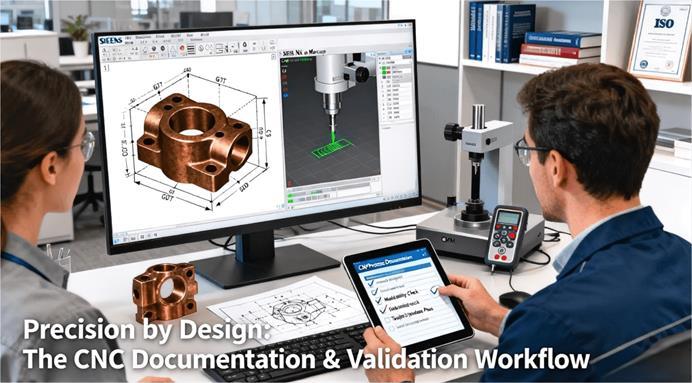
figure2:From guesswork to guaranteed quality. Implementing rigorous CNC process documentation prevents errors, ensures consistency, and protects your budget.
High-precision bronze part machining is inseparable from a rigorous and detailed set of CNC process documentation. This documentation acts as the link connecting design, programming, machining, and quality inspection, ensuring every step is traceable and based on reliable information.
Building a Standardized Documentation Framework
An excellent CNC precision machining process documentation package should include the part drawing, GD&T drawing, CAM programming sheet, tool list, fixture setup sheet, and inspection instructions. Among these, using the internationally recognized Geometric Dimensioning and Tolerancing (GD&T) system for annotation is crucial, as it conveys design intent without ambiguity. According to authoritative industry practice guides, standardized GD&T application can reduce manufacturing misinterpretations by over 15%.
Implementing Digital Verification and Compatibility Management
Conducting thorough digital verification before releasing documentation is a critical step to ensuring the precision of CNC machining bronze parts.
l Toolpath Simulation
Utilizing CAM software for dynamic toolpath simulation allows for intuitive checking of potential collisions between the tool, workpiece, and fixtures, and helps optimize cutting parameters. This is particularly important for machining high-strength bronze alloys.
l Virtual Machine Debugging
Running the generated NC code in a virtual machine environment tests its performance on actual equipment, allowing for the early identification and resolution of potential issues.
l Documentation and Control System Compatibility Confirmation
Ensuring the documentation format is compatible with the specific CNC control systems in the workshop. For guidance on building a robust machining process, one can refer to the CNC Machining Bronze Guide provided by JS Precision. Manufacturers certified to standards like ISO 9001 and AS9100D typically have more mature document control systems, ensuring accurate and consistent information transfer.
What are the Common Technical Content Usability Challenges in Bronze CNC Machining?
Technical content usability directly determines how efficiently and accurately the machining team can execute production instructions. Technical content with low usability, such as vague operating instructions, inconsistent terminology, or lengthy process cards, is a primary breeding ground for human error.
Identifying Typical Usability Bottlenecks
Challenges often manifest as: technical documents using complex, obscure jargon instead of intuitive operational commands; process files created by different engineers having vastly different formats, increasing the operator’s learning curve; and insufficient emphasis on critical dimensions or special process requirements, making them easy to overlook.
Effective Strategies for Enhancing Usability
The core of improving usability lies in “visualization” and “standardization.”
l Widespread Adoption of Visual Tools
Equipping complex fixture setups or inspection schemes with 3D diagrams or even short videos is far more effective than pure text descriptions, helping operators quickly understand the intent.
l Implementing Simplified Standardized Templates
Establishing Standard Operating Procedures (SOPs) and checklists for common operations like CNC machine brass and bronze machining ensures critical information (e.g., cutting speed, feed rate) is presented in a fixed and prominent manner. Case studies show that by optimizing the presentation of technical content, a manufacturer reduced the setup time for its CNC machining parts by 15%, while the defect rate dropped significantly.
What Cost Factors Should Be Considered When Selecting a Bronze CNC Machining Service?
When selecting a bronze CNC machining service, decision-makers should not focus solely on the standalone CNC machine price but conduct a comprehensive assessment of the Total Cost of Ownership (TCO).
Visible Costs vs. Hidden Costs
Visible costs include material costs (bronze is typically more expensive than brass), machining labor hours, and surface treatment fees. Hidden costs are more critical and include rework costs due to file or process issues, project delay costs, and reputational risks associated with premature part failure.
Achieving Cost Optimization through Precision Manufacturing and Control
Real cost savings originate from first-time success in the manufacturing process. Choosing a supplier with a robust quality system for Precision CNC machining services is crucial.
l Analysis of Economies of Scale in Batch Size
Large-volume production can reduce the unit price by spreading the initial setup cost. For small-batch prototyping, the supplier’s capability to support quick changeovers needs evaluation.
l Comprehensive Assessment of Supplier Capabilities
A supplier holding certifications such as IATF 16949, typically has stronger process control capabilities, effectively avoiding hidden costs. Its provided Precision CNC machining services are built on a mature system.
l Cost Comparison: Traditional vs. Optimized Methods
| Cost Item | Traditional Method (Unoptimized Files/Process) | Optimized Method |
| Material Waste Rate | Relatively High (approx. 5-10%) | Significantly Reduced (<2%) |
| Rework Rate | Common | Very Rare |
| Project Cycle Time | Relatively Long, Uncertain | Short and Controllable |
| Overall Cost | Baseline | Reduced by approx. 20% |
How to Enhance Bronze Part Performance through Precision Machining Technology?
Advanced CNC precision machining technology not only guarantees dimensional accuracy but also enhances the mechanical properties and durability of bronze parts at a micro level. For example, 5-axis simultaneous machining technology can complete the machining of complex spatial surfaces for CNC machining bronze parts in a single setup. This avoids cumulative errors from multiple setups, ensuring extremely high geometric tolerances, thereby improving the part’s balance and stability during high-speed operation.
Simultaneously, precise toolpath control and optimized cutting parameters can achieve superior surface finishes, reduce surface micro-cracks, and significantly enhance the bronze part’s resistance to corrosion and wear in harsh environments (e.g., seawater or chemical media). Combined with environmentally friendly processes (like using eco-friendly cutting fluids and implementing scrap recycling) adopted by manufacturers certified with ISO 14001 environmental management systems, machining programs with high Technical content usability also ensure sustainable production processes. Data indicates that by applying these advanced precision machining technologies, the comprehensive performance of bronze parts can be improved by up to 30%.
Conclusion
In summary, by systematically optimizing CAD/CAM file readability, refining CNC process documentation, and enhancing technical content usability, manufacturing enterprises can significantly increase the success rate of their bronze CNC machining projects. This approach not only effectively reduces communication errors and machining rework, ensuring part precision meets stringent standards like ±0.005mm, but also fundamentally controls costs and shortens delivery cycles. Seamlessly integrating the design and manufacturing phases is a key strategy for achieving efficient, high-precision manufacturing.
Are you planning a demanding bronze part project? Visit the JS Precision official website immediately to experience the industry-leading online instant quotation system. Upload your design files to receive detailed pricing, lead times, and professional Design for Manufacturability (DFM) feedback within minutes. Let professional manufacturing capabilities accelerate your innovation and transform your design blueprints into high-quality precision parts.
Author Biography
This article was written by a senior engineer with over a decade of experience in the precision manufacturing field. Their expertise and practical experience are concentrated on CNC machining solutions for complex components in the aerospace and medical device industries. The insights in this article are derived from their participation in numerous successful projects, all of which required a deep understanding of material processes like bronze CNC machining.
FAQs
Q1: What is the minimum achievable tolerance for bronze CNC machining?
A: Through optimized file readability and machining processes, the company can control the machining tolerance of bronze parts within ±0.005mm, fully meeting the needs of high-precision applications like medical devices and complying with relevant ISO standards.
Q2: How to evaluate the quality of CNC process documentation?
A: High-quality documentation should include clear, standard-compliant GD&T annotations, detailed toolpath descriptions, and fixture setup diagrams. Referring to industry guides like Thomasnet and establishing standardized templates can effectively reduce machining ambiguities and errors by up to 20%.
Q3: What are the main differences between bronze and brass CNC machining?
A: Bronze generally offers better wear resistance, corrosion resistance, and mechanical properties but is more costly and difficult to machine. Brass is easier to machine and less expensive but has lower strength. The choice should be based on the final application scenario; for example, high-load components in aerospace prioritize bronze.
Q4: What tools are typically needed to optimize CAD/CAM files?
A: It is recommended to use mainstream CAD software (e.g., SolidWorks, CATIA) and ensure they are up-to-date. Utilize their built-in geometry repair tools and select high-precision options when exporting to neutral formats like STEP or IGES. File validation can enhance readability and help shorten project cycles.
Q5: How does batch size affect the cost of bronze CNC machining?
A: Large-volume production can significantly reduce the unit cost through economies of scale. For small-batch projects, costs are primarily concentrated in initial setup and programming. It is advisable to partner with a supplier like JS Precision, which possesses efficient rapid changeover capabilities, to find the optimal balance between cost and precision in small to medium-batch projects.

Lynn Martelli is an editor at Readability. She received her MFA in Creative Writing from Antioch University and has worked as an editor for over 10 years. Lynn has edited a wide variety of books, including fiction, non-fiction, memoirs, and more. In her free time, Lynn enjoys reading, writing, and spending time with her family and friends.