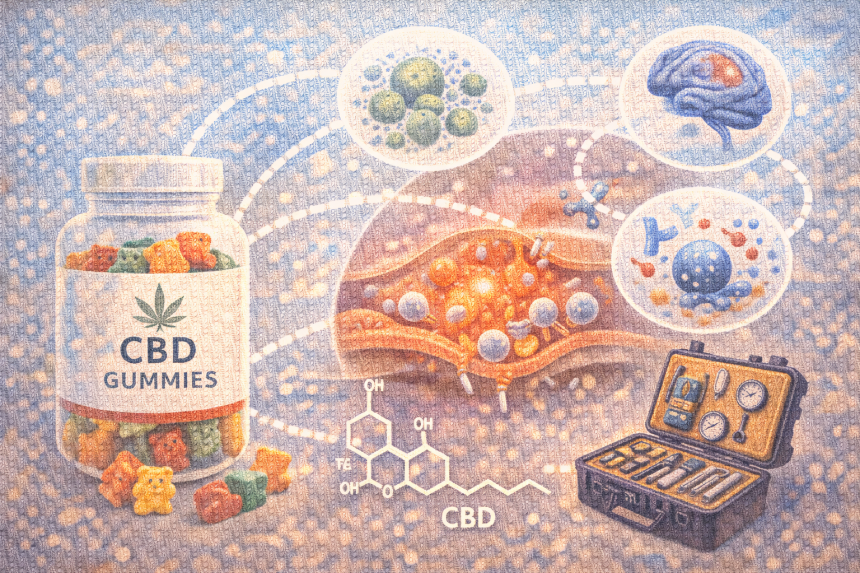
Doctors call inflammation the body’s natural alarm clock. It gets activated when the tissues get injured or the moment the immune system senses a threat. You can protect against short-term inflammation. However, if inflammation is chronic, it has been associated with metabolic disorders, discomfort, persistent pain, and autoimmune conditions. Today, the wellness conversations often throw light on CBD gummies that seem to be a convenient way to balance out inflammatory issues.
- Understanding CBD gummy
CBD (cannabidiol) can be best defined as a non-intoxicating compound that is obtained from hemp. Compared to THC, CBD is not known to generate psychoactive effects. The gummies today have gained prominence as they come in pre-measured doses, with permanent effects in comparison to inhalation. Also, there is the ease of everyday routines. From an absorption perspective, these gummies are metabolized in the digestive system, resulting in a reduced onset and sustained activity.
- Response with the endocannabinoid system
One mechanism that is studied frequently in the domain of inflammation and CBD is the endocannabinoid system. The ECS can help to monitor immune responses, homeostasis, and pain perception. It is essential to notice that the CBD doesn’t bind directly potently to CB1 or CB2 receptors. However, it impacts them indirectly by managing the receptor signaling and endocannabinoid levels. Additionally, this indirect action can enable the reduction of high immune responses that result in excessive inflammation.
- Impact on cytokine production
Cytokines are alerting proteins that have an essential part to play in inflammation. According to research, CBD might help to monitor the generation of pro-inflammatory cytokines, like IL-6 and TNF-α, while simultaneously assisting anti-inflammatory cytokines. By altering the balance, these gummies might support a controlled immune response rather than a chronic inflammatory state.
- Inflammatory pathways and oxidative stress
Chronic inflammation is usually associated with oxidative stress, characterized by the generation of free radicals that rise above the antioxidant defenses of the body. In the preclinical trials, CBD has been proven to possess antioxidant properties. These properties could safeguard the cells from the oxidative damage that would otherwise promote inflammatory processes. By lowering oxidative stress, it is possible that the inflammation could be reduced indirectly over a long period of time.
- Impact on pain and inflammatory discomfort
Pain is often a symptom of the inflammatory response. The chief affinity of CBD to TRPV1 receptors, which are responsible for the perception of pain and heat, is yet another point of research. The influence on these receptors might make these gummies effective at reducing pain associated with inflammation, particularly in joints and muscles.
Consistency and bioavailability considerations
Apart from being more or less effective, these gummies have more or less convenient ways to administer the dosage. The bioavailability of the active ingredient, however, can differ among various formulations, fat contents, and personal metabolism. The consistency of the doctor’s prescription and the product’s quality are the main factors when assessing possible effects. CBD extracted from full-spectrum, broad-spectrum, and isolate formulations may act differently on the inflammatory pathways.
Summing it up
Today, the majority of the evidence regarding inflammation and CBD is sourced from animal and laboratory studies. However, even though there are crucial facts to count on, there is still a need for human research. The early findings are somewhat promising. At the same time, there is a need for clinical trials that will help to create dosage standards, condition-specific outcomes, and long-term effects.

Lynn Martelli is an editor at Readability. She received her MFA in Creative Writing from Antioch University and has worked as an editor for over 10 years. Lynn has edited a wide variety of books, including fiction, non-fiction, memoirs, and more. In her free time, Lynn enjoys reading, writing, and spending time with her family and friends.