Key Takeaways
- Understand the different types of water heaters available.
- Consider factors such as household size, energy efficiency, and installation requirements.
- Be aware of potential tax credits and incentives for energy-efficient models.
Table of Contents
- Introduction
- Types of Water Heaters
- Factors to Consider When Choosing a Water Heater
- Energy Efficiency and Operating Costs
- Installation Considerations
- Tax Credits and Incentives
- Maintenance and Lifespan
- Conclusion
Ensuring comfort and convenience at home heavily depends on your water heater. Whether you’re planning a new installation or addressing persistent issues, understanding your options will help you make an informed, cost-effective choice. Considering the local climate and energy options is especially vital for residents of the Southwest, and expert water heater repair in Tucson, AZ is essential for maintaining efficient operation and extending the lifespan of your system.
Choosing the best water heater involves assessing your household’s hot water needs, energy efficiency, and installation requirements. This guide outlines different water heater types and essential factors to consider, including potential tax incentives and maintenance tips. Making an informed decision can enhance comfort, reduce utility bills, and unlock rebates, all of which significantly impact the total cost of ownership.
Types of Water Heaters
Choosing the right water heater starts with understanding the types available:
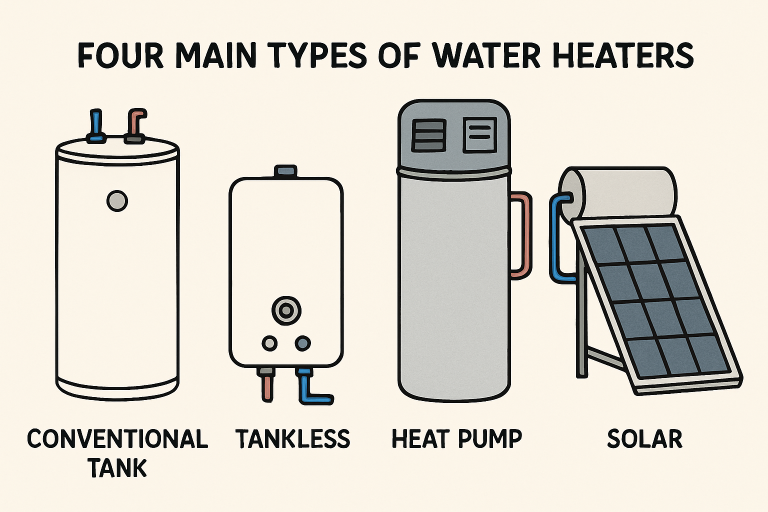
- Conventional Storage Water Heaters: These models maintain a set amount of hot water ready for use. While reliable and widely available, they may struggle to meet high peak demand and can be less energy-efficient due to heat loss from the tank.
- Tankless (On-Demand) Water Heaters: These heat water directly as needed, eliminating standby losses associated with a storage tank. They’re compact and energy-efficient, although installing them in larger homes may require multiple units.
- Heat Pump Water Heaters: Highly efficient, these use electricity to transfer heat from the surrounding air or the ground to the water. Their efficiency can deliver substantial energy savings, though they require ample space and specific installation conditions.
- Solar Water Heaters: Solar systems use panels that capture sunlight to heat water, providing an environmentally friendly option with very low operating costs. They do require a high upfront investment and work best in sunny regions.
- Tankless Coil and Indirect Water Heaters: These draw from a home’s heating system for on-demand hot water, efficiently combining water and space heating needs in homes with significant heating requirements.
Factors to Consider When Choosing a Water Heater
Several critical aspects should inform your water heater selection:
- Household Size and Hot Water Usage: Homes with larger families or those experiencing frequent high-volume usage will benefit from higher-capacity tanks or powerful tankless models to prevent running out of hot water.
- Energy Source Availability: Your access to natural gas, electricity, or solar energy can determine which options are feasible and most economical in your area.
- Space Constraints: In tighter homes or urban dwellings, a compact tankless or wall-mounted model may be preferable to accommodate limited installation space.
Energy Efficiency and Operating Costs
Water heating is typically the second-largest energy expense in a U.S. home. Each type of heater offers different levels of energy efficiency, often expressed as the Uniform Energy Factor (UEF)—the higher the UEF, the more efficient the heater. For example, heat pump water heaters often offer UEFs three to four times that of standard electric units, resulting in substantial operating cost reductions.
To compare efficiency and operating costs between water heaters, evaluating the manufacturer’s EnergyGuide labels and seeking ENERGY STAR-certified products is always a wise step. This can ensure not just energy savings but also potential eligibility for state and federal rebates. Resources such as Consumer Reports’ guide to water heaters provide up-to-date information on efficiency metrics and performance. Additionally, consulting a licensed plumber can help homeowners match the right system to their household size and hot water usage patterns. Taking the time to compare these details ultimately leads to better long-term savings and comfort.
Installation Considerations
Proper installation affects not only the performance of your water heater but also its longevity:
- Electrical Requirements: For advanced options like heat pumps or on-demand electric heaters, ensuring your home meets voltage and amperage needs is critical before installation.
- Ventilation: Many units, such as gas-powered and heat pump water heaters, require adequate space and ventilation to operate safely and efficiently.
- Drainage: Appropriate drainage is necessary for many heater types to handle potential condensation, especially in heat pump and high-efficiency gas units.
Tax Credits and Incentives
Energy-efficient water heaters can qualify homeowners for valuable tax credits and rebates. A federal tax credit of up to $2,000 is available through December 31, 2025, for qualifying heat pump water heaters. Various states, such as California, also offer local rebate programs—like a $900 rebate for efficient water heater upgrades—reducing the total cost of purchase and installation. When considering a new system, be sure to research local and federal incentives, as these are subject to change and can differ by region.
Maintenance and Lifespan
Routine maintenance not only improves efficiency but can also maximize the lifespan of your water heater, sparing you avoidable repair costs:
- Flushing the Tank: Regularly draining the tank helps prevent sediment accumulation and boosts performance.
- Inspecting the Anode Rod: Replacing a worn anode rod helps protect against internal corrosion and extends the tank’s life.
- Checking for Leaks: Early leak detection minimizes the risk of significant water damage and costly repairs.
Well-maintained conventional models usually last 10-15 years, while tankless water heaters can operate efficiently for up to 20 years.
Conclusion
Investing in the right water heater requires striking a balance between immediate needs and long-term efficiency and cost-effectiveness. By carefully evaluating your home’s daily water use, fuel availability, and installation space, you can confidently select a system that ensures reliable hot water and maximizes savings, incentives, and home comfort for years to come.

Lynn Martelli is an editor at Readability. She received her MFA in Creative Writing from Antioch University and has worked as an editor for over 10 years. Lynn has edited a wide variety of books, including fiction, non-fiction, memoirs, and more. In her free time, Lynn enjoys reading, writing, and spending time with her family and friends.