Key Takeaways
- Heavy-duty pickups offer unparalleled capability for towing, payload, and worksite efficiency.
- Advanced safety and infotainment features enhance productivity and driver well-being.
- The durability and fuel efficiency of modern pickups result in substantial long-term cost savings.
- Customizable designs make these trucks adaptable across various industries and job sites.
- Eco-friendly advancements enable businesses to reduce their environmental impact while meeting regulatory standards.
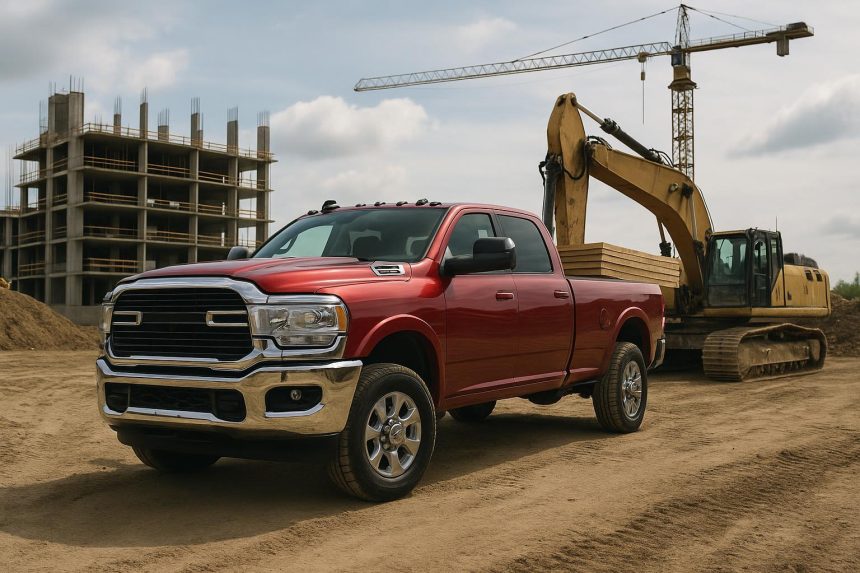
Heavy-duty pickup trucks have become essential assets on contemporary worksites, where efficiency, reliability, and versatility are critical. These vehicles are designed to handle demanding tasks, from hauling large loads of construction materials to towing heavy equipment across challenging terrain. Their robust design and advanced engineering enable teams to maintain productivity even in the most rigorous environments, reducing downtime and streamlining operations. For businesses that rely on dependable transportation, the capabilities of modern pickup trucks can significantly impact day-to-day workflows and overall project timelines.
When considering the acquisition of a heavy-duty truck, many turn to reputable sources, such as a trusted RAM 2500 dealer, to explore options that strike a balance between power, durability, and practical features. These trucks offer a combination of towing capacity, payload management, and stability that is particularly valuable for industries like construction, landscaping, and agriculture. By equipping worksites with vehicles that can perform under pressure, teams can achieve greater operational efficiency and safety.
Enhanced Towing and Payload Capacity
The ability to haul large equipment and materials is often a necessity at construction sites, agricultural fields, and logistics hubs. Heavy-duty pickup trucks are specifically engineered for these demanding situations, offering impressive towing and payload capabilities. These vehicles are built to move more, safely and efficiently, whether it’s transporting concrete mixers, tool trailers, or heavy supplies. Such strength not only boosts productivity but also helps reduce the number of trips required for transportation, ultimately saving time and operational costs.
Towing and payload performance have significantly advanced with improvements in frame construction, turbocharged engines, and upgraded suspension systems. Many of today’s heavy-duty trucks can manage towing capacities of over 20,000 pounds and payloads exceeding 4,000 pounds, giving worksites the flexibility needed for both large and small-scale projects. For many industries, investing in this class of vehicles remains a practical long-term strategy for enhancing reliability, efficiency, and overall worksite performance.
Advanced Safety and Technology Features
Safety is essential on any worksite, and modern heavy-duty pickups incorporate advanced safety features, such as collision warning, lane-keeping assist, blind-spot monitoring, and trailer sway control, to enhance safety in challenging conditions. Backup cameras and 360-degree views make parking, reversing, and trailer hooking easier, reducing the likelihood of accidents. Infotainment systems and digital dashboards enable hands-free operation, navigation, and diagnostics, enhancing safety and productivity. These improvements help reduce incidents, lower insurance costs, and keep projects progressing smoothly, significantly improving fleet safety and efficiency.
For those exploring available models or comparing safety technologies, visiting a CDJR near me can help workers and fleet managers better understand which vehicles offer the specific features they need.
Economic Benefits and Durability
The long-term value of heavy-duty pickups extends well beyond the initial purchase price. Built with reinforced frames, corrosion-resistant materials, and multi-layered protective coatings, these trucks are designed to withstand the harshest environments. Their durability ensures a longer lifespan and reduces the frequency of costly repairs or vehicle replacements.
Fuel efficiency has become a key concern for businesses seeking to enhance their operating margins. Advances in powertrain engineering, such as automated manual transmissions and selective catalytic reduction (SCR) systems, have contributed to significant gains in fuel efficiency without sacrificing power. Increased efficiency standards for commercial vehicles can save truck operators significant amounts on fuel and contribute to a more sustainable operation. These factors lead to a more substantial return on investment and lower total cost of ownership over the vehicle’s lifetime.
Versatility in Applications
Heavy-duty pickup trucks are highly valued across many industries for their versatility. They can be configured as flatbeds, dump trucks, service bodies, or utility vehicles, capable of performing a variety of tasks—from transporting livestock on farms to maintaining power lines in remote locations. Their adaptable chassis can also be fitted with cranes, toolboxes, refrigerated units, or snowplows, addressing the different requirements of fields such as construction, landscaping, emergency services, and energy.
The wide variety of trim levels, cab sizes, and power configurations available in today’s marketplace ensures that businesses can match truck specifications directly to their specific workflow. This sort of flexibility streamlines operations, enabling contractors and fleet managers to deliver greater value to their clients.
Environmental Considerations
As sustainability initiatives become increasingly important, the heavy-duty segment is evolving with greener technologies. Manufacturers are introducing hybrid engines, clean diesel options, enhanced aerodynamics, and technologies like stop-start systems to help reduce emissions. Efforts to comply with state and federal environmental standards also drive the adoption of alternative fuels and battery-electric models, which are gaining traction in both government and private sectors.
These changes not only meet regulatory requirements but also appeal to eco-conscious business owners seeking to reduce their carbon footprint. The shift toward cleaner technologies is expected to accelerate as stricter emissions guidelines are adopted nationwide.
Conclusion
Heavy-duty pickup trucks remain crucial for delivering successful projects across various industries. Their combination of exceptional power, advanced safety, broad versatility, and eco-friendly innovation showcases why they remain a top investment for modern worksites. As design and technology continue to progress, these vehicles will become increasingly integral to how work is done—reliably, efficiently, and sustainably.

Lynn Martelli is an editor at Readability. She received her MFA in Creative Writing from Antioch University and has worked as an editor for over 10 years. Lynn has edited a wide variety of books, including fiction, non-fiction, memoirs, and more. In her free time, Lynn enjoys reading, writing, and spending time with her family and friends.