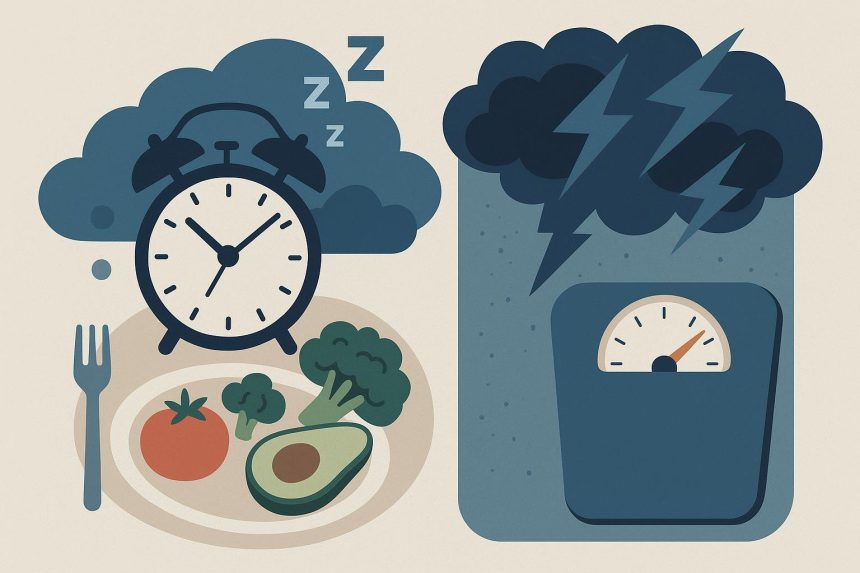
You’re eating the right foods and moving more, yet the number on the scale seems stuck. If this sounds familiar, the saboteurs of your progress could be hiding in plain sight: your sleep quality and your stress levels.
While diet and exercise dominate the weight loss conversation, experts agree sustainable results require a whole-body approach. Leading weight loss experts emphasise that neglecting sleep and stress is like trying to drive with the handbrake on – you’re working hard but not getting far. Science shows that these two factors are powerful metabolic regulators. The good news? Understanding the connection and making a few key tweaks can help release that brake for good.
The Science of Sleep: It’s Not Just About Being Rested
When sleep suffers, the body doesn’t just get tired – it enters a biological state that actively hinders fat loss.
- The Hunger Hormone Hijack: Sleep deprivation directly disrupts appetite control. Research shows it causes a drop in leptin (the hormone that signals fullness) and a surge in ghrelin (the hormone that triggers hunger). The result is increased hunger, less satisfaction after meals, and stronger cravings for high-sugar, high-fat foods. That afternoon craving isn’t just a willpower fail; it’s often a hormonal plea from a sleep-starved brain.
- The Insulin Resistance Effect: Poor sleep can make the body’s cells less sensitive to insulin, the hormone that manages blood sugar. When cells become “resistant,” more sugar remains in the bloodstream, prompting the body to store more of it as fat. This also leads to energy slumps, creating a cycle where you have less vitality for healthy movement and choices.
The Stress-Weight Connection: When the Body Thinks It’s in Crisis
Chronic stress triggers a survival response that is fundamentally at odds with weight loss. The key player is cortisol, the primary stress hormone.
While short cortisol spikes are normal, constant stress from work, life admin, or modern pressures keeps levels elevated. This signals the body to stockpile fuel for the perceived “crisis,” preferentially storing calories as visceral fat around the abdomen. Elevated cortisol also increases appetite and can drive cravings for energy-dense “comfort foods.” In essence, a chronically stressed body is biologically primed to gain and retain weight.
An Action Plan to Fix Sleep and Manage Stress
Addressing these factors doesn’t require a life overhaul. Small, consistent changes can reset the underlying biology. Here is a practical, research-backed toolkit:
To Master Your Sleep:
- Institute a Digital Sunset: Power down phones, tablets, and laptops at least 60 minutes before bed. The blue light they emit suppresses melatonin, the sleep hormone. Opt for reading a book or listening to calm music instead.
- Become a Schedule Stickler: Going to bed and waking up at consistent times – even on weekends – trains the body’s internal clock (circadian rhythm), leading to deeper, more restorative sleep.
- Optimise Your Environment: The bedroom should be cool, dark, and quiet. Consider blackout curtains, a white noise machine, and a slightly cooler thermostat setting at night.
To Tame Your Stress:
- Use Your Breath: When feeling overwhelmed, the 4-7-8 breathing technique can help. Inhale quietly through the nose for 4 seconds, hold the breath for 7 seconds, and exhale forcefully through the mouth for 8 seconds. A few rounds can lower the heart rate and calm the stress response.
- Move to De-stress: Combatting stress doesn’t require an intense workout. A brisk 10-minute walk, gentle stretching, or gardening can clear the mind and utilise stress hormones healthily.
- Contain the Worry: For racing nighttime thoughts, try “scheduling” worry. Dedicate 15 minutes in the early evening to write down everything on your mind. When time is up, close the notebook, mentally signalling that it’s time to rest.
The Holistic Takeaway: Building a Sustainable Foundation
Focusing solely on food and exercise while ignoring sleep and stress is like building a house on an unstable foundation. This holistic view is what distinguishes quick fixes from sustainable, effective weight loss programs designed for long-term success.
Prioritising sleep and managing stress aren’t just acts of self-care – they create the optimal internal environment for the body to let go of excess weight. The benefits cascade: more energy, fewer cravings, and a clearer mind to support health goals.
For those seeking a structured approach, exploring methods that integrate nutrition, movement, sleep, and stress management – core principles championed by top weight loss experts – can be the key to unlocking results that last.

Lynn Martelli is an editor at Readability. She received her MFA in Creative Writing from Antioch University and has worked as an editor for over 10 years. Lynn has edited a wide variety of books, including fiction, non-fiction, memoirs, and more. In her free time, Lynn enjoys reading, writing, and spending time with her family and friends.