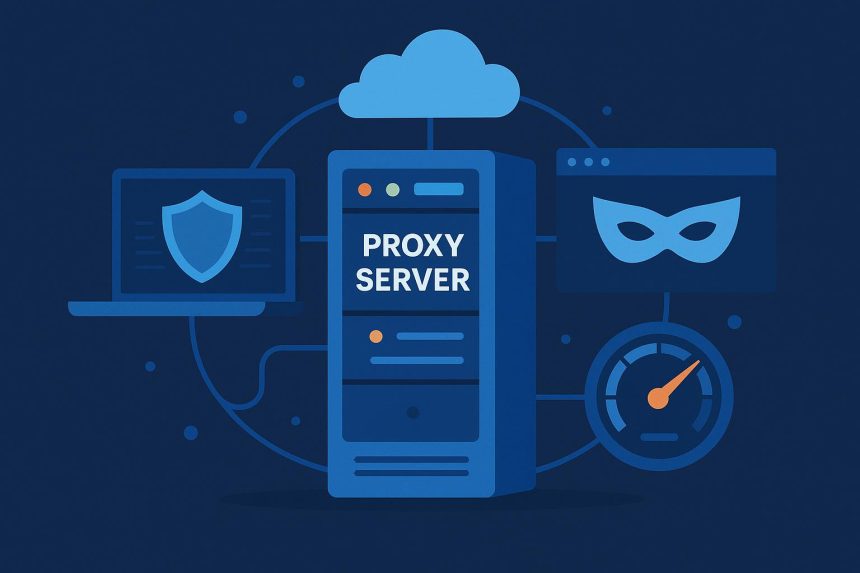
In 2025, over 5.3 billion people worldwide use the internet daily, yet millions of users face content restrictions, bandwidth bottlenecks, and privacy risks. Platforms like PROXY-MAN provide proxy solutions that act as intermediaries between users and websites, allowing individuals and corporations to bypass blocks, manage multiple connections, and maintain anonymity—all while optimizing network performance.
What is a Proxy Server and How Does It Work?
A proxy server is essentially a middleman between a user’s computer and the internet. Every device connected to the web has a unique IP address, which contains information about its location, ISP, and sometimes even the device itself. When a proxy is used, the user’s IP is replaced with the proxy’s IP, masking their real identity and allowing access to content that may otherwise be restricted.
Using a proxy requires no special software; most operating systems and web browsers include built-in support. Users only need the proxy’s IP address, port, and authentication credentials if required. Once configured, all requests from the browser are routed through the proxy server in three steps:
- The user’s computer sends a request to the proxy server.
- The proxy server forwards the request to the target website.
- The website’s response is sent back to the proxy server, which then delivers it to the user’s computer.
This setup ensures both anonymity and efficient network management.
Why Proxy Servers Are Widely Used
While hiding an IP address is the most common reason for using a proxy, there are several other advantages:
- Multi-device management: Multiple devices can share a single IP, hiding individual connections.
- Access to restricted content: Employees or students can bypass network restrictions set by organizations.
- Traffic optimization: Proxy servers can cache frequently accessed data, reducing bandwidth usage.
- Load management: Cached content decreases server load, enabling faster access.
- Location masking: Sites cannot determine the user’s actual location.
- Content unblocking: Users can access blocked social media and entertainment platforms.
- Security: Proxies act as a buffer against certain cyberattacks.
- Automation: Tasks like multi-account management, mass posting, or scraping are simplified.
Proxies are particularly popular in corporate networks, where centralized control, traffic monitoring, and enhanced security are essential.
Choosing the Right Proxy
Users can either opt for free proxies available online or subscribe to premium services. Free proxies often come with limitations such as slower speeds, unstable connections, and limited availability. Paid proxies provide:
- Consistent uptime and performance.
- Choice of server location according to user needs.
- High-speed connections with optimized bandwidth.
- Advanced features such as IPv4/IPv6 support, HTTP/HTTPS/SOCKS5 protocols, and dedicated IPs.
Premium platforms, including PROXY-MAN, provide users with elite, anonymous proxies. These proxies are assigned exclusively to the user, ensuring top-tier privacy and performance. Many providers also offer referral programs, enabling users to earn commissions from new subscribers.
Proxy Servers vs. VPNs
Although both proxies and VPNs provide anonymity and access to blocked content, there are key differences:
- IP usage: Proxies often assign dedicated IPs per user, while VPNs share IPs among many users.
- Performance: VPNs can slow down connections due to encryption overhead, whereas proxies typically maintain higher speeds.
- Reliability: VPN services may occasionally require restarts due to technical issues.
- Cost: Paid VPN subscriptions are generally more expensive than proxy solutions.
- Multi-account management: Shared VPN IPs can trigger detection and blocking, while proxies allow safer multi-account operations.
For users seeking speed, flexibility, and reliable anonymity, proxies remain the superior choice.
Conclusion
Proxy servers continue to be a versatile and cost-effective solution for individuals and enterprises alike. They provide anonymity, access to restricted content, network optimization, and enhanced security, often outperforming VPNs in speed, stability, and usability. Platforms like PROXY-MAN exemplify the modern proxy service, offering dedicated IPs, multiple protocols, and global server locations, making them an essential tool for navigating the increasingly complex digital landscape.

Lynn Martelli is an editor at Readability. She received her MFA in Creative Writing from Antioch University and has worked as an editor for over 10 years. Lynn has edited a wide variety of books, including fiction, non-fiction, memoirs, and more. In her free time, Lynn enjoys reading, writing, and spending time with her family and friends.