A few years ago, global communication still came with awkward pauses, misunderstood emails, and the familiar phrase: ‘Sorry, I didn’t quite mean it that way.’
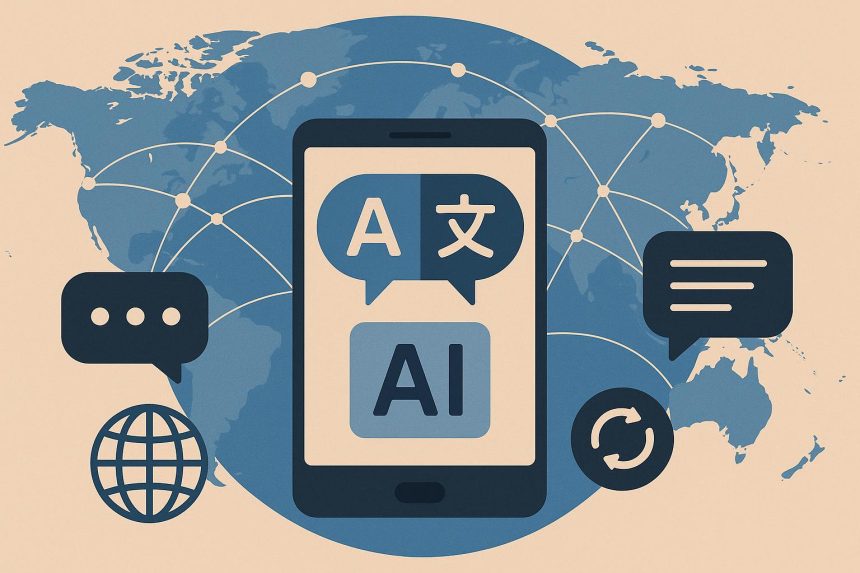
Language differences slowed conversations, diluted ideas, and sometimes even cost opportunities. Today, that experience is changing – and it’s changing fast – thanks to the rise of the AI translator.
We’re no longer just translating words. We’re translating intent, emotion, and meaning. And that shift is quietly transforming how the world connects.
From Literal Words to Meaningful Communication
Traditional translation tools did their best, but anyone who relied on them knows their limits. Sentences sounded stiff. Humor disappeared. Cultural nuance was lost somewhere between ‘copy’ and ‘paste.’
AI translation represents a turning point.
Modern AI translators operate advanced machine learning and neural networks. Trained on massive multilingual datasets, these engines learn language patterns the way people do. It means recognizing context, intent, and usage rather than simply matching words. The result? Translation that feels more natural, accurate, and relevant to real-world conversations.
Breaking Down Language Barriers in Real Time
Seamless multilingual communication is one of the greatest benefits brought by an AI translator. Live captions in video calls, instant chat translations, and voice-to-voice interpretation now happen almost effortlessly.
For global teams, this is more than a convenience – it’s a relief. Meetings flow faster. Collaboration feels more equal. People speak with confidence instead of hesitation.
I’ve seen teams that once leaned on follow-up emails and clarifications suddenly move faster simply because everyone felt understood in the moment. AI translation eliminates the mental burden of ‘interpreting while thinking,’ allowing people to focus on ideas instead of words.
Redefining How Businesses Go Global
For businesses, communication is trust – and trust doesn’t translate well when language senses unnatural. An AI translator helps brands speak clearly, consistently, and respectfully across oceans.
Websites, product descriptions, customer support chats, legal documents, and marketing campaigns can now enjoy localization at scale. But the real value isn’t speed – it’s tone. AI translation tools are increasingly aware of whether a message should sound friendly, formal, empathetic, or authoritative.
That human touch matters. Customers don’t just want to understand a brand. They want to feel understood by it.
Making Travel More Human
Any traveler knows well the frustration of wanting to express but lacking the words. An AI translator changes that experience completely.
Suddenly, ordering food becomes a conversation. Asking for directions turns into a story. Small interactions – often the most meaningful ones – grow possible.
Rather than using rehearsed phrases or pointing at menus, travelers can engage naturally with locals. AI translation doesn’t replace cultural curiosity, but it removes fear – the fear of getting it wrong, of being misunderstood, of staying silent.
And that’s when travel transforms into something more than movement. It delivers a connection.
Opening Doors to Education
Education thrives on access, and language has long been a gatekeeper. AI translation is dismantling that barrier now – calmly and confidently.
Students explore research papers, lectures, and learning platforms in their native language. Educators expand global audiences with no need to rewrite the content. Researchers collaborate across borders without losing essential nuance in translation.
The outcome is a freer exchange of ideas – one where learning spreads faster, travels further, and includes more voices.
A Powerful Ally in Healthcare and Humanitarian Work
In healthcare and emergency settings, words carry significant weight. Misunderstandings can trigger serious consequences. AI translators act as critical support tools – bridging language gaps when human interpreters aren’t immediately available.
Patients can describe symptoms in their own words. Medical staff can explain procedures more clearly. Aid workers can coordinate faster in crisis situations.
AI translation will never replace human empathy. Yet it often provides the first vital layer of understanding, so people can feel seen, heard, and respected when it matters most.
Context Is the Real Breakthrough
What truly sets modern AI translation apart is its context-aware ability. Language is never only words. It manifests culture, social norms, and emotion.
Today’s AI translators can recognize formality, detect sentiment, and adjust phrasing accordingly. A professional email doesn’t sound like a casual message. A support response doesn’t feel cold or robotic.
This evolving emotional intelligence makes AI translation not just a smart tool, but a skilled communication partner – one that understands not just what we say, but how we want to be perceived.
Progress With Responsibility
AI translation has come a long way, but users can still face some challenges. Dialects vary. Technical language evolves. Cultural nuance doesn’t always fit smoothly into an algorithm. Add concerns around privacy and bias, and responsibility becomes non-negotiable.
That’s why AI translation works best as a powerful collaborator – not a standalone solution. With human guidance and ethical oversight, it sharpens accuracy, builds trust, and promises value that lasts.
Speed Without Compromise
Global conversations don’t wait – and neither can translation. AI translation produces instant results in real time without cutting corners. From instant customer support responses to live multilingual meetings, messages move as fast as decisions need to be made.
The true win doesn’t depend only on speed. It lies in consistency. Tone stays aligned. Terminology stays accurate. Messages remain clear, no matter the language.
From Language Barrier to Business Edge
Language no longer slows growth – it fuels it. With AI translation, organizations enter new markets faster, speak to wider audiences, and adapt messaging with precision.
By removing friction, AI translation turns communication into a competitive advantage. Global thinking. Local clarity. Stronger connections.
A More Connected Future
The true impact of an AI translator is not measured in processing speed or technical capability – it’s measured in human connection.
When language barriers fall, ideas travel freely. Collaboration becomes more natural. Opportunities expand beyond borders. Communication grows more inclusive, authentic, and global.
AI translation doesn’t flatten differences. It bridges them, creating space for understanding. And in a world driven by connection, that ability may be its most transformative contribution.

Lynn Martelli is an editor at Readability. She received her MFA in Creative Writing from Antioch University and has worked as an editor for over 10 years. Lynn has edited a wide variety of books, including fiction, non-fiction, memoirs, and more. In her free time, Lynn enjoys reading, writing, and spending time with her family and friends.