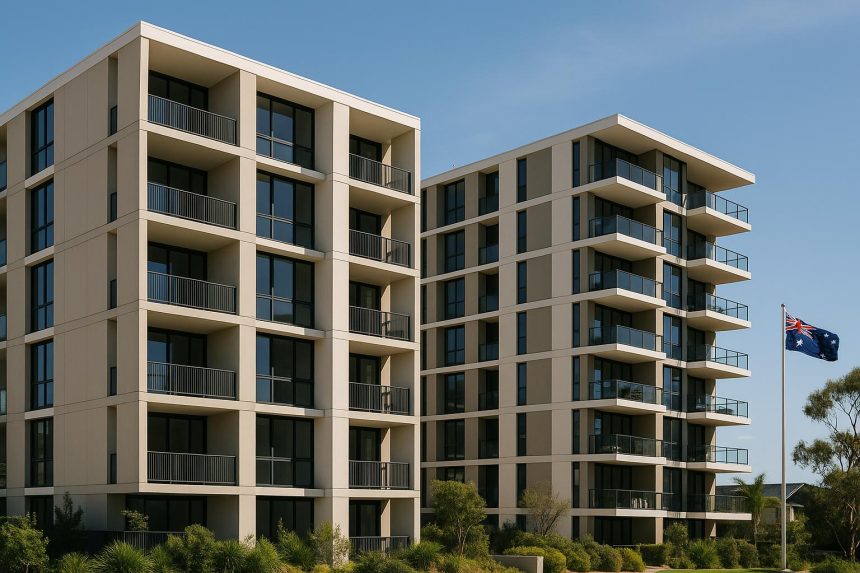
Australia’s housing landscape is changing, and one of the most talked-about shifts in recent years is the rise of built-to-rent (BTR) developments. As affordability pressures increase and long-term renting becomes more common, BTR offers a new approach to delivering rental housing at scale—designed specifically for renters, not investors. But how exactly do built-to-rent developments work in Australia, and why are governments, developers and tenants paying such close attention?
What Actually is Built-to-Rent?
Built-to-rent refers to residential developments that are purpose-built for long-term rental, rather than individual sale. Unlike traditional apartment buildings—where units are sold to multiple private owners—BTR projects are usually owned by a single institutional investor, such as a superannuation fund or property group.
The entire building is managed as one asset, allowing for consistent standards, centralised management, and a stronger focus on tenant experience.
Early discussions around understanding the potential impact of built-to-rent often highlight how this model differs fundamentally from Australia’s long-standing “build-to-sell” approach, particularly in terms of security, scale and professional management.
How Built-to-Rent Developments are Structured
Most BTR projects follow a similar structure:
- A developer designs and constructs the building specifically for renters
- An institutional investor retains ownership of the entire complex
- A professional property manager operates the building on behalf of the owner
- Apartments are leased directly to tenants, often with longer and more flexible lease options
Because the owner’s returns depend on long-term occupancy rather than short-term sales, the emphasis shifts to retention, amenity quality, and ongoing service.
Why Built-to-Rent is Gaining Momentum in Australia
Built-to-rent has been established in markets like the UK and the US for decades, but Australia is only now seeing meaningful uptake. Several factors are driving this growth:
- Changing Rental Demographics: More Australians are renting for longer—by choice or necessity. Professionals, downsizers and families increasingly want rental homes that feel permanent, well-maintained and community-oriented.
- Institutional Investment Appetite: Superannuation funds and global investors are attracted to BTR’s stable, long-term income streams, especially in high-growth urban corridors.
- Government Support: State and federal governments have begun adjusting land tax, planning frameworks and incentives to encourage BTR supply, particularly in areas facing rental shortages.
Key Features of Built-to-Rent Buildings
Built-to-rent developments are typically designed with lifestyle and convenience in mind. Common features include:
- On-site management and concierge services
- Purpose-built communal areas such as co-working spaces, gyms and rooftop terraces
- Consistent apartment finishes and layouts
- Pet-friendly policies
- Professional maintenance and faster response times
These features are not add-ons—they’re central to the BTR value proposition.
How Leasing Works in Built-to-Rent Developments
Leasing in a BTR building often feels different from renting through a private landlord.
Tenants usually deal directly with a professional management team rather than an individual owner. Lease terms may be more flexible, with options for longer stays, simplified renewals, and fewer unexpected changes—such as the property being sold. Because the building isn’t being prepared for resale, there is also less disruption from inspections or owner-driven upgrades.
Built-to-Rent vs Traditional Rental Housing
While both models provide rental accommodation, there are key differences:
- Ownership: BTR has a single owner; traditional rentals have multiple individual landlords
- Stability: BTR often offers longer-term security
- Management: BTR is professionally managed end-to-end
- Design: BTR buildings are designed for renters from day one
For tenants, this can translate into greater certainty and a more consistent living experience.
Does Built-to-Rent Help Housing Supply?
One of the biggest questions surrounding BTR is whether it genuinely helps address housing shortages. While built-to-rent does add new rental stock—often at scale—it is not a silver bullet. BTR developments tend to be concentrated in inner-city and growth-area locations, and they often target the mid-market rather than deeply affordable housing. However, by increasing overall rental supply and offering alternatives to traditional rentals, BTR can help ease pressure across the broader market.
What does the future of built-to-rent in Australia look like?
Built-to-rent is still in its early stages in Australia, but momentum is building. As planning frameworks mature and more projects reach completion, BTR is likely to become a permanent part of the housing mix—particularly in major cities and high-growth regions. For renters, it offers a more stable, service-oriented alternative. For investors and governments, it provides a scalable way to deliver professionally managed rental housing.
As the model continues to evolve, understanding how built-to-rent developments work will be increasingly important for anyone involved in Australia’s property and housing sectors—including developers, planners, investors and tenants alike.

Lynn Martelli is an editor at Readability. She received her MFA in Creative Writing from Antioch University and has worked as an editor for over 10 years. Lynn has edited a wide variety of books, including fiction, non-fiction, memoirs, and more. In her free time, Lynn enjoys reading, writing, and spending time with her family and friends.