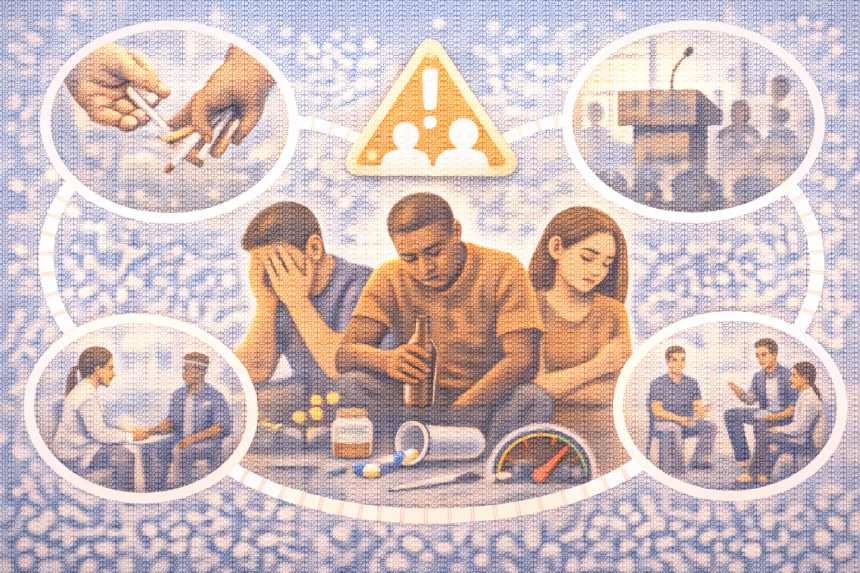
Addiction tends to get framed as something that happens to other people, somewhere else, under circumstances most of us cannot imagine. That framing is comfortable, and it is also wrong. Addiction shows up in households that look stable from the outside, in workplaces that pride themselves on professionalism, and in families who assumed they were immune. It does not announce itself with drama at the start. It often begins quietly, folded into stress, isolation, grief, pain management, or a search for relief that feels reasonable at the time.
What makes this conversation hard is not a lack of information. It is the lingering instinct to reduce complex human behavior into a personal flaw. The reality is that addiction sits at the intersection of biology, environment, mental health, and access to care. When we talk about it honestly, without labels or judgment, the story changes. People are not problems to be fixed. They are people responding to pain, often without enough support or options.
The Modern Triggers We Do Not Like to Admit Matter
Addiction today does not always look like the stereotypes many people still carry. Substances are part of the picture, but so are behaviors that are normalized, encouraged, and monetized. Endless scrolling, constant notifications, and algorithm driven content loops have rewired how attention and reward work, especially for younger adults and teens. The conversation around social media addiction has moved from fringe concern to mainstream reality because the patterns are hard to ignore.
This does not mean technology is the villain or that people lack discipline. It means systems were designed to keep users engaged, and human brains respond predictably to that design. Dopamine does not care whether the reward comes from a substance, a slot machine, or a phone vibrating in your pocket. When stress levels are high and real world connection feels thin, the pull gets stronger. Recognizing this does not excuse harm, but it does explain why willpower alone rarely solves the problem.
Treatment Is Not One Size Fits All, and That Is a Good Thing
One of the most damaging myths around addiction is that there is a single right way to recover. In reality, effective treatment is deeply personal. Some people benefit from structured inpatient care, while others do better with outpatient programs that allow them to stay connected to work or family. Some need medical support to safely manage withdrawal, while others need therapy that addresses trauma, anxiety, or depression that existed long before any substance or behavior entered the picture.
This is why matching care to the individual matters more than chasing a brand name or a rigid philosophy. Whether you’re looking for rehabs in Charleston WV, Richmond VA or anywhere else, finding one that aligns with your goals is key because treatment works best when people feel seen rather than processed. Alignment builds trust, and trust is not optional in recovery. It is the foundation.
Language Shapes Outcomes More Than We Realize
The words used to describe addiction influence whether people seek help or hide. When individuals are reduced to their condition, shame fills the gap where support should be. Warm, precise language does not sugarcoat reality. It simply removes unnecessary barriers. Saying someone is living with addiction keeps the focus on the person, not the problem. It reminds everyone involved that change is possible and that dignity is not conditional.
This shift in language also affects policy and funding. When addiction is treated as a public health issue rather than a moral lapse, resources tend to follow evidence instead of outrage. That means more prevention, earlier intervention, and better long term outcomes. It also means families are more likely to speak openly, which is often the first step toward meaningful help.
Recovery Is a Process, Not a Finish Line
One reason addiction conversations feel frustrating is that people want clean endings. Recovery does not work that way. Progress often comes with detours, pauses, and moments of doubt. That does not mean failure. It means being human. Long term recovery is less about never struggling again and more about building tools to respond differently when struggle shows up.
Support networks matter here, both formal and informal. Therapy, peer groups, medical care, and family support all play roles that change over time. What works in the first six months may not be what someone needs five years later. Flexibility is not a weakness. It is realism.
What Gets Overlooked When We Focus Only on Crisis
Media coverage often centers on overdose statistics or dramatic turning points, which are important but incomplete. Much of addiction exists in the gray space before crisis, when someone is still functioning but quietly unraveling. Catching those moments requires better education, more accessible care, and less fear around asking for help early.
It also requires recognizing that prevention is not just about saying no. It is about addressing loneliness, economic pressure, untreated mental health conditions, and chronic stress. When those factors pile up, coping mechanisms follow. Some are healthy. Others are not. The goal is not perfection. It is resilience with support.
A Better Conversation Leads to Better Outcomes
Addiction will not disappear through silence or shame. It changes when the conversation does. Treating addiction as a shared public health challenge rather than a personal failure opens doors that judgment keeps closed. It encourages earlier help, smarter treatment choices, and long term support that reflects real life. When people are met with understanding instead of labels, recovery stops feeling like a solitary climb and starts looking like what it actually is, a path that works best when no one has to walk it alone.

Lynn Martelli is an editor at Readability. She received her MFA in Creative Writing from Antioch University and has worked as an editor for over 10 years. Lynn has edited a wide variety of books, including fiction, non-fiction, memoirs, and more. In her free time, Lynn enjoys reading, writing, and spending time with her family and friends.