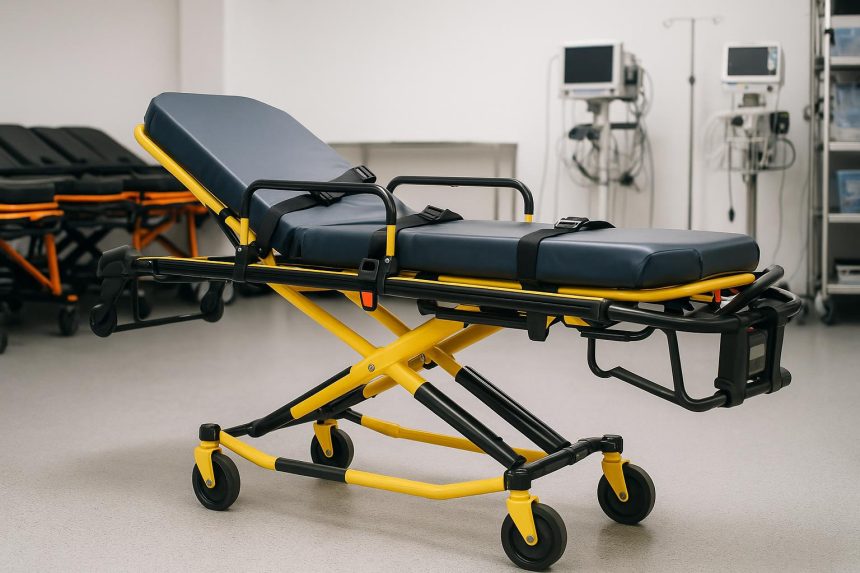
Refurbished medical stretchers and transport gurneys make up a meaningful share of the hospital equipment market worldwide. For purchasing teams at hospitals, ambulance services, surgery centres, and long term care facilities, the category offers a practical route to maintaining fleet capacity without the cost pressure of buying new. The market also has quality variation that rewards understanding how refurbishment actually works before comparing prices.
What Refurbishment Means in the Medical Stretcher Category
Refurbishment in this category is not a single process. At the lower end, it can mean basic cosmetic cleaning, pad replacement, and a safety inspection. At the higher end, it involves full mechanical disassembly, replacement of worn components, repainting of the frame, sterilisation of non removable parts, and load testing against manufacturer specifications. A purchasing team evaluating refurbished stock needs to know which of these categories a supplier is actually offering, because the label itself is unregulated across most jurisdictions.
Why Stryker Models Dominate the Refurbished Market
Several manufacturers supply the majority of new hospital stretchers and EMS gurneys worldwide, and Stryker holds a leading share in both North America and several European markets. The brand’s hydraulic transport stretchers, powered cot systems, and specialty beds have long service lives, which is why Stryker equipment turns up frequently in the refurbished market when a hospital fleet is refreshed or a regional EMS service standardises on a newer generation. The secondary market for Stryker models is deep and international, and refurbishers that specialise in the brand typically hold parts inventories that independent operators cannot match.
Typical Use Cases for Refurbished Stretchers
Refurbished medical stretchers are used in a range of clinical settings:
- Emergency department bays that need replacement capacity quickly.
- Outpatient surgery centres running cost controlled capital budgets.
- Regional hospitals maintaining older fleet models alongside newer purchases.
- International medical facilities where new pricing is not accessible.
- Ambulance services in markets where new gurney lead times exceed six months.
Each of these use cases has different priorities around service life, warranty cover, and maintenance support.
What Good Refurbishment Looks Like
A purchasing team can evaluate a refurbisher against a short checklist that reflects what the better operators in the market actually do:
- The supplier holds or partners with certified biomedical technicians.
- Each unit has a documented inspection, replacement, and test record.
- Hydraulic, electrical, and mechanical components are tested against manufacturer specifications before resale.
- The supplier offers a written warranty, typically between 90 days and 12 months.
- Parts availability for the model is confirmed in advance of purchase.
Operators that meet these standards tend to price above the lowest tier of the market, but the difference is visible in service life and warranty claim rates.
How International Buyers Evaluate the Category
Buyers in the Gulf, Southeast Asia, and Latin America increasingly source refurbished stretchers from North American and European refurbishers rather than importing new equipment. The logistics chain is well established, and the cost gap between certified refurbished and new equipment runs at 40 to 70 percent depending on model and vintage. Buyers in these markets commonly request documentation on the refurbishment process, part replacement records, and compatibility with locally available service technicians before committing to a shipment.
Working with a Specialist Supplier
Specialist suppliers that focus on a narrow range of manufacturers typically offer more consistent quality than generalist resellers. Stretchers R Us is an example of a specialist that maintains a dedicated Stryker collection, which allows the operator to hold the parts inventory and technical knowledge specific to that manufacturer rather than spreading across many brands at a surface level. Specialist suppliers are useful to purchasing teams because they reduce the risk that a refurbished unit arrives with gaps in documentation or poorly matched replacement parts.
Frequently Asked Questions
What is the typical service life of a refurbished medical stretcher? A well refurbished unit from a quality manufacturer can deliver five to ten years of additional service depending on use intensity, provided maintenance is kept current.
Is refurbished equipment safe for acute clinical use? Certified refurbished equipment from reputable suppliers is used widely in acute clinical settings worldwide. The quality of the refurbisher is the determining factor, not the fact that the equipment is not new.
Do refurbished stretchers come with a warranty? Reputable refurbishers offer written warranties ranging from 90 days to 12 months. Buyers should confirm warranty terms in writing before purchase.
How does the cost compare to new equipment? Certified refurbished stretchers typically cost 40 to 70 percent less than new equivalents, depending on model, vintage, and refurbishment depth.
Conclusion
The refurbished medical stretcher market rewards buyers who understand what refurbishment actually involves and who source from suppliers with the parts inventory and technical depth to support specific manufacturer lines. For purchasing teams worldwide, the most consistent results come from specialist operators working with a focused range of brands rather than generalists covering the whole market.

Lynn Martelli is an editor at Readability. She received her MFA in Creative Writing from Antioch University and has worked as an editor for over 10 years. Lynn has edited a wide variety of books, including fiction, non-fiction, memoirs, and more. In her free time, Lynn enjoys reading, writing, and spending time with her family and friends.