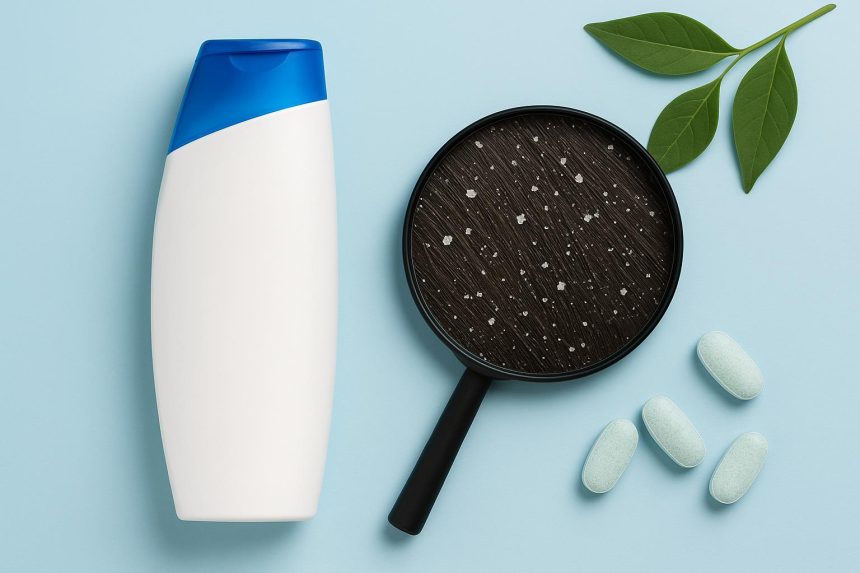
Dandruff is one of the most commonly misdiagnosed conditions in personal care. Walk through the hair aisle in any major market, from the UK to the United States to Australia, and the category looks identical: a long shelf of products promising to clear flakes, most of which address a symptom without asking what is causing it. The result is a predictable pattern of consumers cycling through bottles, seeing partial improvement, and never fully resolving the condition. The good news is that dandruff is a solvable problem once the underlying cause is identified correctly.
Why Dandruff Is Commonly Misdiagnosed
The word dandruff is used colloquially to describe any visible flaking on the scalp, but the term covers several distinct conditions that look similar and respond to very different treatments. Treating the wrong condition with the wrong ingredient is the main reason people report that anti dandruff shampoos do not work for them.
The Four Main Scalp Flaking Conditions
Clinical dermatology generally distinguishes between four underlying causes:
- Seborrheic dermatitis. A chronic inflammatory condition partly driven by the Malassezia yeast. This is the condition that true anti dandruff shampoos are formulated for.
- Simple dry scalp. Dehydrated skin producing fine flakes, frequently worse in winter and in low humidity environments.
- Contact irritation. A reaction to sulfates, fragrance, or styling product residue. Frequently misdiagnosed as dandruff.
- Scalp psoriasis. A distinct autoimmune condition that can present on the scalp with thick, well defined plaques.
The first two account for the majority of cases. The treatments diverge significantly: antifungal ingredients address seborrheic dermatitis but can worsen a genuinely dry scalp by further stripping the skin barrier.
How to Tell Which Condition You Actually Have
A practical self assessment helps narrow down the likely category before product selection:
- Large, oily, yellowish flakes that return within days of washing suggest seborrheic dermatitis.
- Small, white, dry flakes with itch that improves after moisturiser suggest simple dry scalp.
- Flaking confined to specific areas where a product contacts the skin suggests contact irritation.
- Thick, silvery, well defined plaques suggest psoriasis and warrant a dermatologist consultation.
Self assessment is a starting point. Persistent or severe symptoms benefit from professional diagnosis rather than extended product experimentation.
Active Ingredients That Treat Seborrheic Dermatitis
Four active ingredients have clinical evidence for treating seborrheic dermatitis at the scalp:
- Zinc pyrithione. Widely used, gentle, effective across mild to moderate cases.
- Ketoconazole. Strongest over the counter antifungal available in most markets, typically at one percent concentration.
- Selenium sulfide. Effective but can affect hair colour in chemically treated hair.
- Piroctone olamine. Common in European formulations, gentle, well tolerated.
The active ingredient does the therapeutic work. The base formulation around it determines whether the product is tolerable enough to keep using for the weeks required for results.
What a Good Anti Dandruff Shampoo Formula Looks Like
For consumers comparing options, a well designed modern anti dandruff shampoo combines four formulation principles:
- A clinically effective antifungal at a therapeutic concentration rather than a token dose.
- A sulfate free or mild surfactant base that cleans without stripping the scalp lipid barrier.
- Humectants and gentle moisturising agents that support the skin barrier while the active ingredient treats the underlying imbalance.
- A pH in the mildly acidic range, which supports the natural scalp microbiome.
Sulfate heavy drugstore formulations clear flakes quickly but often leave hair feeling dry and straw like, which is why many consumers abandon them within two or three bottles. A formula that balances the active with a tolerable base is more likely to deliver sustained improvement. For consumers evaluating products, the best anti dandruff shampoo options in the market are typically the ones that publish both the active ingredient concentration and the base surfactant system on the label rather than relying on front of bottle marketing claims.
How to Use Medicated Shampoo for Real Results
Application technique matters as much as product choice. Medicated shampoos require contact time with the scalp to work. Rinsing immediately after lathering delivers a fraction of the potential therapeutic effect. The protocol that produces results worldwide is consistent:
- Apply the shampoo directly to the scalp, not along the lengths of the hair.
- Massage for at least 30 seconds to distribute the active ingredient evenly.
- Leave the product on the scalp for three to five minutes before rinsing. Use the contact time to condition the lengths or complete another step in the routine.
- Use three to four times per week for the first two weeks, then taper to two times per week as maintenance.
How Long Before You See Improvement
The scalp skin cycle takes roughly four to six weeks to turn over. A new anti dandruff shampoo should be given a full six weeks before a fair judgement on efficacy. Switching products every two weeks is the single most common reason consumers report that nothing works. The active ingredient needs time to reduce the fungal population, and the skin needs time to normalise its cell turnover.
Frequently Asked Questions
Can I use an anti dandruff shampoo every day? Daily use is generally unnecessary and can over dry the scalp. Two to four times per week is the typical effective range, with non medicated shampoo used on other days if needed.
Will an anti dandruff shampoo damage colour treated hair? Zinc pyrithione, ketoconazole, and piroctone olamine are generally safe for colour treated hair when used in a gentle base. Selenium sulfide can affect colour and is less suited to chemically treated hair.
Can dandruff come back after treatment? Seborrheic dermatitis is a chronic condition that tends to recur when treatment stops. Most consumers move to a maintenance routine, typically one to two washes per week with the medicated product, to keep symptoms controlled.
Is anti dandruff shampoo safe during pregnancy? Most active ingredients are considered low risk in pregnancy, but ketoconazole and selenium sulfide should be discussed with a clinician before use. Zinc pyrithione and piroctone olamine are widely considered safe.
Conclusion
Dandruff is a diagnostic problem in product category disguise. Identifying the correct underlying condition, matching it to the right active ingredient, using the product with enough contact time, and giving it six weeks to work resolves the majority of cases. The market reality worldwide is that the consumers who report dandruff as an unsolvable problem are usually the ones who have been cycling through products without ever working through the four step process above.

Lynn Martelli is an editor at Readability. She received her MFA in Creative Writing from Antioch University and has worked as an editor for over 10 years. Lynn has edited a wide variety of books, including fiction, non-fiction, memoirs, and more. In her free time, Lynn enjoys reading, writing, and spending time with her family and friends.