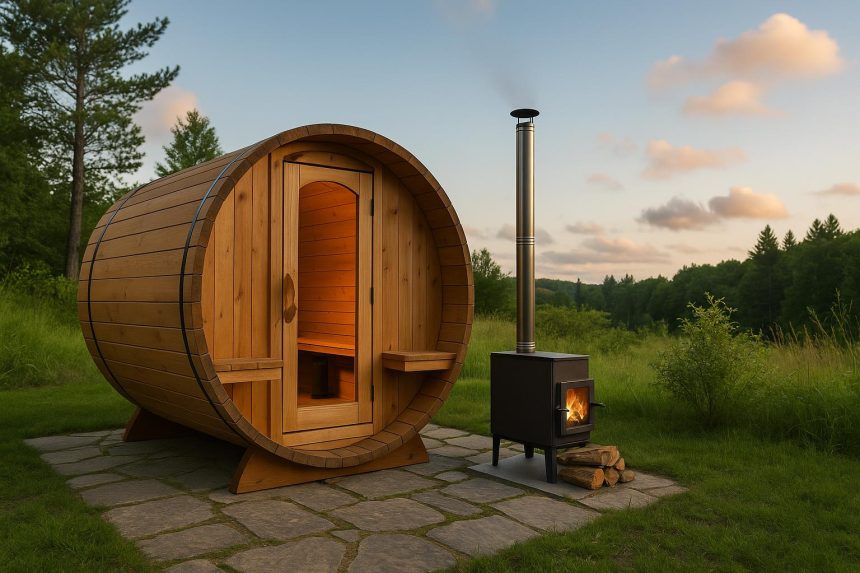
Outdoor saunas have moved from a niche Nordic fixture to a mainstream garden installation across the UK, Ireland, Canada, and parts of central Europe. The category’s growth reflects a wider shift in how households think about recovery, temperature contrast therapy, and the use of garden space year round. For consumers approaching the category for the first time, the useful grounding is how outdoor saunas differ from indoor models, what the main design choices involve, and what installation and running costs actually look like.
Why Outdoor Saunas Have Grown as a Category
Three factors have driven category growth since the early 2020s. Clinical and popular interest in heat exposure has expanded, with regular sauna use linked in long term Finnish cohort studies to improvements in cardiovascular health markers. Remote and hybrid working has increased the value households place on garden features that support recovery and wellbeing. Prefabricated sauna construction has become more accessible, bringing entry pricing into a range that a wider consumer base can consider rather than only custom builds.
The Main Outdoor Sauna Formats
The outdoor sauna category splits into several recognisable formats:
- Barrel sauna. A cylindrical cedar or thermowood cabin, typically 2 to 4 metres long, efficient to heat and quick to install.
- Cube sauna. A rectangular cabin with a flat or pitched roof, more spacious internally and easier to configure with large glass walls.
- Pod sauna. A contemporary egg shaped or rounded cabin, usually designed with strong visual impact for architectural gardens.
- Cabin sauna. A larger freestanding structure with an internal changing area and sometimes a shower, sitting at the top end of the category.
The format choice is shaped by available garden space, visual preference, and whether the sauna is intended for solo use, household use, or entertaining.
Electric vs Wood Burning Heat Sources
Heat source is the other major design decision. Electric heaters are cleaner to run, faster to heat, and do not require a chimney or fuel storage, which is why they dominate the urban and suburban market. Wood burning stoves produce the traditional Finnish sauna experience with a softer heat and the sound of a live fire, and are preferred in rural installations and by experienced sauna users. The choice affects installation cost, insurance, and planning considerations.
Installation and Running Costs
Installation costs vary widely by format and specification. A prefabricated barrel sauna typically runs between 3,000 and 7,000 GBP installed. A mid size cube or pod sits between 6,000 and 15,000 GBP. A larger cabin sauna with internal shower and changing area can reach 25,000 GBP or more. Running costs depend on heat source. An electric sauna drawing 6 to 9 kilowatts costs roughly 3 to 5 GBP per two hour session at current UK electricity pricing. Wood burning running costs depend on fuel pricing but are generally comparable.
Planning Permission and Building Regulations
In the UK, many outdoor saunas fall under permitted development if they meet height, distance, and footprint rules, but this is not universal. Saunas exceeding 2.5 metres at the eaves, those sited within 2 metres of a boundary, and those larger than 15 square metres often require planning consent. Wood burning models may need building control sign off on the flue and hearth installation. Similar rules apply in Ireland and parts of mainland Europe, with national variations worth checking before purchase.
How to Evaluate an Outdoor Sauna Supplier
Consumer research in the category benefits from a short evaluation checklist:
- Does the supplier specialise in outdoor saunas, or is it a general hot tub or garden room retailer?
- What material grade is used for the cabin and benches, and what is the expected service life?
- Is the heater specified from a reputable manufacturer and sized correctly for the cabin volume?
- Does the supplier provide installation, or is the customer responsible for assembly?
- What is the warranty period, and what does it actually cover?
For example, a specialist supplier in the category with a dedicated Outdoor Sauna range typically holds stronger product knowledge than a generalist hot tub retailer offering saunas as a secondary line, because the product specification, heater sizing, and installation detail are the supplier’s core focus rather than a side category.
Frequently Asked Questions
How long does an outdoor sauna take to heat up? An electric sauna typically reaches operating temperature, around 80 to 90 degrees Celsius, in 30 to 45 minutes. A wood burning sauna takes 45 to 75 minutes depending on size and fuel.
Can an outdoor sauna be used year round in the UK or Ireland? Yes. A properly insulated outdoor sauna is designed for year round use and performs well in cold weather. Winter use is in fact the traditional Finnish pattern, with the cold outside air enhancing the recovery effect.
How much space is needed for an outdoor sauna? A two to four person barrel sauna needs around 4 to 6 square metres of footprint plus clearance for the door swing and access to the heater controls. Larger cabins need proportionally more.
How long does an outdoor sauna last? A well built outdoor sauna from a quality supplier has a typical service life of 15 to 25 years, depending on cabin material, climate exposure, and maintenance.
Conclusion
Outdoor saunas have matured into a mainstream garden installation category across northern Europe, the UK, Ireland, and Canada. For consumers approaching the category, the three decisions that matter most are the format, the heat source, and the choice of a specialist supplier with genuine product knowledge. Those three decisions drive both the installation experience and the long term value of the investment.

Lynn Martelli is an editor at Readability. She received her MFA in Creative Writing from Antioch University and has worked as an editor for over 10 years. Lynn has edited a wide variety of books, including fiction, non-fiction, memoirs, and more. In her free time, Lynn enjoys reading, writing, and spending time with her family and friends.