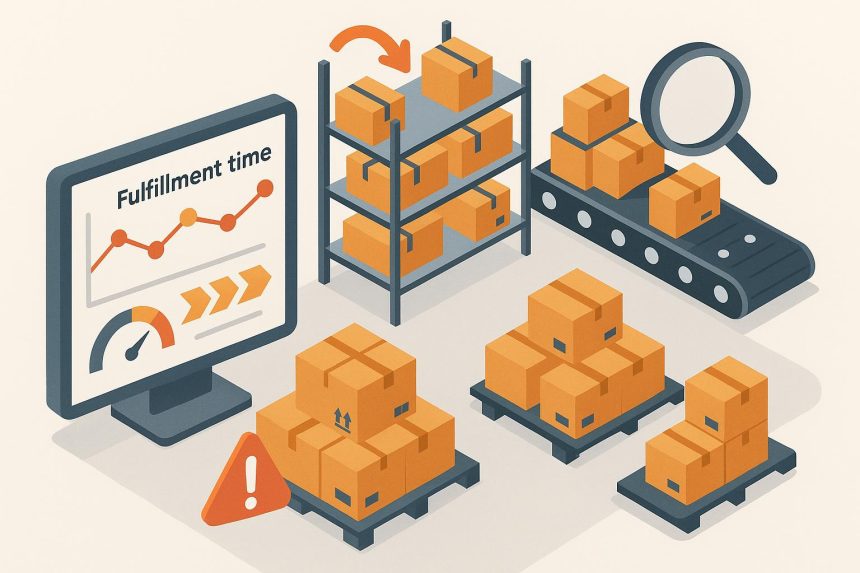
In e-commerce, growth is often measured through revenue, traffic, and conversion rates. However, behind every successful online store is a logistics system that determines whether orders are delivered on time, inventory is managed efficiently, and customers remain satisfied. While logistics can feel like a backend operation, its performance directly impacts profitability and brand reputation.
To manage logistics effectively, online stores must track the right metrics. These key performance indicators (KPIs) provide insight into operational efficiency, customer experience, and scalability. Without them, businesses are essentially guessing how well their supply chain is performing.
Order Fulfillment Time
Order fulfillment time measures how long it takes from the moment a customer places an order to the moment it is shipped. This metric is one of the most important indicators of operational efficiency.
A shorter fulfillment time generally leads to higher customer satisfaction. Customers today expect fast processing, and delays at this stage can negatively affect their perception of the brand—even before shipping begins.
Monitoring fulfillment time helps businesses identify bottlenecks in warehouse operations, such as slow picking processes, inefficient packing systems, or inventory mismanagement.
Shipping Time and Delivery Performance
While fulfillment time focuses on internal operations, shipping time measures how long it takes for a package to reach the customer after leaving the warehouse. Together, these two metrics define the overall delivery experience.
Consistently fast and reliable delivery improves customer trust and increases the likelihood of repeat purchases. On the other hand, delays in shipping can lead to complaints, refund requests, and negative reviews.
Tracking delivery performance across different carriers and regions helps businesses optimize shipping strategies and select the most reliable logistics partners.
Order Accuracy Rate
Order accuracy measures how often customers receive the correct products in the correct quantities and condition. Even small mistakes—such as sending the wrong item or size—can significantly impact customer satisfaction.
High order accuracy indicates a well-organized fulfillment process, while frequent errors suggest issues in inventory management or warehouse operations.
Improving this metric reduces return rates, lowers operational costs, and strengthens customer trust.
Inventory Accuracy
Inventory accuracy refers to how closely recorded stock levels match actual physical inventory. Inaccurate inventory data can lead to overselling, stockouts, and delayed order fulfillment.
For example, if a product is shown as available online but is actually out of stock, it results in canceled orders and frustrated customers.
Maintaining high inventory accuracy requires real-time tracking systems, regular audits, and synchronized updates across all sales channels.
Stockout Rate
Stockout rate measures how often products are unavailable when customers try to purchase them. This metric directly affects revenue and customer satisfaction.
Frequent stockouts indicate poor demand forecasting or inefficient inventory replenishment. When customers repeatedly encounter unavailable products, they are more likely to switch to competitors.
Reducing stockouts requires better forecasting, improved supplier coordination, and smarter inventory allocation strategies.
Order Return Rate
Returns are a normal part of e-commerce, but a high return rate can signal deeper issues. This metric tracks the percentage of orders that customers send back.
Returns may occur due to product quality issues, incorrect orders, or unmet customer expectations. Analyzing return data helps businesses identify recurring problems and improve product descriptions, sizing accuracy, or fulfillment processes.
Lowering return rates reduces costs and improves overall logistics efficiency.
Cost per Order
Cost per order measures the total logistics expense associated with fulfilling a single order. This includes warehousing, packaging, shipping, and labor costs.
Understanding this metric is essential for maintaining profitability. Even if sales are increasing, high logistics costs can reduce margins significantly.
Businesses that optimize warehouse operations, negotiate better shipping rates, or streamline packaging processes can reduce cost per order and improve overall financial performance.
On-Time Delivery Rate
On-time delivery rate tracks how often orders arrive within the promised delivery window. This is one of the most important customer-facing logistics metrics.
Customers expect reliable delivery estimates, and failing to meet them can damage trust quickly. A high on-time delivery rate reflects strong coordination between inventory management, fulfillment, and shipping partners.
Improving this metric often requires better carrier selection, improved routing, and more accurate delivery forecasting.
Inventory Turnover Rate
Inventory turnover rate measures how quickly stock is sold and replaced over a given period. A high turnover rate indicates strong demand and efficient inventory management, while a low rate may suggest overstocking or weak product performance.
This metric helps businesses balance stock levels, reduce storage costs, and avoid tying up capital in slow-moving inventory.
Tracking turnover rates also helps identify which products are performing well and which may need pricing adjustments or promotional support.
Customer Satisfaction Related to Delivery
While not a traditional logistics metric, customer satisfaction related to delivery is increasingly important. It measures how customers feel about the entire fulfillment experience—from checkout to delivery.
This can be tracked through surveys, reviews, and post-purchase feedback. Delivery experience is often one of the most influential factors in overall satisfaction.
Fast, accurate, and reliable logistics operations directly improve this metric, leading to stronger customer loyalty and repeat purchases.
Regional Performance Metrics
As online stores scale, logistics performance can vary by region. Tracking regional metrics helps businesses identify where operations are strong and where improvements are needed.
Factors such as delivery time, cost efficiency, and order accuracy may differ across countries or shipping zones. Understanding these differences allows businesses to optimize their logistics network more effectively.
In some cases, working with localized fulfillment networks or leveraging e-commerce fulfillment Europe strategies can significantly improve performance across multiple markets by reducing shipping distances and improving delivery consistency.
Why These Metrics Matter for Growth
Tracking logistics metrics is not just about operational control—it is about enabling growth. Without visibility into performance, businesses cannot scale efficiently or identify issues before they become costly problems.
These metrics help online stores:
- Improve customer satisfaction
- Reduce operational costs
- Increase delivery reliability
- Optimize inventory management
- Scale into new markets confidently
As businesses grow, it often becomes necessary to work with an ecommerce fulfilment partner to maintain efficiency, handle increasing order volumes, and ensure consistent customer experience across regions.
Conclusion
Logistics is one of the most critical components of e-commerce success, yet it is often overlooked compared to marketing and sales. The key metrics outlined above provide a clear framework for understanding and improving logistics performance.
By consistently tracking fulfillment speed, inventory accuracy, delivery performance, and cost efficiency, online stores can build stronger, more scalable operations.
Ultimately, businesses that treat logistics as a strategic function—not just an operational necessity—are better positioned to deliver exceptional customer experiences and achieve sustainable long-term growth.

Lynn Martelli is an editor at Readability. She received her MFA in Creative Writing from Antioch University and has worked as an editor for over 10 years. Lynn has edited a wide variety of books, including fiction, non-fiction, memoirs, and more. In her free time, Lynn enjoys reading, writing, and spending time with her family and friends.