Key Takeaways
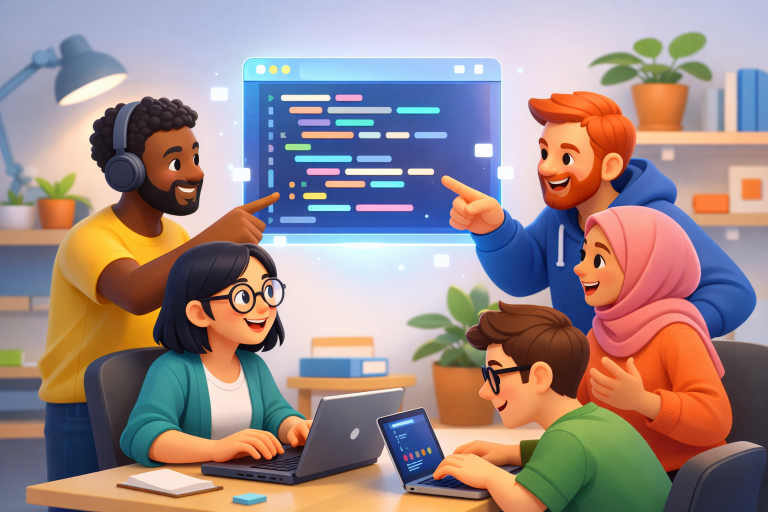
- Collaborative coding enhances problem-solving by bringing diverse perspectives to bear.
- Group projects build strong, supportive communities among developers.
- Shared coding experiences lead to more innovative and creative solutions.
In the rapidly transforming world of software development, the days of the lone coder are giving way to an era in which coding together is seen as a creative movement. Working as a team not only unlocks fresh ideas but also fosters camaraderie among developers. Hackathons, open-source collaborations, and online communities have all played pivotal roles in shaping this environment. Activities like Vibe coding illustrate how group efforts lead to more dynamic and inclusive settings where developers feel connected and motivated.
Bringing people together through collaborative coding is about more than writing lines of code. It fuels innovation by weaving diverse perspectives and skill sets into each solution, turning programming into a shared art form that welcomes innovation. The sense of belonging that grows from these experiences drives both personal fulfillment and professional growth for everyone involved.
The Power of Collective Problem-Solving
Developers who form a team bring varied expertise and backgrounds. This blend becomes a fertile ground for inventive thinking because multiple viewpoints spur broader discussions and bolder experiments. Research published by Harvard Business Review emphasizes that diverse teams consistently outperform homogenous groups when tackling tough challenges. They generate more innovative ideas and spot loopholes others might miss, ultimately producing higher-quality software and more creative technical solutions.
Collaboration often accelerates the problem-solving process. Where one developer may hit a roadblock, another can provide a fresh perspective or a new tool to try. This synergy of skills enables teams to address complex challenges more efficiently than isolated individuals. Furthermore, the shared process of troubleshooting and debugging enables less-experienced members to learn best practices firsthand, thereby strengthening the entire team’s knowledge base.
Building Stronger Communities Through Code
Group coding often acts as a catalyst for nurturing communities that extend beyond technical discussions. Organizations like Codebar provide environments where underrepresented groups come together to learn, grow, and thrive. These gatherings are vital in today’s tech landscape; they help close the skills gap, encourage mentorship, and foster friendships and emotional support among coders from all walks of life.
Community meetups, coding bootcamps, and online forums foster an environment of encouragement and support. Through these interactions, many developers not only gain technical tips but also develop critical soft skills such as communication, emotional intelligence, and teamwork. These skills are increasingly essential in project-driven workplaces, where teams must collaborate on tight deadlines and adapt to changing requirements.
Enhancing Creativity with Pair Programming
Pair programming, where two developers share a single workstation, is a staple of collaborative coding. This method champions real-time feedback and learning as developers switch between the “driver” (who writes the code) and the “navigator” (who reviews each step and suggests improvements). According to a ScienceDirect study, pair programming not only improves code quality but also boosts developer satisfaction and overall productivity. The constant exchange of ideas helps teams solve problems faster and deliver more creative, robust projects.
Besides pair programming, techniques such as mob programming and code review sessions further extend the benefits. In mob programming, the entire team works on the same codebase together. This collaborative format ensures everyone is aligned and brings a wide spectrum of ideas to the table. Similarly, regular group review sessions can serve as knowledge-sharing workshops, help prevent technical debt, and create a culture of openness and improvement.
Leveraging AI in Collaborative Coding
The recent integration of artificial intelligence tools into collaborative development environments is transforming how coders work together. Massive hackathons like Cognizant’s “Vibe Coding” event, which united over 53,000 participants, highlight the power of AI to coordinate global teamwork. From automated code review to AI-driven suggestions, these technologies streamline workflows, providing developers with innovative tools to amplify their creative process in massive collaborative efforts.
AI-powered assistants and collaborative IDEs facilitate coordination, automate repetitive tasks, and quickly surface recommendations or documentation. This not only makes group coding more efficient but also allows teams to focus on creative aspects rather than routine chores. As new AI models continue to emerge, they promise to further close collaboration gaps, make onboarding smoother, and drive even more effective teamwork in the future.
Online Platforms: Bridging Gaps and Building Networks
The rise of online coding communities is transforming how developers connect, share, and collaborate worldwide. Community-driven initiatives such as ASU’s CodeDevils merge virtual and in-person collaboration, allowing both remote and local students to work together, exchange ideas, and forge professional networks. These platforms foster a sense of connection, giving coders access to resources and mentors who might otherwise be out of reach.
In global online environments, developers can contribute to or lead open-source projects regardless of geographic location. These experiences are invaluable for learning about version control, project management, and cross-cultural communication, all crucial skills for success in today’s tech industry. By leveraging digital collaboration spaces, even junior developers can share knowledge, gain visibility, and participate in projects that shape the broader software ecosystem.
Interdisciplinary Collaboration: A Creative Boost
When developers collaborate with professionals from other fields, they can unlock richer, more imaginative results. Combining coding with art, science, or business insights produces solutions that are not only technically sound but remarkably innovative. Studies show that interdisciplinary teams foster environments where creativity is heightened and solutions are more comprehensive, enhancing the overall quality of technological output. As noted by Wired, interdisciplinary teamwork encourages new approaches that drive both creativity and impact.
For example, software projects in fields like healthcare or environmental science often require expertise beyond programming. Collaborative efforts with domain experts can yield user-friendly tools, mission-driven features, and entirely breakthroughs that a purely technical team might overlook. As interdisciplinary innovation becomes the norm, companies are placing greater value than ever on diverse teams with varied backgrounds and thought processes.
Conclusion
Collaborative coding is a powerful movement that turns development into a collective force for innovation, learning, and community-building. By engaging in group efforts, programmers benefit from diverse perspectives, stronger relationships, and greater creativity. Ultimately, this shared spirit of creation can drive the entire tech ecosystem toward a more inclusive and inventive future.

Lynn Martelli is an editor at Readability. She received her MFA in Creative Writing from Antioch University and has worked as an editor for over 10 years. Lynn has edited a wide variety of books, including fiction, non-fiction, memoirs, and more. In her free time, Lynn enjoys reading, writing, and spending time with her family and friends.