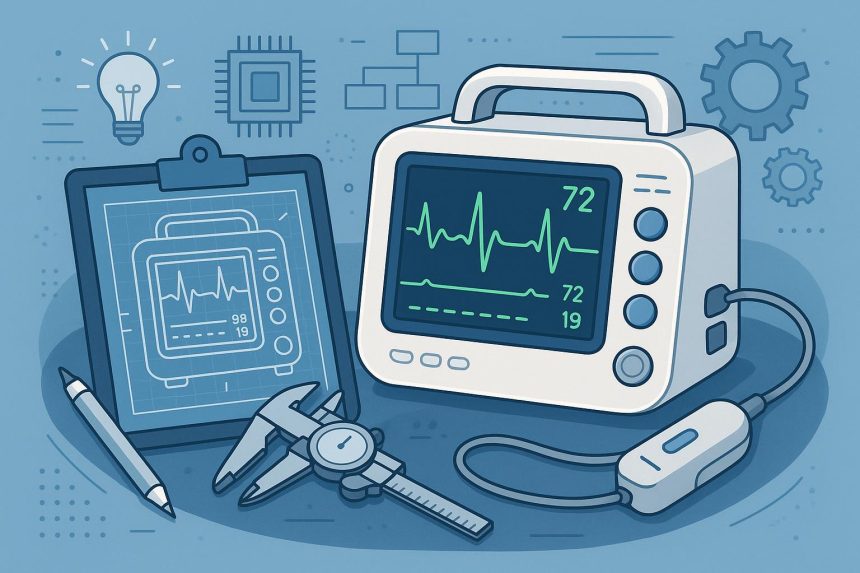
Bringing a medical product from idea to market is rarely straightforward. It involves engineering, clinical insight, regulatory strategy, usability planning, risk management, and manufacturing readiness—all working together. That is what makes medical device design and development both highly specialized and critically important.
From wearable diagnostics to surgical robotics, successful devices are rarely the result of invention alone. They emerge from structured development processes designed to balance innovation, patient safety, compliance, and real-world performance.
As healthcare technology advances, the importance of strong medical device development processes continues to grow.
What Is Medical Device Design and Development?
Medical device design and development refers to the end-to-end process of transforming a concept into a market-ready medical device.
That process typically includes:
- Concept development
- User and clinical needs analysis
- Engineering and prototyping
- Verification and validation
- Regulatory preparation
- Manufacturing transfer
It applies to a broad range of products, including diagnostic tools, implantables, digital health devices, monitoring systems, and therapeutic technologies.
According to U.S. Food and Drug Administration requirements and global quality standards such as International Organization for Standardization ISO 13485, development must follow structured controls to help ensure safety and effectiveness.
Why Medical Device Design and Development Matters
Healthcare technology carries unusually high stakes. Poor design does not just risk inefficiency—it can affect patient outcomes.
Strong medical device development helps support:
- Patient safety
- Clinical effectiveness
- Regulatory compliance
- Manufacturing scalability
- Commercial viability
In many cases, development decisions made early can determine whether a device succeeds or fails years later.
Stage 1: Concept and Needs Definition
Everything starts with identifying a real problem worth solving.
Understanding Unmet Needs
The strongest products often begin not with technology, but with unmet clinical needs.
Questions typically include:
- What problem is the device solving?
- Who will use it?
- What current solutions fall short?
This stage often involves clinicians, engineers, and commercial teams working together.
User-Centered Design
Modern medical device design and development increasingly starts with users.
That includes understanding:
- Physician workflows
- Patient usability
- Care setting constraints
- Human factors risks
Designing around users early often reduces costly redesign later.
Stage 2: Feasibility and Early Design
Once the concept is defined, feasibility work begins.
Engineering Feasibility
Teams assess whether the idea can realistically be built.
This may involve:
- Technical modeling
- Materials selection
- Functional architecture
- Risk analysis
Prototyping
Early prototypes allow teams to test assumptions quickly.
Rapid prototyping helps evaluate:
- Ergonomics
- Functionality
- Clinical usability
- Technical performance
This stage often identifies issues before major investment occurs.
Stage 3: Detailed Design and Development
This is where concepts become real products.
Mechanical, Electrical, and Software Development
Depending on the device, development may include:
- Mechanical engineering
- Electronics integration
- Embedded software
- Connectivity systems
For digital and connected devices, cybersecurity and interoperability may also be critical.
Design Controls
A core part of medical device design and development is operating under design controls.
These typically include:
- Design inputs
- Design outputs
- Risk management files
- Design reviews
- Traceability documentation
These systems help ensure requirements are met and documented.
Stage 4: Verification and Validation
This phase answers two fundamental questions:
- Was the device built correctly?
- Was the right device built?
Verification
Verification confirms the design meets specifications.
Examples include:
- Bench testing
- Electrical safety testing
- Performance testing
- Environmental testing
Validation
Validation focuses on intended use and real-world performance.
This may involve:
- Usability studies
- Clinical evaluations
- Simulated use testing
This stage is often critical for regulatory submission.
Stage 5: Regulatory and Compliance Preparation
Regulation is deeply integrated into development—not something added at the end.
Depending on geography and device classification, requirements may involve:
- European Commission medical device regulations
- FDA submissions
- Risk management under ISO 14971
- Quality system compliance
Regulatory strategy often shapes development timelines and evidence generation.
Stage 6: Manufacturing Transfer
A successful prototype is not automatically manufacturable.
Moving into production requires:
- Process validation
- Supply chain readiness
- Manufacturing documentation
- Quality controls
- Scale-up planning
This stage bridges innovation and commercialization.
Benefits of Strong Medical Device Design and Development
Better Patient Outcomes
Well-designed devices support safer and more effective care.
Lower Development Risk
Structured development helps identify problems earlier, reducing costly failures.
Faster Market Readiness
Good planning often shortens timelines by preventing rework.
Stronger Commercial Performance
Devices designed around users, manufacturability, and compliance often perform better in market adoption.
Real-World Impact
Medical device innovation continues expanding rapidly.
Industry analysts project the global medical device market to exceed hundreds of billions of dollars in coming years, driven by diagnostics, digital health, minimally invasive technologies, and personalized care.
That growth depends heavily on disciplined development processes.
Challenges in Medical Device Design and Development
Regulatory Complexity
Requirements continue evolving globally, increasing development demands.
Cross-Disciplinary Coordination
Projects often require engineers, clinicians, regulatory experts, and manufacturing teams working together.
Balancing Innovation and Risk
Breakthrough technologies must still meet strict safety and quality expectations.
Cost and Timeline Pressures
Development can require significant investment, especially for higher-risk devices.
Expert Insight: Design Decisions Made Early Carry the Most Weight
A widely recognized principle in product development is that early decisions often have outsized downstream consequences.
Material selection, user workflow assumptions, and architecture choices made early can affect:
- Regulatory pathways
- Manufacturing cost
- Product reliability
- Time to market
That is why experienced teams often place enormous emphasis on early-stage rigor.
Trends Shaping Medical Device Design and Development
Human Factors Engineering
Usability has become central, especially as devices move closer to patients and home settings.
Connected and Smart Devices
Software-enabled products and connected ecosystems continue growing.
Rapid Prototyping and Iterative Development
Advanced prototyping tools are accelerating design cycles.
Sustainability and Design for Manufacturing
More companies are considering environmental impact alongside manufacturability.
Outsourced Development Partnerships
Many companies work with specialized partners for engineering, prototyping, and regulatory support.
Choosing the Right Development Approach
Whether developing internally or with external partners, consider:
- Technical expertise needed
- Regulatory complexity
- Manufacturing strategy
- Risk profile of the device
- Long-term commercialization goals
Development strategy should align with both product goals and business objectives.
Practical Takeaways
For organizations navigating medical device design and development:
- Start with unmet clinical need, not technology alone
- Integrate regulatory strategy early
- Prioritize user-centered design
- Invest in robust verification and validation
- Design with manufacturing in mind from the beginning
These principles often separate scalable products from stalled projects.
Conclusion
Medical device design and development is where innovation meets engineering discipline, regulatory rigor, and patient-centered thinking.
From concept through commercialization, every stage matters. Strong development processes do more than bring products to market—they help ensure devices are safe, effective, manufacturable, and positioned to improve care.
As healthcare technology evolves, thoughtful design and disciplined development will remain at the center of meaningful medical innovation.

Lynn Martelli is an editor at Readability. She received her MFA in Creative Writing from Antioch University and has worked as an editor for over 10 years. Lynn has edited a wide variety of books, including fiction, non-fiction, memoirs, and more. In her free time, Lynn enjoys reading, writing, and spending time with her family and friends.