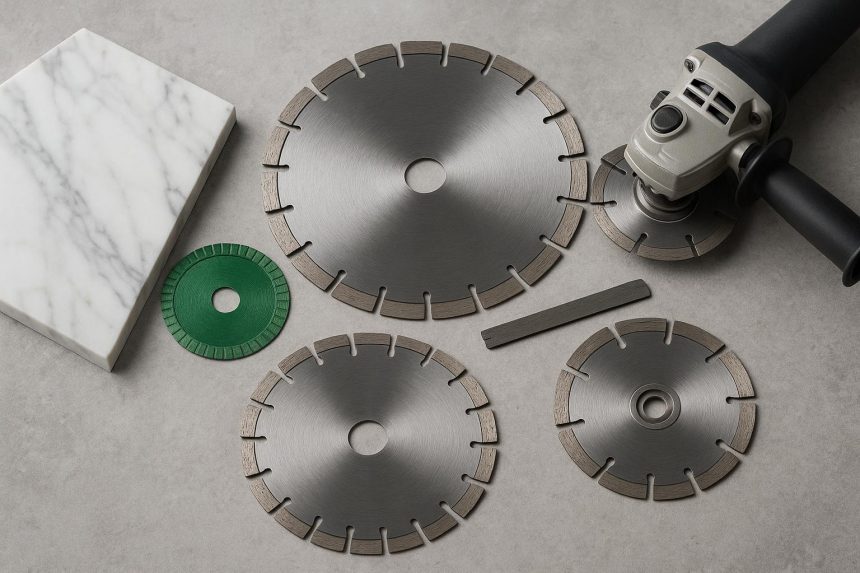
Marble cutting isn’t about speed. It’s about control.
A clean cut depends on the blade. Not just any blade—a blade built for marble. The difference shows immediately. Wrong blade? You get chips, heat marks, and uneven edges. Right blade? Smooth cut, consistent line, minimal rework.
That’s where professional marble cutting blades from Tait Sales fit in. They’re designed for controlled cutting, stable performance, and consistent results across real job conditions.
What Marble Cutting Blades Are Built For
Marble cutting blades are diamond blades.
They use industrial-grade diamond segments bonded to a steel core. These diamonds grind through marble instead of slicing it.
From the range, these blades are built to:
- Deliver smooth, chip-free cuts
- Maintain cutting stability
- Handle continuous use
- They are compatible with standard angle grinders and marble cutting machines.
Why it matters:
Marble is sensitive. It chips easily if the blade is too aggressive or unstable. The blade must cut clean, not just cut fast.
Types of Marble Cutting Blades Available
It offers multiple blade configurations based on cutting needs. The difference comes down to rim design.
Continuous Rim Blades
- Smooth, uninterrupted edge
- Designed for precision cutting
- Produces clean, chip-free finishes
Best used for:
- Final cuts
- Visible edges
- Finishing work
These blades focus on finish over speed.
Turbo Rim Blades
- Patterned or serrated rim
- Faster cutting than continuous rim
- Balanced performance
Best used for:
- General-purpose cutting
- Jobs requiring both speed and finish
These blades give flexibility without sacrificing too much edge quality.
Segmented Blades
- Divided segments with gaps
- Maximum cutting speed
- Better heat dissipation
Best used for:
- Thick marble
- Rough cuts
- High-volume work
These blades prioritize speed, not finish.
Key Features of Marble Cutting Blades
Not all blades are built the same. What matters is how they’re constructed.
Diamond Segment Quality
The blades use high-quality diamond segments designed for:
- Consistent cutting
- Reduced wear
- Stable performance
Higher-quality diamonds:
- Cut faster
- Last longer
- Maintain edge quality
Segment Height and Design
The segment is the working part of the blade.
The blades are built with optimized segment height to:
- Extend blade life
- Maintain cutting efficiency
- Handle continuous usage
Short segments wear faster. Proper segment design keeps performance consistent.
Steel Core Stability
The steel core controls vibration.
A stable core:
- Reduces wobble
- Improves accuracy
- Prevents uneven cuts
The blades are engineered for balanced rotation and reduced vibration during operation.
Compatibility and Sizes
Common sizes available:
- 4 inch (100–110 mm)
- 5 inch (125 mm)
- 6 inch (150mm)
- 8 inch (200mm)
- 10 inch (250mm)
- 14 inch (350mm)
- 16 inch (400mm)
Compatible with:
- Angle grinders
- Marble cutters
- Tile cutting machines
- Bridge saws
Why it matters:
The wrong size or poor fit affects control and cutting precision.
Wet vs Dry Cutting: What to Use
It offers blades suitable for both wet and dry cutting.
Wet Cutting
- Reduces heat buildup
- Improves cut quality
- Extends blade life
Best for:
- Precision work
- Long-duration cutting
Dry Cutting
- Quick setup
- No water required
- Suitable for on-site jobs
But:
- Generates more heat
- Requires controlled usage
Why it matters:
Heat affects both the blade and the marble. Managing it improves results and extends tool life.
How These Blades Actually Cut Marble
The blade doesn’t slice.
It grinds.
Diamond particles on the segment scratch and remove material layer by layer. As the blade wears, new diamonds are exposed, keeping the cutting action consistent.
The blades are designed to maintain this cycle efficiently.
Why it matters:
If the blade stops cutting properly, it’s either worn out or used incorrectly.
How to Choose the Right Blade
Selection depends on the job.
Based on the Finish Requirement
- Clean finish → Continuous rim
- Balanced use → Turbo rim
- Fast cutting → Segmented
Based on Material Thickness
- Thin marble → Fine, controlled blade
- Thick marble → Strong, segmented blade
Based on Usage Type
- Precision work → Wet cutting blade
- Site work → Dry or wet/dry blade
Why it matters:
Using the wrong blade increases rework and reduces efficiency.
Common Mistakes to Avoid
Even professionals make these errors.
Using the Wrong Blade Type
Leads to:
- Edge chipping
- Rough finish
- Material damage
Applying Excess Pressure
Results in:
- Blade wear
- Overheating
- Uneven cuts
Ignoring Cooling Requirements
Dry cutting without control:
- Damages blade
- Reduces life
- Affects finish
Running at Incorrect Speed
Improper RPM:
- Reduces cutting efficiency
- Increases risk
The blades are designed to operate within standard machine RPM ranges for safe and stable performance.
Best Practices for Clean Marble Cutting
Keep it controlled.
- Let the blade do the work
- Maintain steady movement
- Avoid forcing the cut
- Keep alignment straight
The blades are designed for smooth, stable cutting when used correctly.
Why it matters:
Control is what separates clean cuts from damaged edges.
Blade Maintenance and Lifespan
Blades don’t fail suddenly. They degrade over time.
Watch for:
- Slower cutting speed
- Increased heat
- Rough edges
To extend life:
- Use the correct blade
- Avoid excessive pressure
- Use proper cooling
Why it matters:
A worn blade affects both finish quality and job efficiency.
Final Thought: The Blade Controls the Outcome
Marble cutting results are decided before the cut begins.
The blade you choose defines:
- Cut quality
- Speed
- Efficiency
Tait Sales & Consulting LLC provides professional marble cutting blades designed for consistent performance, durability, and clean cutting across different marble applications.
If the goal is precision without compromise, use blades that are built for it.
Explore the full range of marble cutting blades at Tait Sales and choose the right blade for your application.
FAQs
1. Which blade type is best for marble?
Continuous rim blades are best for smooth, chip-free finishes.
2. Can I use the same blade for all stones?
Not ideal. Marble requires blades designed for cleaner, controlled cutting.
3. Is wet cutting necessary?
Wet cutting is strongly recommended for precision work and longer blade life.
4. Why does my blade chip marble edges?
Usually, it is due to the wrong blade type, high pressure, or dry cutting.
5. How long does a marble cutting blade last?
Depends on usage, material, and handling, but proper use significantly extends lifespan.

Lynn Martelli is an editor at Readability. She received her MFA in Creative Writing from Antioch University and has worked as an editor for over 10 years. Lynn has edited a wide variety of books, including fiction, non-fiction, memoirs, and more. In her free time, Lynn enjoys reading, writing, and spending time with her family and friends.