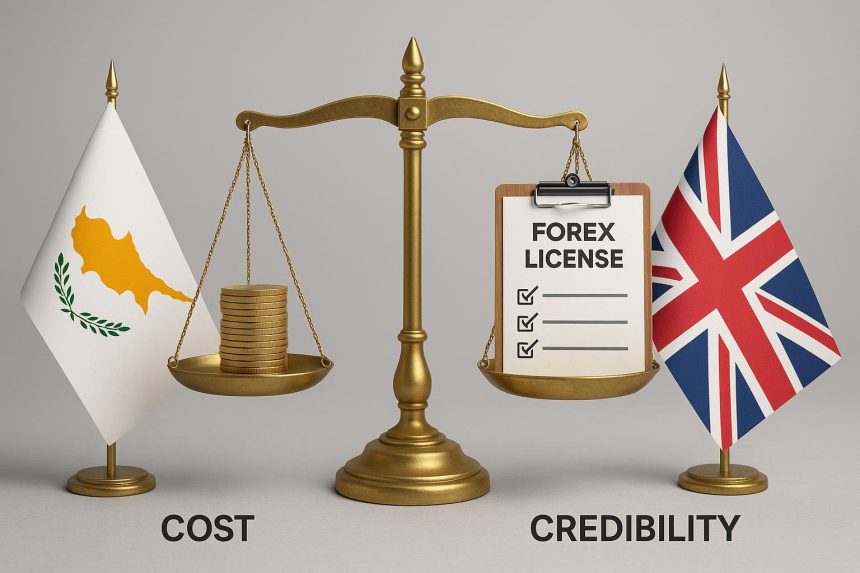
When establishing a forex brokerage, selecting the right regulatory jurisdiction is one of the most critical decisions a firm will make. Two of the most prominent options in Europe are Cyprus and the United Kingdom—both well-regarded, yet fundamentally different in terms of cost, operational flexibility, and investor protection.
This article compares a Cyprus forex license with its UK counterpart, helping prospective brokers determine which jurisdiction aligns best with their business model and long-term strategy.
Capital Requirements: A Clear Divide
One of the most immediate differences between Cyprus and a forex license in the UK lies in the capital requirements.
In Cyprus, firms operating under the Straight Through Processing (STP) or matched principal model benefit from significantly lower capital thresholds. A Cyprus Investment Firm (CIF) license typically requires a minimum of €150,000 for STP brokers. This makes Cyprus highly attractive for startups and mid-sized firms looking to enter the market without excessive upfront financial commitments.
In contrast, the United Kingdom imposes far stricter financial requirements. Firms regulated by the Financial Conduct Authority (FCA) must hold a minimum of £730,000 in regulatory capital for dealing on own account or market-making activities. Even for agency brokers, the financial burden remains substantially higher than in Cyprus.
The implication is clear: Cyprus offers a far more accessible entry point, while the UK demands significant financial backing from the outset.
Operational Costs: Cyprus as the Cost-Efficient Option
Beyond capital requirements, ongoing operational costs further differentiate these two jurisdictions.
Running a regulated brokerage in the UK comes with considerable overhead. Office rent in financial hubs such as London is among the highest in Europe, and firms are expected to maintain a physical presence with qualified local staff. Salaries for compliance officers, risk managers, and senior management are significantly higher compared to Cyprus.
Additionally, FCA-regulated firms must adhere to extensive compliance reporting requirements, which often necessitate hiring specialized compliance teams or outsourcing to costly service providers.
Cyprus, while still maintaining strong regulatory standards under the Cyprus Securities and Exchange Commission (CySEC), offers a more cost-effective operating environment. Office space is more affordable, staffing costs are lower, and compliance obligations, while robust, are generally less resource-intensive than those imposed by the FCA.
For many brokers, especially those in growth phases, this difference in operational expenditure can be decisive.
Business Model Flexibility: Cyprus Takes the Lead
Cyprus provides greater flexibility in how brokers structure their operations, particularly through the matched principal or STP model. This allows firms to route client trades directly to liquidity providers without taking on market risk, reducing both capital requirements and regulatory burden.
The UK, on the other hand, imposes stricter oversight and expectations regardless of the execution model. While STP models are permitted, regulatory scrutiny remains high, and firms must maintain substantial internal controls and capital buffers.
For entrepreneurs seeking a lean, scalable brokerage model, Cyprus offers a more adaptable framework.
Investor Protection: The UK Advantage
While Cyprus excels in cost efficiency and flexibility, the United Kingdom stands out when it comes to investor protection.
A key differentiator is the Financial Services Compensation Scheme (FSCS). Under this scheme, clients of FCA-regulated firms are protected up to £85,000 in the event of broker insolvency. This provides a strong safety net and significantly enhances investor confidence.
Cyprus offers its own Investor Compensation Fund (ICF), but coverage is limited to €20,000 per client—considerably lower than the UK’s FSCS protection.
For brokers targeting high-value clients or institutional investors, the enhanced protection offered in the UK can be a powerful trust signal and a competitive advantage.
Reputation and Market Perception
The United Kingdom has long been regarded as one of the most prestigious financial jurisdictions globally. An FCA license is widely perceived as a mark of credibility, transparency, and regulatory rigor.
This reputation can translate into stronger brand positioning, easier access to banking relationships, and increased trust among clients—particularly in highly competitive markets.
Cyprus, while respected within the European financial ecosystem, does not carry the same global prestige. However, it remains a well-established and fully compliant EU jurisdiction, particularly popular among forex and CFD brokers due to its pragmatic regulatory approach.
Passporting and Market Access
Historically, Cyprus held a significant advantage through EU passporting rights, allowing firms to offer services across the European Economic Area (EEA) under a single license.
While regulatory changes following Brexit have altered the landscape, Cyprus-based firms still benefit from broader access to EU markets compared to UK firms, which now face additional barriers when targeting European clients.
This makes Cyprus particularly appealing for brokers with a strong focus on EU expansion and cross-border operations.
Conclusion: Cost vs Credibility
Ultimately, the choice between a Cyprus and UK forex license comes down to strategic priorities.
Cyprus is ideal for firms seeking a cost-effective, flexible entry into the forex market. Lower capital requirements, reduced operational expenses, and adaptable business models make it a practical choice for startups and growing brokerages.
The United Kingdom, by contrast, offers unmatched credibility and investor protection. Higher costs are offset by stronger regulatory reputation, enhanced client trust, and the added security of the FSCS.
For many brokers, the decision is not about which jurisdiction is better—but rather which one aligns more closely with their business goals: efficiency and scalability in Cyprus, or prestige and protection in the UK.

Lynn Martelli is an editor at Readability. She received her MFA in Creative Writing from Antioch University and has worked as an editor for over 10 years. Lynn has edited a wide variety of books, including fiction, non-fiction, memoirs, and more. In her free time, Lynn enjoys reading, writing, and spending time with her family and friends.