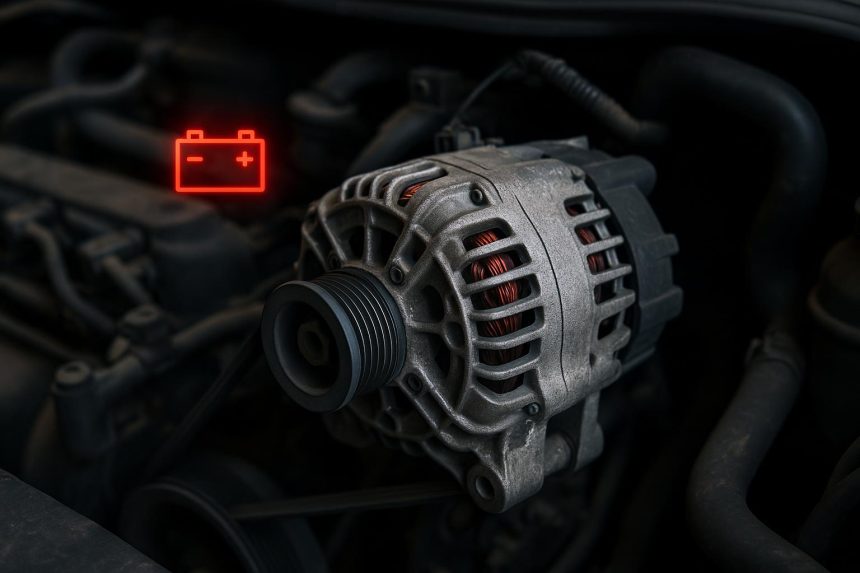
Nothing is as frustrating as waking up one day, only to find that your vehicle will not start. Even after being fine the previous day. Many drivers immediately assume that the battery is the source of the issue. But this is not always the case. It’s the alternator.
This is a power-producing generator attached to the engine. It generates electrical current when the vehicle is moving. It has two important roles. While the engine is running, it supplies 12-volt electrical power to all the electrical systems in the vehicle:
- Lights
- Air conditioning
- Infotainment
- Power windows
- Anything else that requires electricity.
It continually recharges the battery. Keeps it ready to start the engine the next time you turn the key.
If the alternator malfunctions, the battery will run the rest of the circuits. But it can only do so for a short time before it is drained. When the battery runs out, the car stops. Sometimes without warning.
You can avoid that if you notice these signs along the way.
The warning light
A warning light on the dash is one of the first and most direct clues to alternator problems. It is often a battery icon or the words ALT or GEN that light up on the instrument panel. Most drivers who see this light assume that their battery needs to be replaced. Sometimes this is correct. More often, it’s the alternator that has caused the warning.
Newer vehicles have sensors that can detect alternator voltage output. When it drops outside of the specifications, the warning light will come on. That’s where the expertise of a good Auto Mechanic Virginia Beach VA can really prove useful. They can diagnose a warning in time before a misdiagnosis results in a battery replacement that costs the driver more than it should. And that doesn’t solve the problem until the next week or so.
Dimming or flickering lights
The alternator powers your vehicle’s lighting system while the engine is running. One of the most obvious signs of failure is inconsistent lighting, such as:
- Headlights that appear less bright than normal
- Interior lights that flicker at random moments
- Lights on the instrument panel that blink in a manner that they didn’t before.
The lights may flicker when you accelerate. Then resume normal brightness when idling. This fluctuation is a typical indication of an inconsistent output of the alternator. It means that the alternator is unable to maintain a steady electrical output.
Notice your lights behaving unusually? Don’t dismiss it as a bulb issue. Have the charging system tested before the problem progresses further.
Electrical components behaving strangely
The alternator supplies power to all electrical systems in the car. So when it fails, it can cause a number of circuits to act up simultaneously. For example:
- Power windows that move slower than usual
- A radio that cuts in and out
- Air conditioning that seems less responsive
- A GPS screen that dims without reason, etc.
All these are potential indicators of insufficient electrical supply.
If your car has more electrical equipment, these symptoms tend to be more apparent. Newer cars especially are crammed with technology. Therefore, a failing alternator can generate a string of warning lights and error messages with seemingly unrelated issues. However, all stem from the same problem.
Unusual noises from under the bonnet
Another sign of a failing alternator is the noise it makes. A common one is a grinding or whining sound that shifts pitch with engine speed. It is typically a sign of a worn bearing inside the alternator.
Also, an old or loose belt (the drive belt from the alternator to the engine) may squeal when the electrical system draws more current. For example, when the air conditioning is activated.
These sounds can be easily mistaken for normal engine noise. But if they are new and recurring, you should have your car checked. A broken belt or worn bearing are far less expensive problems to deal with than a total alternator failure.
A dead battery that keeps coming back to life
Another indicator is if your battery is relatively new or just replaced and frequently has to be jump-started. It’s one of the most significant indicators that your alternator needs attention.
Do you have to jump-start your vehicle more than once in a short time, and the battery is fine? Then you know your car’s alternator is probably not charging it properly.
The easiest way to check the alternator output is to have a reliable workshop like the London Bridge Auto and Transmission Repair Shop Virginia Beach run a simple charging system test. This test is quick and simple. It will eliminate the guesswork in diagnosis.
The takeaway
The alternator is active on every second that the engine is on. When it fails, the whole car is affected. So watch out for the warning signs. If they appear, have the charging system checked. This is one of the easiest and least expensive measures you can take to prevent a completely preventable breakdown.

Lynn Martelli is an editor at Readability. She received her MFA in Creative Writing from Antioch University and has worked as an editor for over 10 years. Lynn has edited a wide variety of books, including fiction, non-fiction, memoirs, and more. In her free time, Lynn enjoys reading, writing, and spending time with her family and friends.