In Spain’s evolving vape market, multi-flavor disposable devices have quickly moved from a niche product category to a mainstream retail option. Their appeal is straightforward: users can switch between flavors without carrying multiple devices, while retailers benefit from higher impulse purchases and stronger product differentiation on shelves.
But behind this simple appeal, the Spanish market reveals a more complex reality. Regulations under EU TPD rules, inconsistent import quality, and rapidly changing consumer expectations make it difficult for retailers and distributors to rely purely on brand positioning when selecting products. Instead, decision-making has shifted toward operational reliability—how stable the device performs, how consistent the supply chain is, and how predictable the product behaves in real retail environments.
A useful way to understand this shift is to look at how mid-sized distributors operate in cities like Barcelona, where the vape retail ecosystem is highly competitive. One distributor operating across convenience stores and small vape shops recently described their purchasing approach as “less about novelty, more about repeat stability.” In practice, this means a product is not judged by its flavor variety alone, but by how often it triggers customer complaints or returns.
Multi-flavor disposable vapes introduce additional technical complexity compared to standard disposables. Switching mechanisms, airflow consistency, and internal battery load distribution all become critical. Even small inconsistencies in manufacturing can lead to uneven flavor delivery or reduced device lifespan. For retailers, these issues translate directly into margin loss, as returns and replacements quickly erode profit from high-volume, low-ticket products.
This is where compliance and traceability become central. In Spain, CE marking and clear nicotine labeling are often the minimum expectation, but experienced buyers typically go further by evaluating batch consistency and supplier transparency. Products without clear traceable documentation are increasingly avoided, not necessarily due to immediate safety concerns, but because risk becomes unmanageable at scale.
Battery performance is another decisive factor. In Barcelona’s urban retail channels, distributors report that devices with unstable battery output tend to underperform within the first few days of purchase. Since disposable vapes are largely impulse-driven purchases, a single negative experience can significantly reduce repeat demand for an entire product line. This creates a feedback loop where retailers gradually eliminate unreliable SKUs, even if they initially appear cost-effective.
At the same time, the Spanish market is not uniform. In Madrid and coastal tourist regions, demand patterns differ significantly. Tourist-heavy areas tend to favor visually distinctive, multi-flavor formats that emphasize novelty. Local neighborhood stores, however, prioritize predictable performance and low complaint rates. This divergence means that product selection is often segmented not just by consumer preference, but by retail environment itself.
From a sourcing perspective, many distributors are increasingly cautious about fragmented supply chains. Import channels into the EU remain diverse, with products arriving through direct manufacturing shipments, regional wholesalers, and third-party trading intermediaries. This diversity creates pricing advantages but also introduces inconsistency risks. Packaging variations, QR verification mismatches, and flavor calibration differences are commonly cited issues in lower-control supply routes.
For this reason, some buyers prefer working with structured platforms that provide clearer segmentation of product lines. For example, Marsilen official store Spain is often referenced by buyers as a centralized catalog where product categories are more clearly organized, allowing easier comparison across multi-flavor disposable configurations. In a fragmented market, this type of structured sourcing becomes less about branding and more about reducing operational uncertainty.
A growing segment within this category is rechargeable multi-flavor disposable devices. These products reflect a broader shift in the European market toward reducing electronic waste while maintaining convenience-driven usage patterns. Unlike traditional disposables, rechargeable versions extend lifecycle usability and often provide more stable power delivery across flavor switching cycles.
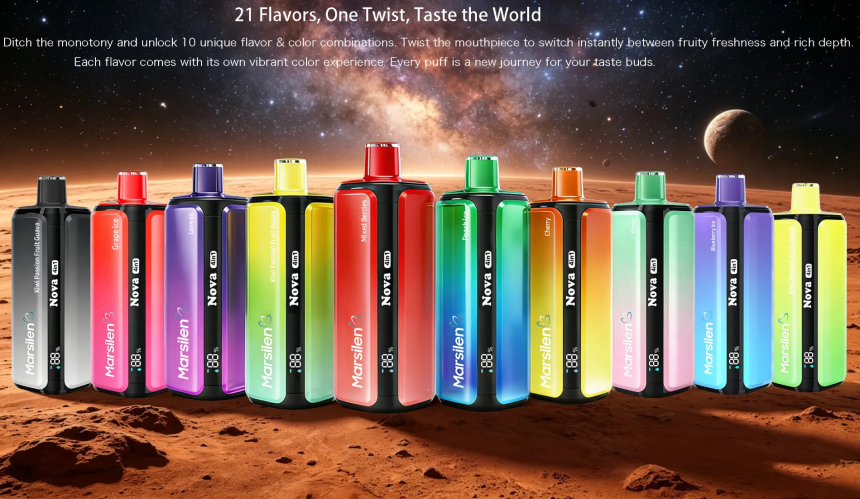
Within distributor discussions, hybrid models such as the 4-in-1 rechargeable disposable vape Spanish market are increasingly used as reference points rather than just commercial SKUs. Even when not adopted at scale, they serve as benchmarks for evaluating how far disposable technology has evolved in balancing sustainability, usability, and regulatory expectations.
Despite this evolution, market fragmentation remains a defining characteristic of Spain’s vape sector. Smaller distributors often still rely on trial-based procurement, testing small batches before committing to larger orders. This approach reflects a lack of standardized performance benchmarks across manufacturers, which continues to be one of the sector’s structural limitations.
Looking forward, the most noticeable shift is not just toward rechargeable formats, but toward supply chain transparency becoming a competitive advantage. As regulatory pressure increases across Europe, products that can demonstrate consistent batch quality, clear compliance documentation, and predictable lifecycle performance are likely to outperform those relying primarily on flavor variety or aggressive pricing.
In that sense, the future of multi-flavor disposable vapes in Spain may be less about how many flavors a device can offer, and more about how reliably that experience can be repeated across thousands of units in real retail conditions.

Lynn Martelli is an editor at Readability. She received her MFA in Creative Writing from Antioch University and has worked as an editor for over 10 years. Lynn has edited a wide variety of books, including fiction, non-fiction, memoirs, and more. In her free time, Lynn enjoys reading, writing, and spending time with her family and friends.