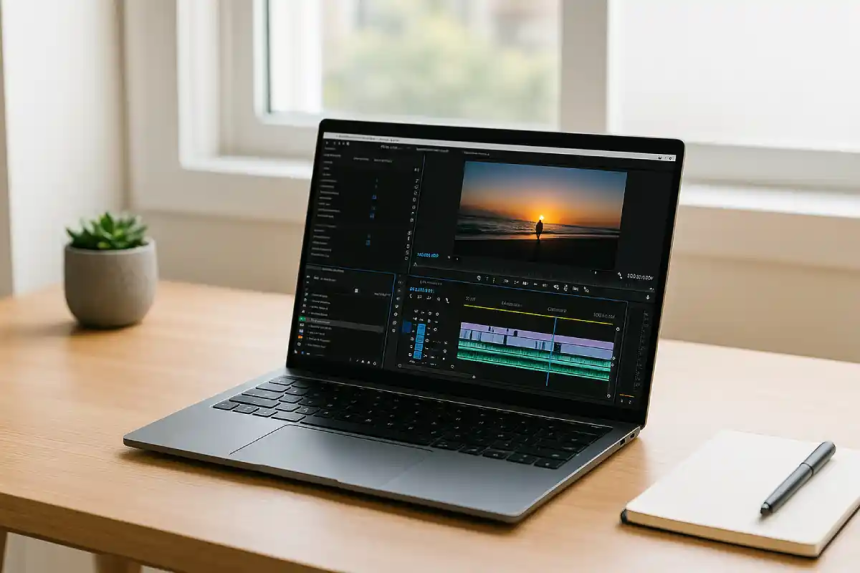
Scroll through any social platform today and you’ll notice something: the feed moves faster than it did even a year ago. Text posts get skipped. Static images get half a glance. Video — fast, punchy, and personal — is what actually stops the thumb.
The numbers back this up. According to Wyzowl’s 2026 report, 91% of businesses now use video as a marketing tool, and social video remains the single most popular format among marketers, favored by 69% of them. Perhaps more telling: short-form video generates 2.5 times more engagement than long-form content, with some platforms seeing engagement rates as high as 5.91%. Social video alone drives 1,200% more shares than text and images combined.
This shift isn’t just about watching more video — it’s about who’s making it. Small teams, solo creators, and lean marketing departments are now expected to produce as much content as agencies did five years ago. That’s simply not possible by hand. It’s why a growing share of that content pipeline is now automated, AI-assisted, and built for speed without sacrificing quality.
The Real Bottleneck: Time, Not Ideas
Ask any social media manager what’s stopping them from posting more, and the answer is rarely creativity. It’s hours in the day.
- Filming takes time.
- Editing takes longer.
- Adding captions, music, transitions, and voiceovers takes longer still.
- And then the algorithm demands you do it all again tomorrow.
This is exactly the gap that’s pushing so many teams toward automated production tools. Recent industry data shows 63% of video marketers now use AI tools to help create or edit their content, up from 51% just a year earlier — a jump that signals this isn’t a passing trend but a structural shift in how content gets made.
[Image suggestion: a split-screen photo showing a person filming a short clip on a phone next to a laptop screen with editing software open — search “content creator editing video” on Unsplash or Pexels]
What Changed: From Editing Software to Generation
For most of the last decade, “video software” meant timelines, layers, and a steep learning curve. You needed Premiere Pro skills, or a budget to hire someone who had them.
That’s no longer the entry point. Modern tools can take a script, a product photo, or even a single sentence and turn it into a finished, captioned, voiced clip in minutes. This is the core promise of an AI video maker: it compresses what used to be a multi-day production cycle — scripting, filming, editing, sound design — into a workflow a single person can run before lunch.
That compression matters more than it sounds. Consider a small e-commerce brand launching five products a month. Producing five polished ads used to mean a shoot day, an editor, and a week of turnaround. With an AI video maker, the same brand can generate variations for each product, test different hooks, and publish within the same afternoon — without touching a camera.
Where This Actually Shows Up in Results

It’s easy to be skeptical of “AI does everything now” claims, so it’s worth grounding this in what marketers are actually reporting:
- 82% of marketers say video delivers positive ROI, according to Demand Sage’s 2026 data.
- 88% credit video with directly boosting sales and leads.
- 83% of consumers say they’ve been convinced to buy something after watching a brand’s video.
- 66% of consumers say short-form video is the most engaging content format they encounter.
None of these numbers are new to video generally — video has outperformed static content for years. What’s changed is access. A tool that once required a production budget is now something a solo founder, a nonprofit, or a two-person marketing team can use on a laptop between meetings.
A Practical Example
Picture a fitness coach who wants to post daily workout tips. Filming, editing, and captioning one 30-second video by hand might take 45 minutes to an hour, start to finish. Multiply that by seven days a week, and video becomes a part-time job on its own.
Using an AI video maker, the same coach can:
- Write a short script or bullet points for the tip.
- Feed it into the tool along with a preferred visual style or stock footage.
- Get back a captioned, voiced, platform-sized video in a few minutes.
- Adjust pacing, text, or music with lightweight edits — not a full re-edit.
The time saved doesn’t just mean more free hours. It means the coach can post consistently, which matters enormously on platforms where algorithms reward frequency and momentum, not just quality.
[Image suggestion: a simple workflow graphic — script on the left, an arrow, phone screen showing a finished video on the right — search “video production workflow diagram” or build a simple 3-step graphic]
Where People Get This Wrong
It’s worth being honest about the limits here too. Automated video tools are excellent at speed and consistency, but they’re not a substitute for strategy. A few common mistakes:
- Treating volume as a strategy. Posting ten mediocre videos a week performs worse than three genuinely good ones. Speed should serve quality, not replace it.
- Ignoring platform-specific formatting. A video built for YouTube doesn’t automatically work on TikTok or Instagram Reels — aspect ratio, pacing, and hook timing all differ.
- Skipping the hook. Data consistently shows the first two to three seconds determine whether a viewer stays. No amount of automation fixes a weak opening line.
- Forgetting the caption and audio strategy. A large share of viewers watch with sound off first; captions aren’t optional anymore, they’re the default viewing experience.
Used well, these tools handle the repetitive, technical work — leaving the human in charge of the message, the hook, and the strategy behind each post.
What This Means for 2026 and Beyond
Digital video ad spend is projected to grow from roughly $140 billion in 2025 to nearly $189 billion in 2026, and short-form video’s market is expected to balloon from about $59 billion this year to over $640 billion by 2035. That kind of growth doesn’t happen without a corresponding shift in how content gets produced — there simply aren’t enough hours, editors, or budgets to meet that demand the old way.
For individual creators and small businesses, this is genuinely good news. The gap between a brand with a full production team and one without is shrinking. A well-scripted idea, run through the right tools, can now compete on the same feed as content from teams ten times its size.
The brands that adapt fastest won’t necessarily be the ones with the biggest budgets — they’ll be the ones who treat video production as a repeatable system rather than a rare event. That shift, quietly, is already underway.

Lynn Martelli is an editor at Readability. She received her MFA in Creative Writing from Antioch University and has worked as an editor for over 10 years. Lynn has edited a wide variety of books, including fiction, non-fiction, memoirs, and more. In her free time, Lynn enjoys reading, writing, and spending time with her family and friends.