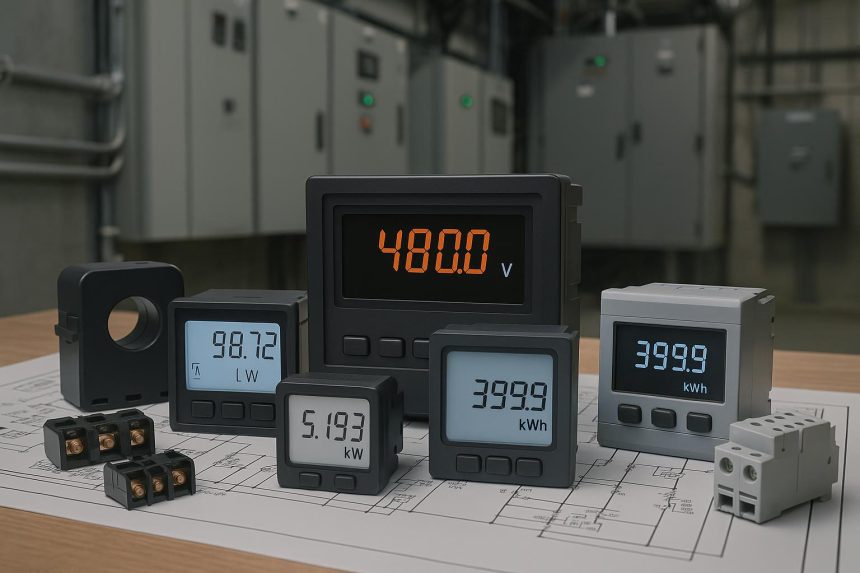
Industrial and commercial facilities often undertake retrofit projects to improve energy visibility, operational efficiency, and cost control without replacing existing electrical distribution infrastructure.
For these reasons, selecting the right power meter becomes an important part of a successful retrofit strategy. Modern power meters offer far more than basic energy measurement.
But how can a power meter improve retrofit outcomes in industrial and commercial facilities? The answer depends on how well the selected solution aligns with the facility’s monitoring requirements, operational goals, and future expansion plans. This article explores the key considerations that can help industrial and commercial facilities evaluate power meters for retrofit projects more effectively.
How Modern Power Meters Address Retrofit Challenges Across Industrial and Commercial Sites
Retrofit projects rarely have identical requirements. Some facilities prioritize energy cost management, while others focus on regulatory reporting or network visibility.
Accuracy Matters for Reliable Energy Monitoring
Accurate measurement forms the foundation of effective energy management. A power meter should provide dependable readings for voltage, current, active energy, reactive energy, and demand parameters.
Reliable monitoring supports:
- Load profiling
- Demand analysis
- Power factor monitoring
- Energy cost management
- Multi-source energy recording
By identifying consumption trends, operators can uncover inefficiencies that may otherwise remain hidden. Multifunction power meters can further enhance visibility by monitoring multiple electrical parameters through a single device. For facilities seeking to optimize energy performance, measurement accuracy directly influences operational planning, budgeting, and efficiency improvement strategies.
Compliance and Visibility Across Electrical Systems
Regulatory requirements continue to shape how industrial and commercial facilities manage energy data. A power meter that supports reporting and monitoring requirements can simplify compliance efforts while improving operational visibility.
Modern monitoring systems often provide:
- Power factor monitoring
- Voltage variation analysis
- Current imbalance detection
- Energy consumption tracking
- Data logging and reporting
These insights can assist organizations during audits and energy performance evaluations. When evaluating retrofit solutions, organizations frequently ask which cost-efficient power meter brands are suitable for industrial and commercial retrofit projects while ensuring accuracy and regulatory compliance. The answer often lies in selecting established manufacturers that offer multifunction monitoring, reliable measurement performance, compliance-oriented reporting capabilities, and scalable solutions. Enhanced visibility also helps facility teams better understand system performance and supports more informed maintenance planning.
Evaluating Cost Efficiency Beyond Initial Installation
Cost efficiency should not be measured solely by the purchase price of a power meter. Long-term value often depends on how effectively the device supports operational objectives over its lifecycle.
Key considerations include:
- Energy cost management
- Reduced energy waste
- Ease of integration
- Communication capabilities
- Scalability for future needs
Power meters can help reduce energy waste by providing greater visibility into consumption patterns. Better information enables organizations to identify inefficiencies, optimize equipment usage, and improve energy allocation across facilities.
Supporting Multi-Source Energy Monitoring in Retrofit Environments
Many industrial and commercial facilities rely on more than one energy source. Utility power, backup generators, and renewable energy systems often operate within the same electrical environment. Monitoring these sources separately can improve accountability and provide deeper insight into energy usage patterns.
Advanced metering solutions support:
- Dual-source energy recording
- Utility and generator monitoring
- Energy source comparison
- Consumption allocation
- Renewable energy tracking
This visibility can help organizations evaluate energy performance, manage costs more effectively, and improve reporting accuracy. For facilities integrating renewable energy systems, separate monitoring can also support sustainability initiatives and energy optimization programs. The ability to track multiple power sources within a retrofit project adds flexibility while enhancing operational control.
Choose the Right Power Meter for Long-Term Retrofit Success
Selecting the right power meter for a retrofit project involves more than comparing technical specifications. Accuracy supports reliable decision-making, compliance capabilities simplify reporting requirements, and cost efficiency contributes to long-term operational value.
As industrial and commercial facilities continue to modernize, power meters play an increasingly important role in monitoring performance, managing costs, and supporting operational efficiency. Choosing solutions that align with current and future requirements can help maximize the value of retrofit investments. Visit Schneider Electric’s official website today to learn how to enhance reliability and efficiency in your electrical systems.

Lynn Martelli is an editor at Readability. She received her MFA in Creative Writing from Antioch University and has worked as an editor for over 10 years. Lynn has edited a wide variety of books, including fiction, non-fiction, memoirs, and more. In her free time, Lynn enjoys reading, writing, and spending time with her family and friends.