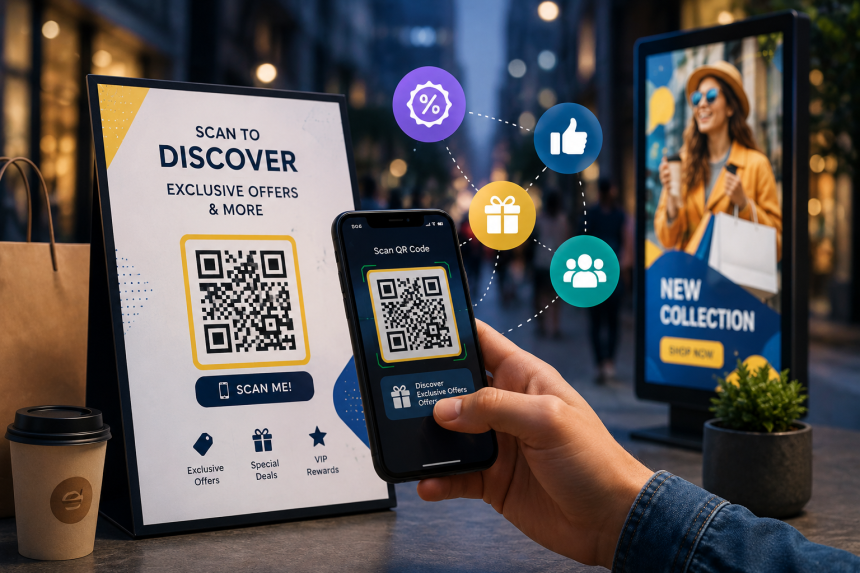
Modern advertising is no longer limited to static billboards, printed posters, or digital banners. Today’s consumers expect interactive experiences that connect physical and digital spaces instantly. This shift has made the qr code for advertising one of the most effective tools for brands looking to improve customer engagement, simplify communication, and track campaign performance in real time.
QR technology has become increasingly common across retail, events, hospitality, product packaging, outdoor advertising, and print campaigns. Consumers are already familiar with scanning QR codes using their smartphones, which makes adoption simple and accessible for businesses of all sizes. Instead of directing customers to manually search for information online, advertisers can now create instant digital interactions with a single scan.
As competition for customer attention continues to grow, brands are focusing on advertising methods that encourage participation rather than passive viewing. QR codes support this transition by turning traditional advertisements into measurable and interactive experiences.
Why QR Codes Are Changing Modern Advertising
Traditional advertising often struggles to bridge the gap between customer interest and customer action. A person may see a billboard, magazine advertisement, or product display but fail to take the next step because the process requires additional effort. QR technology removes this friction by providing immediate access to digital content.
With a simple smartphone scan, users can instantly reach websites, promotional offers, event registrations, social media pages, digital catalogs, videos, or landing pages. This direct connection increases the likelihood of customer interaction and shortens the path between awareness and conversion.
Another major advantage is flexibility. Dynamic QR codes allow advertisers to update campaigns without replacing printed materials. A single QR code can support evolving promotions, seasonal offers, product launches, or updated event information while remaining visually identical in physical advertisements.
This flexibility is especially valuable for businesses running large-scale campaigns across multiple channels. Instead of reprinting assets every time information changes, marketing teams can adjust the destination content within the QR management platform.
Modern QR campaigns also provide measurable insights. Unlike many forms of traditional advertising, QR technology allows businesses to monitor customer engagement through scan analytics, helping marketers better understand campaign performance and audience behavior.
The Value of a Professional qr code advertising service
A professional qr code advertising service offers businesses much more than basic QR code generation. Advanced platforms support branding, analytics, campaign management, and customer engagement optimization across different advertising environments.
One of the most important features is dynamic QR functionality. Advertisers can update links, landing pages, or promotional content even after physical advertisements have already been distributed. This allows campaigns to remain flexible while reducing operational costs.
Analytics capabilities are equally valuable. Businesses can monitor scan volume, engagement timing, geographic activity, and device usage to understand how audiences interact with campaigns. These insights help marketing teams refine strategies and improve future advertising performance.
Branding tools also play an important role. Generic QR codes may appear purely functional, while professionally customized codes feel integrated into the campaign itself. Adding logos, brand colors, or visual styling helps create stronger trust and recognition among customers.
Many businesses also use QR platforms to centralize campaign management. Teams can organize multiple campaigns, manage permissions, and track performance from a single dashboard. This is especially useful for companies operating across multiple regions, retail locations, or advertising channels.
As marketing becomes increasingly data-driven, businesses are relying on QR platforms not only for customer interaction but also for performance measurement and campaign optimization.
How qr code interactive advertising Improves Customer Experience
One of the biggest trends in modern marketing is the shift toward participation-based experiences. Consumers no longer want to simply view advertisements; they want to interact with brands in meaningful ways. This is where qr code interactive advertising becomes highly effective.
Interactive QR campaigns transform static marketing materials into digital experiences that encourage customer engagement. Instead of delivering one-way messaging, brands can invite users to participate directly through surveys, games, promotions, contests, augmented reality experiences, or personalized content.
For example, a QR code displayed on product packaging may lead customers to instructional videos, loyalty rewards, or exclusive promotions. Event organizers may use QR codes to unlock schedules, networking opportunities, or live updates during conferences and festivals. Retail brands often connect QR scans to limited-time discounts or digital product experiences that encourage immediate action.
Interactive advertising also helps create stronger emotional connections between brands and audiences. Customers who actively engage with content are more likely to remember the campaign and share the experience with others.
This approach is particularly valuable for younger digital-first audiences who expect mobile-friendly and interactive communication. QR technology allows businesses to meet these expectations without requiring customers to download additional applications or complete complicated registration processes.
Another major benefit is personalization. QR campaigns can direct different customer groups toward specific landing pages, offers, or experiences based on campaign goals. This creates more targeted communication and improves relevance for users.
As customer expectations continue to evolve, interactive advertising strategies supported by QR technology are becoming increasingly important across industries.
The Growing Importance of qr code in print advertising
Print advertising remains valuable in many industries, but traditional print materials often lack measurable engagement opportunities. The integration of qr code in print advertising helps solve this challenge by adding digital functionality to physical media.
Magazines, brochures, catalogs, flyers, posters, direct mail campaigns, and outdoor advertisements now frequently include QR codes that connect readers directly to online experiences. This allows print campaigns to become interactive rather than static.
For advertisers, QR integration provides a way to track customer engagement that was previously difficult to measure in print environments. Businesses can analyze how many people scanned the code, when interactions occurred, and which campaigns generated the strongest results.
Print advertising also benefits from the convenience of mobile access. Instead of expecting customers to remember a website address or search for a product later, QR technology creates immediate engagement while attention is still focused on the advertisement.
Real estate companies use QR codes in brochures and signage to provide virtual property tours. Retail brands connect catalog pages to online stores or promotional offers. Restaurants and hospitality businesses often use QR-enabled print materials to provide reservations, menus, or loyalty programs.
The combination of physical visibility and digital functionality makes QR technology particularly effective in print campaigns where space is limited but customer engagement opportunities remain important.
Industries Using QR Advertising Most Effectively
QR advertising has become widely adopted because it works across many industries and campaign types. Retail businesses frequently use QR technology to connect physical products with digital experiences such as reviews, tutorials, or promotions. Hospitality companies integrate QR codes into customer service experiences, including menus, reservations, and guest communication.
Event organizers rely on QR technology for ticketing, schedules, sponsor engagement, and attendee interaction. Healthcare providers use QR systems to improve patient communication and simplify information access. Educational institutions incorporate QR codes into promotional campaigns, campus materials, and event coordination.
Consumer goods brands also benefit from QR-powered packaging that supports storytelling, authenticity verification, and personalized customer engagement. In outdoor advertising, QR codes help transform passive billboards and transit advertisements into measurable digital campaigns.
Because QR technology is flexible and relatively simple to implement, businesses of all sizes can incorporate it into their advertising strategies without requiring major infrastructure investments.
Final Thoughts
The advertising industry continues to move toward more interactive, measurable, and customer-focused experiences. A modern qr code advertising service allows businesses to connect offline and online communication while improving engagement, flexibility, and campaign performance.
At the same time, qr code interactive advertising helps brands create more memorable experiences that encourage active participation rather than passive viewing. The growing use of qr code in print advertising also demonstrates how physical media can remain relevant in an increasingly digital marketplace.
As consumer expectations continue to evolve, QR technology offers businesses a practical and scalable way to improve customer interaction across multiple advertising channels. Brands that successfully combine creativity, convenience, and measurable engagement through QR campaigns will be better positioned to build stronger customer relationships in the future.

Lynn Martelli is an editor at Readability. She received her MFA in Creative Writing from Antioch University and has worked as an editor for over 10 years. Lynn has edited a wide variety of books, including fiction, non-fiction, memoirs, and more. In her free time, Lynn enjoys reading, writing, and spending time with her family and friends.