For decades, the soundtrack of rural life was defined by the high-pitched whine of a two-stroke engine and the lingering scent of premixed gasoline. If you managed a few acres or a sprawling homestead, a heavy gas saw was simply the cost of doing business. But over the last few years, a quiet shift has occurred in the equipment sheds of landowners across the country.
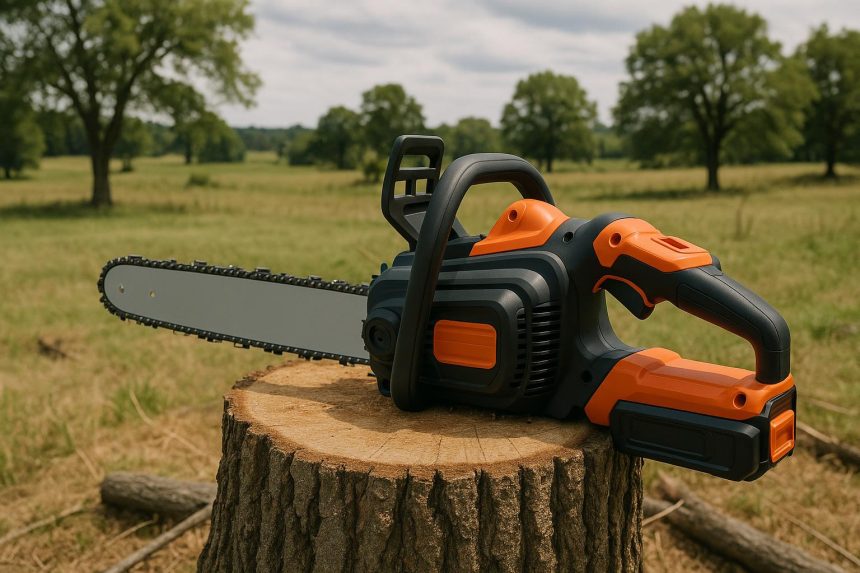
Managing a rural property requires a tool that is ready to work the moment you are. Whether it’s clearing a fallen oak after a summer storm or maintaining fence lines, the reliability of a battery powered chainsaw has turned what used to be a chore into a streamlined task. These modern machines are no longer just “backup” tools; for many property owners, they have become the primary workhorse, offering a level of convenience and efficiency that gas-powered ancestors simply can’t match.
The Evolution of Battery Technology in Land Management
Early cordless tools were often dismissed by serious land managers as “toys” for light suburban pruning. However, the jump from NiCad to high-voltage Lithium-ion technology changed the narrative entirely. Modern 60V and 80V platforms now deliver torque that rivals mid-range gas saws, allowing users to buck logs and fell small trees without a drop in performance.
The shift isn’t just about raw power; it’s about energy density and electronic management. Today’s batteries hold a charge longer and deliver consistent power until the cell is nearly empty. For a rural owner, this means you can throw a saw in the back of the UTV and know it will start instantly, even if it hasn’t been touched in a month.
Why Immediate Startup is a Game Changer
In a rural setting, tasks are often intermittent. You might drive a mile to the back of your property to fix a gate, only to find a cedar limb blocking the path. With a gas saw, you’re looking at a cold-start routine: priming, choking, and multiple pulls—all while wearing out your shoulder before the work even begins.
A cordless saw eliminates this friction. You pull the trigger, and the chain spins. This “instant-on” capability reduces operator fatigue significantly. When you aren’t fighting a pull-cord, you save your physical energy for the actual cutting and hauling, making the workday far more productive and less frustrating.
Reducing the Maintenance Burden of Rural Life
One of the biggest headaches of rural property management is small engine maintenance. Gasoline engines are notorious for gumming up when left with ethanol-blended fuel for too long. Between cleaning carburetors, replacing spark plugs, and adjusting air filters, gas saws require a constant “tax” of time and money.
Electric motors are essentially maintenance-free by comparison. There are no pistons to seize, no mufflers to clog with carbon, and no fuel to stabilize for the winter. Your primary maintenance tasks are reduced to the basics of any saw: keeping the chain sharp and the bar oil reservoir full. For a busy landowner, reclaiming those hours spent “wrenching” in the garage is invaluable.
Comparing Gas and Battery for Property Work
While cordless tech has caught up, choosing the right tool depends on your specific acreage and workload. Gas-powered saws still hold an edge for professional loggers who need to cut for eight hours straight in deep forest where charging isn’t an option. They offer high power-to-weight ratios for very long guide bars, typically 20 inches or more.
However, battery saws have claimed the crown for the vast majority of residential and agricultural tasks. They excel with 14-inch to 18-inch bars, which cover nearly all pruning, clearing, and firewood prep. The trade-off is simple: gas offers unlimited runtime if you carry a fuel can, while battery offers silence, instant starts, and zero exhaust fumes. For 90% of rural maintenance, the convenience of the battery outweighs the raw endurance of gas.
The “Quiet Advantage” and Neighborhood Relations
Rural living often comes with a desire for peace and privacy. Traditional chainsaws can be heard from over a mile away, often disrupting the very tranquility people move to the country to find. Cordless saws are significantly quieter, operating at a decibel level that won’t disturb the household or the neighbors down the road.
Beyond etiquette, the lower noise level improves safety. It is much easier to hear what is happening in your immediate environment—the crack of a dead limb overhead, the shout of a helper, or the approach of a vehicle—when you aren’t wearing heavy-duty ear muffs to dampen a roaring engine. This increased situational awareness is a major safety boost for solo workers.
Best Practices for Maximizing Battery Life
To get the most out of your cordless setup on a large property, a little strategy goes a long way. First, it is wise to invest in a single battery platform. Don’t buy a random assortment of brands; stick to one ecosystem so your chainsaw batteries can also power your leaf blowers, string trimmers, and even your lawn mower.
Secondly, keep your chains sharp. A dull chain forces the motor to work harder, which drains the battery significantly faster. A quick touch-up with a file every few times you fill the bar oil keeps the motor running at peak efficiency. Finally, manage your storage temperatures. Lithium-ion batteries dislike extreme heat, so keep your spares in the shade rather than in the direct sun on a truck tailgate.
Common Mistakes When Switching to Cordless
The most frequent mistake new users make is treating a cordless saw like it is a heavy-duty demolition tool. While they have impressive torque, they perform best when you let the speed of the chain do the work rather than “dogging” into the wood with excessive physical force.
Another common error is neglecting the bar oil. Because there is no loud engine noise to remind you that the machine is running, it is easy to forget that the saw still requires lubrication. Always check your oil level every time you swap out a battery to ensure your bar and chain stay in good condition and don’t overheat.
Essential Features to Look For in a New Saw
If you are currently shopping for a saw to manage your land, focus on a few key technical specs. Look for a brushless motor, as these are more efficient and have a longer lifespan than older brushed versions. Tool-less chain tensioning is another massive benefit, allowing you to make quick adjustments in the field without heading back to the barn for a wrench.
Additionally, check for high-quality metal bucking spikes at the base of the bar. These provide the necessary leverage when cutting through larger logs and are usually a sign of a durable, high-quality build. A transparent oil tank is also a “must-have” so you can monitor your fluid levels at a glance without opening the cap.
Frequently Asked Questions
How long does a battery actually last when cutting? It depends on the wood density and the size of the battery. Generally, a high-capacity 5.0Ah battery can handle roughly 100 to 150 cuts through 4-inch pressure-treated lumber. For typical rural tasks like trail clearing or limb removal, one or two batteries usually provide enough runtime for a full afternoon of work.
Can I use a cordless chainsaw in the rain? While most high-quality cordless saws are designed to be weather-resistant, it is best to avoid working in heavy downpours. Light mist or damp conditions are usually fine, but you should always dry the battery interface and the tool thoroughly after use before putting it away.
Do battery saws have enough power for hardwoods like Oak or Hickory? Yes. Modern high-voltage saws (60V and up) have incredible torque. As long as you keep the chain sharp and don’t force the cut, they will bite into dense hardwoods just as effectively as gas saws of a comparable size.
Final Thoughts on the Future of the Homestead
The transition from gas to battery is not just a trend; it’s a practical evolution in land management. For the rural property owner, the goal is always to spend less time on “overhead” and more time enjoying the land. By removing the barriers of fuel mixing, pull-starting, and complex engine maintenance, cordless chainsaws allow us to be better, faster, and quieter stewards of our property. The revolution isn’t coming—it’s already in the tool shed.

Lynn Martelli is an editor at Readability. She received her MFA in Creative Writing from Antioch University and has worked as an editor for over 10 years. Lynn has edited a wide variety of books, including fiction, non-fiction, memoirs, and more. In her free time, Lynn enjoys reading, writing, and spending time with her family and friends.