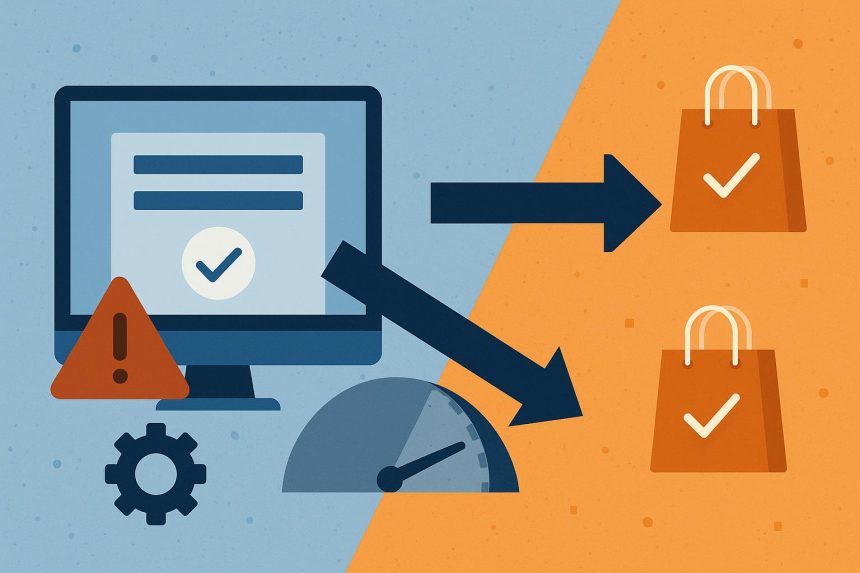
Most businesses spend significant time and money getting a customer to say yes. Marketing builds awareness, sales builds trust, and eventually the deal is ready to move forward.
Then onboarding begins, and that is where things can start to unravel.
Not in obvious ways. There is rarely a clear moment where a customer says they are leaving because of onboarding friction. Instead, delays creep in, communication becomes repetitive, and momentum fades.
By the time the issue becomes visible, the opportunity is often already lost.
Why Onboarding Is More Fragile Than It Looks
The early stages of a customer relationship carry more weight than many teams realise.
This is when expectations are formed. Customers are paying close attention to how easy it is to work with your business, how organised your processes are, and how quickly things move.
If onboarding feels slow or disjointed, it creates doubt.
That doubt does not always result in immediate churn, but it often leads customers to reassess their options. In competitive industries, that reassessment can quickly turn into a switch.
According to research from PwC, one in three customers will leave a brand they trust after just one poor experience. While this statistic is often applied to consumer markets, the principle holds true in B2B environments where operational efficiency is expected.
Where Friction Typically Shows Up
Onboarding friction is rarely caused by a single issue. It is usually the result of multiple small inefficiencies that add up.
Customers are asked to fill out forms more than once.
Information is requested in separate emails.
Supporting documents are not clearly defined upfront.
These steps may seem minor internally, but from the customer’s perspective they feel repetitive and unnecessary.
Credit applications are a common example. A customer may submit initial details, only to be asked for additional information days later. Each request extends the timeline and creates a sense of disorganisation.
This is often where the experience starts to break down.
The Gap Between Internal Processes and Customer Expectations
Internally, businesses understand why certain steps exist. Credit checks, documentation, approvals, and compliance all serve a purpose.
Customers, however, do not see the internal logic. They experience the process as a whole.
If that process feels fragmented, it reflects on the business as a whole.
In many cases, customers are comparing experiences across industries. They are used to fast, seamless digital processes in other areas of their work and personal lives.
When onboarding feels manual or outdated, it stands out immediately.
How Delays Create Opportunity for Competitors
Friction does not just slow things down. It creates space for competitors to step in.
If a customer is ready to place an order but faces delays, they may start exploring alternatives. Even if they initially preferred your offering, speed can become the deciding factor.
This is especially true in industries like wholesale, manufacturing, and distribution, where timing directly impacts operations.
A delayed onboarding process can mean delayed production, delayed delivery, or missed project timelines.
In those situations, customers are less likely to wait.
The Hidden Cost of Repeated Requests
One of the most common sources of friction is repeated information requests.
A customer provides basic details.
Finance asks for additional documentation.
Sales follows up again for clarification.
Each interaction introduces a delay.
More importantly, it signals a lack of coordination.
From the customer’s perspective, it feels like different parts of the business are not aligned. That perception can be difficult to recover from.
As one operations manager in a construction supply company explained, “We did not mind providing the information. We just did not understand why we had to provide it three times.”
What a Smooth Onboarding Process Looks Like
Reducing friction is not about removing necessary steps. It is about structuring them in a way that feels seamless.
Customers should know exactly what is required from the beginning.
All information should be collected in one place.
Timelines should be clear and predictable.
When these elements are in place, the process feels controlled rather than chaotic.
This has a direct impact on how customers perceive the business.
A smooth onboarding experience builds confidence. It signals that the company is organised, reliable, and easy to work with.
The Role of Technology in Reducing Friction
Technology plays a key role in creating that structure, particularly in areas like credit applications.
Instead of relying on manual forms and email communication, businesses can streamline how information is collected and processed.
This is where online credit application software becomes relevant.
By guiding customers through a structured application process, businesses can ensure that all required information is captured upfront. Supporting documents can be uploaded directly, reducing the need for follow ups.
For internal teams, this creates a single source of truth. Sales and finance can access the same information, which reduces duplication and improves coordination.
The result is a faster and more consistent onboarding experience.
Balancing Efficiency with Risk Management
A common concern is that simplifying onboarding might reduce the level of control.
In reality, structured processes tend to improve control.
When information is standardised and complete, it becomes easier to apply consistent credit policies. Decisions are based on better data, not incomplete inputs.
This allows businesses to move faster without increasing risk.
It also reduces the need for manual intervention, which is often where delays and inconsistencies occur.
Practical Steps to Reduce Onboarding Friction
Improving onboarding does not require a complete overhaul. It starts with identifying where friction exists.
Map the current onboarding journey from the customer’s perspective.
Identify points where information is requested more than once.
Look for delays between steps and understand what causes them.
From there, focus on simplifying the process.
Consolidate forms and documentation requirements.
Create clear guidelines for what customers need to provide.
Ensure that information flows smoothly between teams.
Small changes in these areas can have a significant impact.
The Long Term Impact on Customer Retention
Onboarding is not just about the first transaction. It sets the tone for the entire relationship.
A difficult onboarding experience can create lingering frustration.
A smooth experience builds trust from the beginning.
That trust influences how customers interact with the business moving forward.
It affects how quickly they place repeat orders, how they respond to issues, and how likely they are to recommend the company to others.
Conclusion
Friction in onboarding is often underestimated because it does not always show up in obvious metrics.
But its impact is real. It slows down deals, frustrates customers, and creates opportunities for competitors.
By simplifying processes and adopting tools like online credit application software, businesses can reduce unnecessary delays and create a more consistent experience.
In the end, onboarding should reinforce the decision to choose your business, not give customers a reason to reconsider.

Lynn Martelli is an editor at Readability. She received her MFA in Creative Writing from Antioch University and has worked as an editor for over 10 years. Lynn has edited a wide variety of books, including fiction, non-fiction, memoirs, and more. In her free time, Lynn enjoys reading, writing, and spending time with her family and friends.