Table of Contents
- AI and Machine Learning in Health Insurance
- Personalized Health Plans
- Telemedicine and Digital Health Platforms
- Blockchain for Data Security
- Wearable Technology and IoT
- Self-Funded Insurance Models
- Challenges and Opportunities
- Conclusion
Health insurance is rapidly changing as insurers introduce fresh solutions to tackle an increasingly complex healthcare environment. Today, advanced technology and a focus on personalization are not just streamlining access to care but also bolstering health security for millions. In particular, solutions like critical illness insurance offer protection beyond traditional policies. These insurance policies provide essential financial support during significant health events, highlighting the crucial role of innovative risk coverage in contemporary health security. As global health challenges evolve, insurers are increasingly utilizing digital tools, predictive analytics, and user-focused strategies. These advancements aim to enhance efficiency and outcomes while granting policyholders more autonomy over their health. The insurance sector is shifting from mere cost coverage to empowering individuals and communities through smarter design. Additionally, as healthcare providers adapt to modern demands, policyholders enjoy tailored coverage and greater convenience, reflecting significant improvements in both the quality of coverage and health management. By adopting next-generation insurance practices, stakeholders can bridge gaps in health security and explore new avenues for comprehensive protection.
AI and Machine Learning in Health Insurance
Artificial Intelligence (AI) and Machine Learning (ML) are reshaping the insurance sector at its core. These technologies process incredibly large datasets, helping insurers more accurately assess applicant risk and detect potential fraud. Modern underwriting systems now leverage AI to automatically flag unusual billing patterns and inconsistencies in applications, minimizing wasteful spending and speeding up enrollment. For example, AI-driven claim reviews can identify fraudulent or duplicate claims far better than manual systems, saving significant resources for both the insurer and the insured. As reported by Forbes, these advancements are streamlining once-complex processes into more transparent, intelligent, and accessible systems.
Personalized Health Plans
Personalization is at the heart of the next generation of health insurance. Using real-time information from wearable devices and health monitoring apps, insurers can customize coverage and premiums around a policyholder’s actual health status and behavior. Individuals who regularly exercise, maintain healthy weights, or adhere to preventive care routines may benefit from reduced premiums and expanded coverage. This approach not only incentivizes positive lifestyle choices but also aligns insurance offerings with real-world risk. According to a Capgemini report, the shift toward consumer-centric insurance plans is driving engagement and nurturing stronger long-term insurer-policyholder relationships.
Telemedicine and Digital Health Platforms
The proliferation of telemedicine platforms has radically expanded access to healthcare, particularly for underserved communities and individuals with mobility challenges. Through digital health portals, patients can consult doctors virtually, access prescriptions, and monitor chronic conditions from the convenience of home. Insurance providers are increasingly partnering with telehealth services to include these offerings in their plans, reducing unnecessary emergency room visits and follow-up costs. A growing number of digital-first insurers are prioritizing virtual care not only to improve patient satisfaction but also to reduce administrative overhead, while maintaining a high standard of medical oversight.
Blockchain for Data Security
Data security and privacy are paramount in the era of digital health. Blockchain provides a tamper-resistant method for storing and sharing sensitive health records among authorized parties. Each transaction or data entry within a blockchain system is authenticated and permanently recorded, dramatically lowering the risk of data breaches and identity theft. Both patients and insurers benefit from greater transparency and accountability, further encouraging trust and collaboration across the healthcare ecosystem. The Wall Street Journal has noted that blockchain’s adoption could provide long-term resiliency and integrity for health insurance infrastructure.
Wearable Technology and IoT
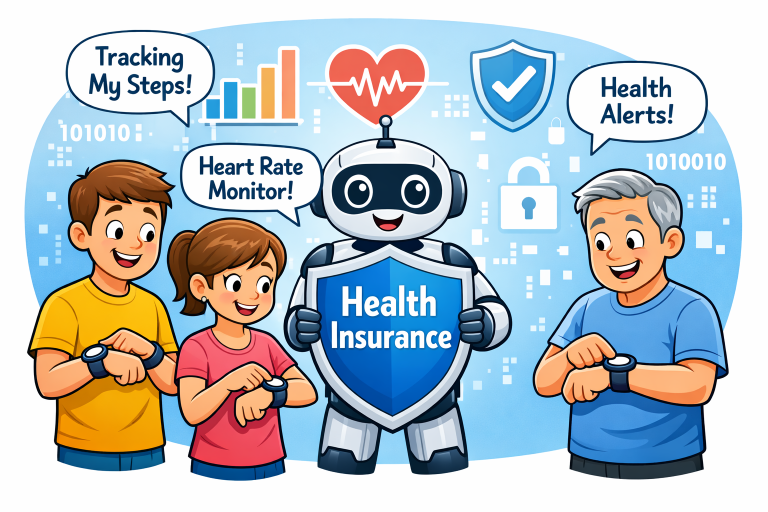
Wearables and other Internet of Things (IoT) innovations, such as fitness trackers, smart glucose monitors, and connected blood pressure cuffs, offer continuous health insights both for individuals and their insurers. By regularly capturing metrics such as heart rate, activity levels, or sleep quality, providers can proactively identify potential health issues and intervene earlier. This data-driven, preventive approach helps lower hospitalization rates and supports healthier lifestyles, translating to reduced claims for insurers and healthier policyholders. The integration of real-time data into insurance models is not only elevating health management but also introducing more adaptive and responsive insurance products.
Self-Funded Insurance Models
Self-funded insurance models are gaining momentum among employers seeking more control over their healthcare spending. In this arrangement, organizations take direct financial responsibility for their employees’ claims, typically supported by stop-loss insurance to limit exposure. Self-funded solutions provide customization that addresses unique workforce health needs, promotes transparency, and can yield significant cost savings compared to fully insured plans. As InsuranceNewsNet highlights, novel self-funded models are fostering innovative coverage arrangements and partnerships, solidifying their role in the future of workplace health protection.
Challenges and Opportunities
Despite their promise, these innovative solutions raise important considerations. Privacy concerns loom large as more personal data is collected and shared. Regulatory compliance is an ongoing challenge for companies operating across multiple jurisdictions. And the need for modern IT infrastructure can pose a barrier, especially for smaller organizations. Nevertheless, the opportunities for smarter, more effective, and more equitable health security solutions underscore the necessity of continued investment and ethical implementation. Collaboration between technology developers, insurers, and policymakers is vital for scalable success and lasting positive change.
Conclusion
Innovative insurance solutions are transforming how individuals and organizations approach health security. By adopting AI, personalizing coverage, enabling telehealth, leveraging blockchain, and deploying wearable technology, insurers are delivering products that are more responsive, efficient, and attuned to real-world needs. As healthcare challenges continue to evolve, embracing these solutions will be essential for improving outcomes and ensuring that all individuals have access to quality, affordable care tailored to their circumstances.

Lynn Martelli is an editor at Readability. She received her MFA in Creative Writing from Antioch University and has worked as an editor for over 10 years. Lynn has edited a wide variety of books, including fiction, non-fiction, memoirs, and more. In her free time, Lynn enjoys reading, writing, and spending time with her family and friends.