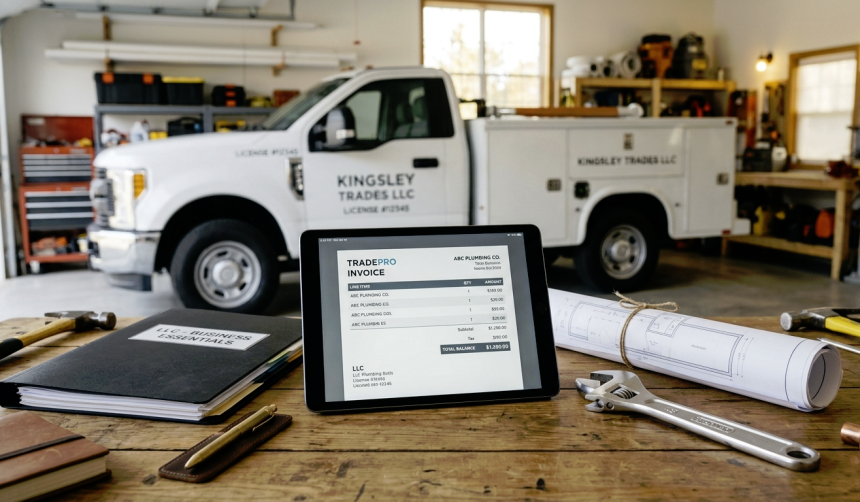
Launching a skilled trade business requires navigating a complex web of legal benchmarks before you can accept your first client payment. Many aspiring entrepreneurs mistakenly believe that simply buying a service truck and tools means they are open for business. To protect your personal assets and remain compliant with the law, you must establish a formal corporate identity and acquire the necessary credentials.
Form Your Corporate Identity And Tax Framework
The first definitive step to operating legally is choosing a business structure. For most tradespeople, establishing a Limited Liability Company (LLC) is the most effective way to separate personal assets from business liabilities. Once your LLC is registered with your state, you must obtain an Employer Identification Number (EIN) from the IRS for tax administration and payroll purposes.
Regulatory compliance varies widely across trades, so your legal roadmap depends entirely on your specific craft. For instance, an aspiring master plumber faces completely different regulatory hurdles than a residential painter or a drystone mason. If you intend to offer plumbing services, you must secure a journeyman or master level credential by fulfilling mandatory apprenticeship hours and passing a rigorous written exam.
To navigate this complex process, you can use a state-by-state guide on how to get a plumbing license to review specific compliance pathways, exam structures, and local permit rules. A little reading around the subject will leave you in a stronger position to take the next steps. Focus on your niche, of course, and you’ll get the best outcomes.
Navigate Insurance And Local Financial Compliance
While it’s possible to work remotely in some professional contexts, operating a hands-on trade business carries inherent physical and financial risks that standard business structures do not fully cover. General liability insurance is nonnegotiable, as it protects your operation against third-party bodily injury and accidental property damage on the job site. Furthermore, local municipalities frequently require specific surety bonds before issuing commercial working permits.
Before launching operations, make sure you complete these foundational legal and operational milestones:
- Register your trade name with your local county clerk’s office
- Secure worker compensation insurance if you plan to hire helpers
- Set up a business bank account to avoid mixing funds
Proper financial tracking keeps your business legal and ensures you do not run afoul of local tax authorities. Implementing dedicated invoicing tools early allows you to itemize local sales taxes, track permit fees, and maintain clear records for end-of-year tax filings.
Secure Your Business Foundation For Growth
Building a compliant trade business requires ongoing attention to shifting local ordinances and state regulations. If you neglect your local licensing renewals or let your general liability policy lapse, you risk heavy fines and potential legal shutdowns.
By taking the time to secure your entity structure, acquire proper credentials, and implement clean invoicing tools from day one, you build a resilient operational foundation. For more actionable business advice and operational strategies to scale your enterprise efficiently, explore the strategic insights available on our blog.

Lynn Martelli is an editor at Readability. She received her MFA in Creative Writing from Antioch University and has worked as an editor for over 10 years. Lynn has edited a wide variety of books, including fiction, non-fiction, memoirs, and more. In her free time, Lynn enjoys reading, writing, and spending time with her family and friends.