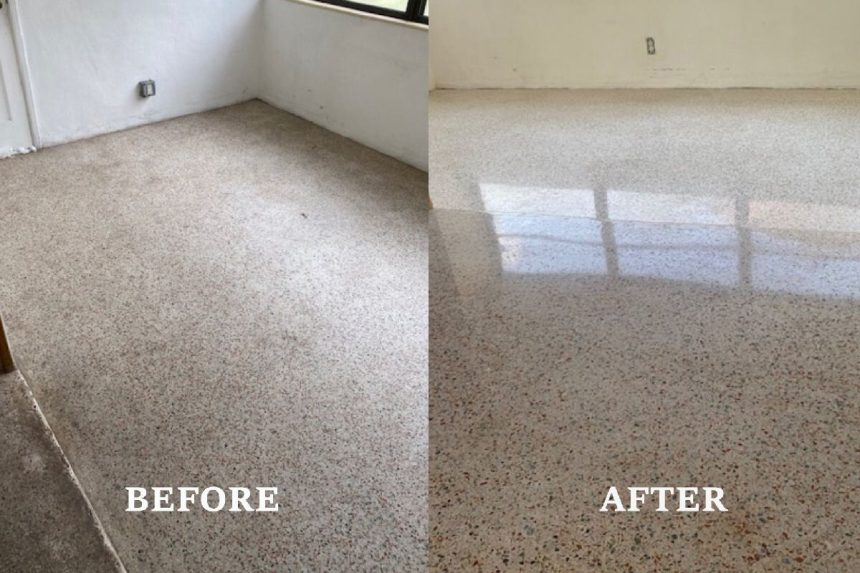
Terrazzo is considered as one of the most elegant, durable, and sustainable flooring materials in modern and historic architecture. Composed of natural marble, granite, quartz, or glass chips set within a cementitious or epoxy binder matrix, terrazzo delivers extraordinary visual appeal paired with unrivaled longevity. When properly maintained, a quality terrazzo floor easily endures for over 75 years, outlasting virtually every other commercial or residential floor covering on the market.
Whether installed in a historic estate in Alamo Heights, a high-traffic commercial office tower in Stone Oak, a retail space in Leon Valley, or a mid-century residential remodel in Universal City, terrazzo represents a substantial architectural investment. Maintaining that signature glass-like finish requires specialized care tailored to South Texas’s environmental conditions. The combination of intense climate, regional soil characteristics, tracked-in limestone dust, and daily foot traffic can gradually degrade protective sealers, cause surface dullness, and compromise the floor’s structural matrix over time.
This blog explores terrazzo composition, chemistry, vulnerabilities, Primary Causes of Terrazzo Surface Degradation, Daily Dry Dust Mopping Guidelines, Weekly Damp Mopping and Neutral Chemical Protocol and Professional Diamond Polishing, Sealing, and Restoration.
Understanding Terrazzo: Composition, Chemistry, and Vulnerabilities
Cementitious Terrazzo vs. Epoxy Terrazzo
The two primary binder systems used in terrazzo flooring require distinct long-term care strategies:
Cementitious Terrazzo
This type of terrazzo typically found in historic homes, civic structures, older schools, and commercial buildings constructed before the 1970s, cementitious terrazzo utilizes a Portland cement matrix. This system is inherently porous and highly alkaline. Because a cement matrix contains calcium hydroxide, it reacts severely to acidic substances, which dissolve the binder and create surface dullness known as etching. Cementitious floors require deep-penetrating, breathable sealers that allow moisture vapor to escape from the subfloor without causing surface delamination.
Epoxy Terrazzo
It is predominantly installed in modern residential and commercial construction, epoxy terrazzo utilizes a thin-set resinous binder. An epoxy matrix is non-porous, highly chemical-resistant, and flexible, allowing for vibrant pigment choices and complex inlaid designs. While epoxy terrazzo does not etch from mild acids as easily as cementitious systems, it remains susceptible to micro-scratching from fine abrasives and can turn yellow or dull if exposed to harsh solvents or unapproved cleaning chemicals.
Primary Causes of Terrazzo Surface Degradation
Abrasive Aggregate Wear
San Antonio soil contains high concentrations of fine clay, sand, and crushed limestone. When tracked indoors on footwear, these microscopic particles act like coarse sandpaper under daily foot traffic, gradually grinding down the polished surface, wearing away sealers, and causing high-traffic pathways to look foggy or matte.
Chemical Etching
Acidic liquid spills (such as citrus juice, wine, coffee, soda, or vinegar) and acidic cleaning chemicals chemically react with the marble aggregate and cementitious binder. This reaction dissolves the top micro-layer of stone, leaving rough, white, unpolished spots that attract dirt and darken over time.
Hydrostatic Pressure and Moisture Trapping
In South Texas’s humid environment, moisture vapor migrates upward through concrete slabs. If an impermeable topical wax or acrylic coating is applied over porous cementitious terrazzo, trapped moisture causes efflorescence (white mineral salts) or turns the surface cloudy, causing the coating to peel and flake.
Staining from Spills
Because natural marble chips and cement matrices are absorbent, unsealed or improperly sealed floors rapidly soak up oily substances, rust, or colored dyes, locking stains deep beneath the surface layer.
Daily and Weekly Preventive Maintenance Protocols
Preventive maintenance is the cornerstone of preserving terrazzo. Eliminating grit and spills before they inflict physical or chemical damage saves thousands of dollars in restoration costs over the life of the building. The U.S. The Environmental Protection Agency (EPA) also recommends regular attention to terrazzo and other flooring, along with appropriate cleaning practices and moisture control.
Daily Dry Dust Mopping Guidelines
Use Untreated Microfiber Dust Mops
Always select high-density microfiber dust mops. Never use oil-treated sweepers or chemical dust-mop treatments; oil residues transfer directly onto the terrazzo, creating a sticky film that attracts dirt and dims natural light reflection.
Frequency Guidelines
Residential properties should dust mop daily in high-foot-traffic pathways. Commercial facilities, retail outlets, and office lobbies must dust mop multiple times per day, especially during peak entry hours.
Vacuuming Considerations
If using a vacuum, equip it with a soft brush attachment. Never use upright vacuums with rotating beater bars, as hard metal or stiff plastic components can chip marble aggregates and leave permanent scratches.
Weekly Damp Mopping and Neutral Chemical Protocol
Select a Specialized Neutral pH Cleaner
Always use a dedicated, neutral floor cleaner specifically formulated for natural stone and terrazzo with a pH level between 7.0 and 8.0. Avoid general-purpose household soaps, floor waxes, or acidic solutions.
Proper Chemical Dilution
Mix the cleaner with clean, warm water according to manufacturer directions (typically 1 to 2 ounces of cleaner per gallon of water, or roughly a 1:100 ratio). Excess cleaner concentration leaves a soapy film that dulls surface gloss.
Double-Bucket System
Utilize a dual-bucket mop cart, with one bucket containing fresh cleaning solution and the second bucket reserved for wringing out dirty rinse water. This prevents recycling abrasive soil back onto the floor.
Microfiber Mop Heads
Use clean, non-abrasive microfiber string mops or flat mops. Change mop heads frequently throughout the cleaning process.
Rinse and Dry
While neutral cleaners technically do not require rinsing, passing over the wet floor with a clean mop dampened only with cold water guarantees that no surfactant residue remains behind. Allow the area to dry completely before re-opening to foot traffic.
Commercial vs. Residential Maintenance Requirements
While the fundamental chemistry of terrazzo preservation is identical across all applications, scale, foot traffic volume, and operational constraints necessitate different maintenance schedules for commercial facilities and private residences.
Commercial Entrance Matting Systems
In commercial environments, over 80% of outdoor soil and grit enters the building via pedestrian footwear. Implementing a comprehensive entrance matting strategy is the most cost-effective way to protect polished terrazzo.
10-to-15-Foot Rule
Place entrance walk-off mats that extend at least 10 to 15 feet inward from all exterior doors. This length ensures that pedestrians take at least four to six steps on the matting, wiping away the vast majority of abrasive sand, moisture, and soil before stepping onto the terrazzo.
Mat Maintenance
Vacuum entrance mats daily and clean them regularly with carpet extractors. A saturated or dirty entrance mat loses its ability to trap soil and can end up grinding abrasive particles directly into nearby terrazzo surfaces.
What to Avoid: Critical Mistakes in Terrazzo Care
Improper Terrazzo floor cleaning in San Antonio cleaning chemicals and techniques account for the vast majority of premature terrazzo failures. Avoiding harmful practices is just as crucial as executing correct maintenance routines.
Chemical Risks: Acids, Alkalis, and Solvents
Never Use Acidic Cleaners
Vinegar, lemon juice, citrus-based solutions, tile scale removers, and muriatic acid dissolve marble aggregates and cement binders within seconds, causing irreversible surface etching.
Avoid Harsh Alkaline Cleaners and Bleach
High-pH chemicals, ammonia, undiluted bleach, and heavy-duty degreasers strip protective sealers, weaken the cement matrix, and cause discoloration or chalking.
Avoid Unapproved Solvents
Harsh industrial solvents can weaken epoxy binders and leave permanent hazing on modern terrazzo installations.
Physical Risks: Abrasive Tools and Topical Waxes
Do Not Apply Topical Floor Waxes or Acrylic Finishes
Applying cheap acrylic wax or topical varnish to terrazzo is a critical error. Waxes trap moisture, yellow over time, scuff easily, and require periodic chemical stripping with aggressive solvents that harm the floor. Genuine terrazzo shine should come from physical diamond polishing, not synthetic coatings.
Eliminate Abrasive Cleaning Tools
Steel wool, wire brushes, green scouring pads, and aggressive black auto-scrubber pads scratch polished stone and ruin the reflective clarity of the floor.
Do Not Leave Standing Water
Allowing mop water or liquid spills to puddle and air-dry leaves mineral scale deposits behind, especially in San Antonio where municipal water carries high calcium and magnesium hardness levels.
Multi-Stage Mechanical Diamond Polishing
Modern terrazzo restoration relies entirely on physical diamond abrasion rather than chemical coatings or wax tricks to produce a high gloss.
1. Surface Grinding and Honing
Heavy-duty, counter-rotating planetary grinding machines equipped with metal-bonded diamond segments smooth out uneven tiles, remove deep scratches, and level high edges. Water-fed grinding systems are used to control airborne dust during this stage.
2. Progressive Diamond Polishing
Technicians transition through finer resin-bonded diamond pads, moving sequentially from 100-grit up to 3000-grit or higher. Each progressive pass refines the micro-scratch pattern, compacting the aggregate surface and building a natural, glass-like reflection.
3. Precision Patching and Repair
Any hairline cracks, spalls, or missing aggregate chips are hand-filled using color-matched epoxy or cementitious terrazzo filler. Once cured, the repaired spots are ground flush with the surrounding floor so patches blend seamlessly into the original pattern.
Penetrating Impregnating Sealers
Following mechanical diamond polishing, the surface must be protected with a high-grade penetrating impregnating sealer.
How Impregnating Sealers Work
Unlike topical coatings that sit on top of the floor, penetrating sealers sink deep into the micro-pores of the aggregate and binder matrix. They create an oil- and water-repellent barrier beneath the surface without altering the floor’s slip resistance, color, or natural breathability.
VOC Compliance and Air Quality
Professional restoration uses low-VOC, eco-friendly solvent or water-based impregnators safe for indoor air quality in occupied homes, offices, schools, and healthcare environments.
Curing Requirements
After sealer application, the floor should cure undisturbed for 24 hours before heavy foot traffic or damp cleaning is permitted.
Conclusion
Terrazzo is an exceptional architectural element that combines enduring strength with sophisticated design versatility. Protecting its mirror-like clarity in San Antonio’s unique climate requires a systematic approach: daily microfiber dust mopping to control regional abrasive soils, weekly damp mopping with neutral pH solutions, and an absolute avoidance of topical waxes or acidic chemicals.
By prioritizing preventive care and partnering with certified experts for periodic diamond polishing and penetrating sealing, property managers and homeowners can safeguard their flooring investment for generations. Whether maintaining a historic estate or managing a modern commercial facility, a dedicated terrazzo care plan ensures your floors continue to deliver striking visual appeal, superior hygienic performance, and maximum long-term value. For more information on improving the readability of business content, see Readability’s business reading tool.

Lynn Martelli is an editor at Readability. She received her MFA in Creative Writing from Antioch University and has worked as an editor for over 10 years. Lynn has edited a wide variety of books, including fiction, non-fiction, memoirs, and more. In her free time, Lynn enjoys reading, writing, and spending time with her family and friends.