

Face painting is a wonderful way to bring imagination to life. A simple brushstroke can become a colourful butterfly, a fierce tiger, a magical unicorn or a favourite superhero. Whether you want to enjoy a creative hobby or build a career, learning the right techniques can help you create designs that people love.
An online face painting course gives you the chance to develop your skills from the comfort of your home. You can practise at your own pace, learn from experienced artists and improve your technique without travelling to a classroom. With the right training and regular practice, even a complete beginner can develop the confidence to create beautiful designs.
The International Face Painting School offers structured learning for beginners and experienced artists who want to improve their skills. Its programmes cover painting techniques, practical assignments, professional guidance and business development.
In this guide, we will explore what you can learn from a face painting course, how online training works and how to turn your creativity into a valuable skill.
Why Choose an Online Face Painting Course?
Learning face painting is about more than choosing colours and copying pictures. You need to understand brush control, paint consistency, colour combinations and the way designs fit the shape of a face.
An online course helps you develop these skills through planned lessons and regular practice.
Learn at Your Own Pace
One of the main benefits of an online face painting course is flexibility. You can study in the morning, during your lunch break or in the evening. You do not need to follow a fixed classroom timetable.
You can also replay lessons whenever you need help. If a particular brushstroke feels difficult, watch the demonstration again and practise until you feel more comfortable.
This approach is useful for parents, students, working professionals and anyone who wants to learn a new skill without changing their daily routine.
Learn from Experienced Artists
Professional guidance can help you avoid common mistakes. An experienced instructor can show you how to load a brush, use a sponge and create clean lines.
Some structured programmes also offer feedback on your work. This helps you understand what you are doing well and which areas need improvement.
The International Face Painting School provides step-by-step lessons, practical assignments and instructor support through its professional learning programmes.
Save Time with a Clear Learning Plan
Free videos can be useful, but finding the right lessons across different websites can become confusing. You might learn one technique from one artist and a different method from another without understanding how to combine them.
A structured face painting course gives you a clear path to follow. You can start with basic skills, move on to more detailed designs and gradually build a strong foundation.
What Will You Learn in a Face Painting Course?
A good course should cover the essential skills needed to create attractive, safe and professional-looking designs. Each technique plays an important role in the final result.
1. Choosing the Right Face Painting Supplies
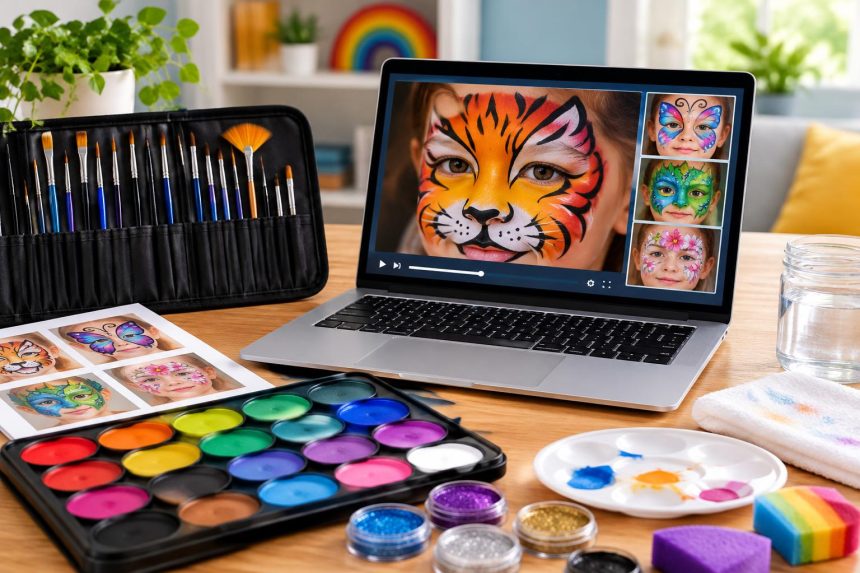
Before you begin, you need suitable materials. Your basic kit may include:
- Face paints designed for use on skin.
- Round brushes for fine lines and details.
- Flat and filbert brushes for flowers and larger shapes.
- Soft sponges for backgrounds and colour blending.
- Stencils for repeated patterns.
- Cosmetic-grade glitter and suitable decorative products.
Quality matters, but beginners do not need to buy every product available. Start with a small selection of reliable supplies and add more as your skills develop.
A well-planned kit makes practice easier and helps you understand how different tools affect your designs.
2. Mastering Brush Control and Linework
Clean lines can make a simple design look professional. They are important for butterfly wings, whiskers, superhero masks, flower petals and decorative patterns.
During a face painting course, you can practise thin lines, thick lines, dots, teardrops and curved strokes.
Start slowly and focus on control rather than speed. Use light pressure for fine lines and increase pressure when you need thicker marks. With regular practice, your movements will become smoother and more confident.
3. Understanding Colours and Blending
Colour plays a major role in face painting. The right combinations make designs bright, balanced and easy to recognise.
Learn how primary colours work together and how to combine contrasting shades. You should also practise blending colours without creating muddy patches.
For example, a butterfly may look striking with purple wings, pink highlights and white details. A tiger design needs warm orange tones, dark stripes and lighter areas around the eyes and mouth.
Colour theory helps you make better choices and create designs that stand out.
4. Learning One-Stroke and Double-Dip Techniques
One-stroke painting allows you to create several colours in a single brush movement. It is especially useful for flowers, leaves, petals and decorative flourishes.
The double-dip technique involves loading a brush with two colours to produce attractive transitions and patterns.
Both techniques can help you create detailed designs more quickly. They require practice, so begin with simple shapes before moving on to more complex artwork.
5. Creating Popular Face Painting Designs
A practical face painting course should give you opportunities to work on different themes.
Butterflies and Flowers
Learn to create balanced wings, colourful petals and fine decorative details. These designs are popular at birthday parties, school events and family festivals.
Animal Faces
Practise tiger stripes, cat whiskers, puppy noses and other recognisable features. Focus on making each design clear without adding unnecessary detail.
Unicorns and Fantasy Art
Explore rainbows, magical colours, stars and decorative shapes. These designs help you develop creativity and learn how to combine several techniques.
Superhero Masks
Learn to create bold shapes, sharp edges and strong colour combinations. Simple, recognisable designs are especially useful when working at busy events.
Practising a range of themes helps you build a varied portfolio and prepares you for different client requests.
How to Practise Face Painting at Home
Watching lessons is useful, but real improvement comes from practice. Set aside regular time to work on your designs and focus on one skill at a time.
Start with Simple Designs
You do not need to master complicated artwork straight away. Begin with stars, hearts, flowers, simple butterflies and small animal designs.
Practise each design several times. Notice where your lines become uneven or where the colours do not blend as expected. Then repeat the design and try to correct those problems.
As your confidence grows, combine different techniques to create more detailed artwork.
Practise on Different Face Shapes
Faces vary in shape and size. A design that looks balanced on one person may need adjustments on another.
You can practise on a willing adult, use a suitable practice board or work with a face painting mannequin. These options allow you to understand how designs fit around the eyes, cheeks and forehead.
Always use suitable products and follow proper hygiene practices when painting real people.
Photograph Your Best Work
Take clear photographs of your finished designs. A portfolio helps you track your progress and identify your strongest styles.
It can also become an important marketing tool if you decide to offer face painting services. Keep your photographs organised by theme, such as animals, fantasy, superheroes and floral designs.
Why Hygiene and Safety Matter in Face Painting
Creative ability is important, but professional face painters must also understand hygiene and product safety.
Your face painting course should explain how to prepare your equipment, clean your brushes and sponges, and handle paints correctly.
Follow these essential practices:
- Use paints specifically designed for cosmetic application on the skin.
- Wash your hands before each session and between clients when needed.
- Clean brushes and reusable tools according to the manufacturer’s instructions.
- Avoid sharing products or tools in ways that could spread infection.
- Never paint over open wounds, irritated skin or areas showing signs of infection.
- Check product instructions and ask about known allergies before beginning.
- Follow the manufacturer’s guidance for using products near the eyes and mouth.
Good hygiene protects your clients and shows that you take your work seriously. It is especially important when working with children at busy events.
Can an Online Face Painting Course Help You Start a Business?
Yes, a well-designed course can provide a useful starting point for a face painting business. However, success also depends on your practical ability, customer service, pricing and marketing.
Face painters may find opportunities at birthday parties, school fairs, festivals, community events, family celebrations and corporate functions.
Build a Portfolio That Attracts Clients
Choose your strongest designs and present them in a clear, professional portfolio. Include different styles to show potential customers what you can offer.
With permission, use photographs of your work on social media or a business website. Make sure your images are clear and represent the quality of your current skills.
Set Fair Prices for Your Services
When setting your rates, consider the time spent travelling, preparing equipment, painting each person and cleaning your supplies afterwards.
You should also account for paint, brushes, insurance where appropriate and other business costs.
Start with pricing that reflects your skill level and local market. As your experience and demand grow, you can review your rates.
Learn How to Promote Your Work
Social media can help you reach parents, event organisers and local businesses. Share examples of your work, explain the services you provide and make it easy for people to contact you.
Recommendations from satisfied customers can also help you build trust. Professional communication, punctuality and a clean working area encourage clients to book you again.
Some face painting training programmes also include business and marketing education, covering areas such as pricing, branding and client management.
How to Choose the Right Face Painting Course
Not every course offers the same level of training. Before enrolling, consider your goals and the type of support you need.
Look for these important features:
- Structured lessons: The course should move from basic skills to more advanced techniques.
- Practical assignments: You should have opportunities to apply what you learn.
- Expert feedback: Personal guidance can help you correct mistakes and improve faster.
- Hygiene training: Safety should be part of your learning, not an afterthought.
- Varied designs: Choose training that covers different themes and painting styles.
- Business guidance: If you want to earn from your art, learn about pricing and finding clients.
- Clear certification details: Check whether a certificate is included and what you must complete to earn it.
Explore the International Face Painting School
The International Face Painting School offers learning options for beginners and artists who want to develop their professional skills. Its courses include video lessons, practical exercises and community support. Some professional programmes also offer individual coaching and certification.
Before enrolling, review the course content, access period, fees and certification requirements. This will help you select training that suits your budget and ambitions.
Common Mistakes Beginners Should Avoid
Every artist makes mistakes while learning. The key is to recognise them and keep improving.
Using too much water: Excess water can make paint run or become difficult to control. Practise finding the right consistency for each product.
Pressing too hard: Heavy pressure can produce uneven lines. Learn to control your brush with steady, gentle movements.
Rushing through designs: Speed comes with experience. Focus on neat results first, then work on painting more efficiently.
Buying too many supplies: A large kit cannot replace good technique. Start with essential tools and invest in additional products as needed.
Ignoring feedback: Constructive criticism helps you see problems you may have missed. Use it to improve rather than feeling discouraged.
Giving up too soon: Some techniques take time to master. Regular, focused practice is more useful than expecting perfect results after one lesson.
Final Thoughts: Turn Your Creativity into a Valuable Skill
An online face painting course can help you develop artistic skills, learn professional techniques and explore new creative opportunities without leaving home. From brush control and colour blending to hygiene and business planning, the right training can give you a strong foundation.
You do not need to be an experienced artist to begin. Start with simple designs, practise regularly and build your skills step by step. As your confidence grows, you can explore more advanced artwork and create a portfolio that reflects your style.
If you want to learn in a structured way, explore the programmes offered by the International Face Painting School and compare them with your personal goals.
The most important step is to begin. With patience, practice and the right guidance, your interest in face painting can grow into a rewarding hobby or a professional skill that brings colour and joy to others.

Lynn Martelli is an editor at Readability. She received her MFA in Creative Writing from Antioch University and has worked as an editor for over 10 years. Lynn has edited a wide variety of books, including fiction, non-fiction, memoirs, and more. In her free time, Lynn enjoys reading, writing, and spending time with her family and friends.