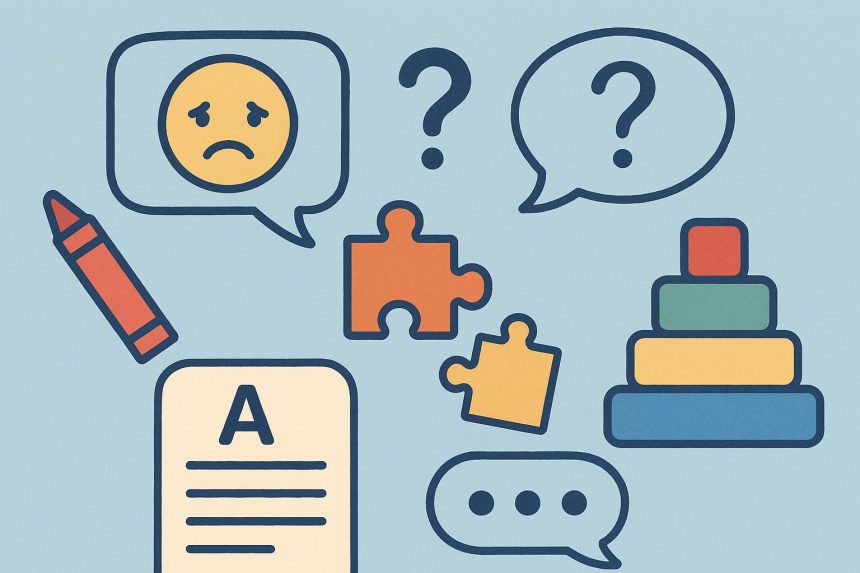
Every child develops communication skills at their own pace, but parents may notice subtle signs that development could be delayed. Recognising these signs early allows families to access the right support, helping children reach their full potential. Communication support, including child speech therapy, is vital for improving language, social skills, and confidence.
Understanding Children’s Communication Development
Speech versus Language
It’s important to distinguish between speech and language:
- Speech is the ability to produce sounds clearly.
- Language is about understanding and using words to communicate meaning.
Children can have difficulties with one, both, or related skills. For example, a child may pronounce words clearly but struggle to form sentences or follow instructions.
Typical milestones by age
Awareness of developmental milestones can help parents track progress:
- Around 12 months: First words appear; simple gestures like pointing.
- 18–24 months: Vocabulary expands to 50+ words; short phrases emerge.
- 3 years: Sentences of 3–4 words, understandable to familiar listeners.
- 4–5 years: Complex sentences, storytelling, and following multi-step instructions.
- 5–6 years: Conversational skills, basic grammar understanding, and social language.
Delays in reaching these milestones may indicate the need for communication support for children.
Early Indicators of Communication Delays
Some children show subtle signs of delay, while others may have more noticeable difficulties. Common indicators include:
- Limited vocabulary or slow language growth: Your child may have fewer words than peers or struggle to form sentences. They might rely heavily on gestures, pointing, or non-verbal cues.
- Difficulty following instructions: Children with communication challenges may misunderstand simple directions or struggle with multi-step tasks. This can affect learning, daily routines, and participation in group activities.
- Problems with speech clarity: Persistent slurred, unclear, or distorted speech can signal a speech delay. Sound omissions, substitutions, or inconsistent speech patterns are common signs.
- Challenges in social interactions: Some children struggle to start or maintain conversations, take turns in dialogue, or respond appropriately to others. Difficulty understanding jokes, questions, or social cues may also indicate communication support needs.
Behavioural Signs That May Indicate Support is Needed
Communication delays often appear in behaviour. Children who find it hard to express themselves may:
- Become frustrated or withdrawn: They may act out, become easily upset, or avoid speaking because expressing needs is challenging.
- Avoid conversation or play: Some children shy away from group activities, prefer solitary play, or rely heavily on caregivers to communicate on their behalf. Recognising these behaviours early helps families seek timely support.
In some cases, children with ADHD or other neurodevelopmental conditions may also benefit from complementary therapies. For example, a child chiropractor can support focus, posture, and overall wellbeing, which can indirectly improve communication engagement. Similarly, mobile occupational therapy services can provide personalised support in the home environment, enhancing daily communication and social participation.
How Speech Therapy for Children Can Help
Assessment and personalised plans
A qualified speech pathologist evaluates a child’s language, speech, comprehension, and social skills. The assessment identifies strengths and areas needing support. From this, a tailored therapy plan is developed.
Therapy techniques and strategies
Therapy may include structured exercises, play-based activities, or interactive games that encourage speech and language development. The therapist works with the child at their pace, focusing on building skills in everyday contexts.
Collaboration with parents and teachers
Effective communication support involves the entire care team. Parents and teachers play a key role in reinforcing therapy strategies at home and school. Consistency across environments improves outcomes and builds confidence.
The Importance of Early Intervention
Benefits of starting therapy early
Early intervention can significantly improve a child’s outcomes. Children develop language and social skills rapidly in the first five years, so timely support has the greatest impact. Child speech therapy helps children:
- Build vocabulary and sentence structure
- Improve articulation and clarity of speech
- Strengthen social interaction and confidence
- Reduce frustration and behavioural issues
How early support impacts learning and social skills
Language and communication skills form the foundation for literacy, problem-solving, and learning. Children who receive support early often experience fewer challenges at school and have better peer relationships. Early intervention sets them up for lifelong communication success.
Accessing Child Communication Support Through NDIS and Allied Health
Eligibility for NDIS support
NDIS participants can access funding for speech therapy for children if a communication delay significantly affects daily life. Supports may cover assessments, therapy sessions, assistive technology, and allied health services.
Steps to access funding and therapy
- Include communication goals in the child’s NDIS plan
- Obtain assessment reports from a speech pathologist
- Submit a request to the NDIS for therapy funding
- Choose an approved provider to deliver the therapy
Choosing the right provider
Selecting a provider involves checking qualifications, experience with children, therapy approaches, and availability. Clear communication and flexible session options help families stay engaged in the process.
Tips for Supporting Communication at Home
Parents can foster communication skills in simple, practical ways:
- Describe activities while completing them together
- Encourage children to express needs in words
- Ask open-ended questions to promote conversation
- Use routines like mealtime or dressing as opportunities for language
Play encourages social interaction, problem-solving, and vocabulary growth. Reading together introduces new words, sentence structures, and storytelling skills. Consistent, enjoyable practice at home reinforces therapy sessions and motivates children to communicate.
Combining therapy with everyday activities and complementary therapies like occupational therapy or chiropractic support can provide a holistic approach to communication development.

Lynn Martelli is an editor at Readability. She received her MFA in Creative Writing from Antioch University and has worked as an editor for over 10 years. Lynn has edited a wide variety of books, including fiction, non-fiction, memoirs, and more. In her free time, Lynn enjoys reading, writing, and spending time with her family and friends.