Why Closed Clinics Are One of the Best Sources for Used Medical Lasers
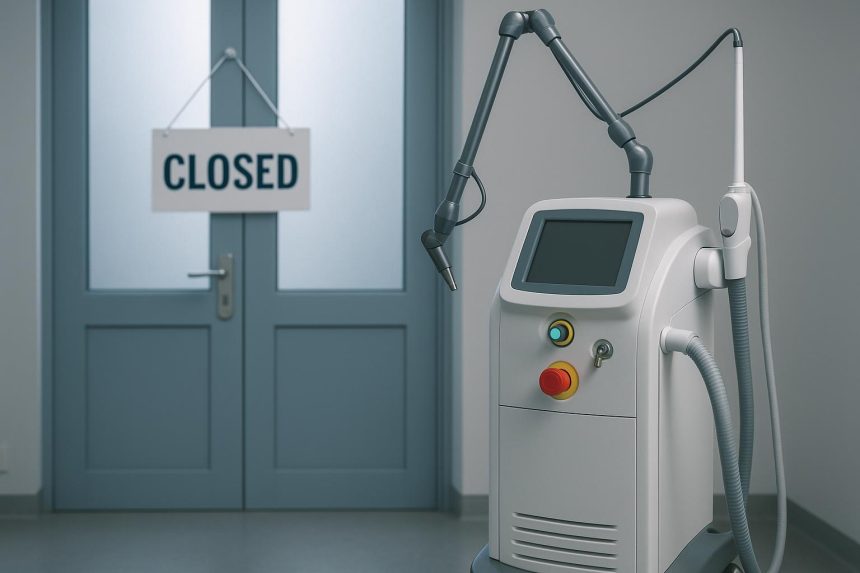
When a clinic closes, someone has to deal with the equipment. Landlords want the space cleared. Estate attorneys want assets liquidated. Creditors want cash. None of those parties are laser equipment specialists, which means devices often move fast and at prices that reflect urgency more than market value.
For a practice looking to buy used medical lasers, this creates a genuine opportunity. You can sometimes acquire clinical-grade equipment at 30 to 60 percent below what the same device would cost through a traditional dealer. The savings are real.
The risk is also real. Buying directly from a closed clinic means bypassing the vetting process a reputable dealer would apply. The device may have been maintained poorly. Key accessories may be missing. The sale may be structured in a way that leaves you with no recourse if something is wrong. And the urgency that creates the discount can also create pressure to skip the due diligence that protects you.
This guide covers the sourcing process from start to finish, so you can take advantage of the opportunity without absorbing the avoidable risks.
Step 1: Find Closed Clinic Sales Before They Hit the Open Market
The best prices on used medical lasers from closed clinics come before the sale is widely advertised. By the time a device appears on a general marketplace listing, it has often already been seen by dealers who have made offers. Understanding where to look early gives you access to inventory that never reaches the open market at all.
Where Closed Clinic Equipment Actually Surfaces
- Bankruptcy and receivership filings. When a clinic closes through a formal bankruptcy process, the assets become part of a legal proceeding. These filings are public record in most jurisdictions. A Chapter 7 liquidation, for example, will list all assets, including medical equipment. Following local court filings in your area takes some effort, but can surface opportunities before any equipment dealer is contacted.
- State medical board notifications. Many states require physicians to notify the medical board when closing a practice. While these notifications don't always include equipment details, networking through professional associations can surface closures before they're publicly advertised.
- Equipment dealers and brokers. Paradoxically, the brokers who compete with you for direct purchases are also sometimes your best early-warning system. Dealers who specialize in used medical lasers often know about pending clinic closures before the equipment is formally listed. Building a relationship with a reputable dealer means you sometimes get a first look at inventory they've decided not to take on, or private referrals to sellers they are not actively pursuing.
- Local medical real estate agents. Commercial real estate agents who specialize in medical office space often know when a practice is closing before anyone else does. A relationship with one or two agents in your market costs nothing and can surface leads months before public listings appear.
- Professional networks. Other physicians and clinic owners in your area often hear about a colleague closing through word of mouth. A reputation for being a fair, fast buyer of equipment spreads within professional communities.
- Online liquidation platforms. Sites like GovPlanet, BidSpotter, and medical-specific auction platforms list equipment from practice closures, bankruptcies, and hospital surplus. These are more competitive than private sales but still frequently offer pricing below dealer retail.
Step 2: Evaluate the Seller and the Sale Structure Before Anything Else
Before you look at the device itself, understand who you are buying from and what legal authority they have to sell it.
Who Is Actually Selling the Equipment?
In a clinic closure, the answer is not always obvious. The equipment might be owned by:
- The physician personally
- A practice entity (LLC, PC, or partnership)
- A lender with a security interest in the equipment
- A leasing company if the device was financed
- A bankruptcy trustee if formal proceedings have begun
Buying from a physician who no longer has authority to sell because the practice is in receivership, or buying equipment that is collateral on an outstanding loan, can create serious problems. You may end up paying for a device and then having it claimed by a creditor who has a senior legal interest in it.
Before negotiating price, ask these questions directly:
- Is there a lien or security interest on this equipment? Request a UCC lien search by serial number.
- Is the practice currently in bankruptcy or any formal legal proceeding?
- Who legally owns the device, and what documentation confirms that ownership?
- If the practice is an entity, does the seller have authority to dispose of assets?
A title search and a UCC lien search through your state's Secretary of State database are not expensive and take a day or two. It is worth doing on any device purchase above a few thousand dollars.
What Does the Sale Agreement Look Like?
Private sales from closed clinics are often handled informally, which works against you. A handshake agreement or a simple receipt does not protect you if the device has undisclosed problems or if ownership questions surface later.
Push for a written bill of sale that includes:
- Full identification of the seller and their legal authority to sell
- Device make, model, and serial number
- A representation that the device is free of liens and encumbrances
- A description of what is included: handpieces, accessories, manuals, service records
- The as-is nature of the sale is clearly stated
- Any representations the seller is making about the device condition or history
You will not get a warranty from a private seller, and you should not expect one. But a written agreement with accurate representations gives you something to stand on if misrepresentation surfaces later.
Step 3: Inspect the Device Before You Pay Anything
Private sales from closed clinics are almost always as-is. That means the inspection you do before purchasing is your only opportunity to understand what you are actually buying.
Do not accept photos, videos, or the seller's verbal description as a substitute for a hands-on inspection by a qualified technician. Sellers in a liquidation situation are motivated to move quickly, and even honest sellers may not know the full condition of the equipment they did not personally operate or maintain.
What a Pre-Purchase Inspection Should Cover
- Power-on verification. The device needs to actually turn on and run through its startup sequence. Error codes on startup are a red flag that warrants investigation before proceeding.
- Shot count and usage data. Most laser platforms log total pulse counts internally. Pull that data and compare it against manufacturer-rated component lifespans. A flash lamp rated for 500,000 shots that shows 480,000 on the counter needs replacement immediately, which should be factored into your price negotiation.
- Optical component condition. Lenses, fibers, articulated arms, and handpiece tips need physical inspection. Look for scratches, cloudiness, crazing, or contamination on any optical surface. These directly affect energy delivery and treatment outcomes.
- Cooling system status. Check coolant levels and color. Discolored or contaminated coolant signals deferred maintenance. Run the device under load and verify the cooling system holds the target temperature.
- All included accessories. Physically inventory every handpiece, tip, cable, key, footswitch, and manual. Replacement handpieces for some platforms cost thousands of dollars. Missing accessories that the seller assumed were included in the price are a common source of post-purchase disputes.
- Service history documentation. A closed clinic may have maintenance records going back years, or none at all. Whatever records exist, get copies before the sale. They establish a baseline for your ongoing service planning.
- Physical condition of the chassis and connections. Look for signs of impact damage, liquid intrusion, or unauthorized internal modifications. Burn marks, corrosion, or evidence of amateur repairs are serious concerns.
If you cannot be present for the inspection yourself, hire a certified biomedical engineer or a laser service technician with documented experience on that specific platform to do it on your behalf. The cost of a professional inspection, typically $300 to $800, is insignificant relative to the purchase price and the cost of buying a device with serious, undisclosed problems.
Step 4: Price It Based on Condition, Not the Asking Price
Closed clinic sales are emotionally charged situations in which sellers often have an inflated sense of their equipment's value. They paid a lot for it, they believe it was well maintained, and they need the money. That combination produces asking prices that sometimes bear little relationship to actual market value.
How to Establish a Realistic Market Price
- Check current dealer listings. Reputable used medical laser dealers publish pricing on their websites. A device in verified good condition with full accessories and service history commands dealer pricing. A device with an unknown history, missing accessories, or high shot counts should trade at a meaningful discount to that baseline.
- Account for immediate service needs. If the inspection identifies consumables that need replacement, cooling system service, or calibration work, price that work and deduct it from your offer. Get actual quotes from a service technician, not estimates.
- Factor in what is missing. A device sold without its original handpieces, manuals, or key accessories is worth substantially less than a complete system. Price each missing item at replacement cost and subtract it.
- Consider the age and platform support trajectory. A platform that is seven years old with an active parts supply chain and a broad service network is worth considerably more than an eight-year-old device from a brand that has discontinued support. Research before you negotiate.
Your opening offer should reflect real market data, not what the seller hopes to get. Come in with documentation: dealer listings, service cost estimates, consumable replacement quotes. A well-documented offer is harder to dismiss than a number without a rationale.
Step 5: Handle the Logistics Like a Professional Transaction
Once the price is agreed and the bill of sale is signed, the physical transfer of the device requires planning. Medical lasers are heavy, fragile, and sensitive to improper handling.
Moving the Equipment
Do not use a general moving company for medical laser equipment. Vibration, improper tilting, and rough handling can damage optical components and cooling systems in ways that are not immediately visible but later show up as performance problems.
Use a medical equipment transport specialist, or ask the service technician who did your inspection whether they can recommend a qualified mover. Some biomedical engineering firms handle equipment relocation as part of their service offering.
Before the device leaves the clinic, document everything with photos and video: the device's physical condition, the accessories included, and the condition of the packaging. This documentation protects you if any transport damage is later disputed.
Installation and Recommissioning
A used medical laser installed in a new location needs to be properly commissioned before it treats any patients. This means:
- Physical setup and leveling by a qualified technician
- Coolant system check after transport
- Full calibration to verify energy output matches specifications
- Safety system verification, including all interlocks and shutoffs
- Staff training or refresher training on the specific platform
Do not skip the post-installation calibration. Transport can shift the optical alignment and affect the cooling system's performance. The device that passed your pre-purchase inspection may need adjustment after it moves.
Step 6: Get Your Service Infrastructure in Place Before You Turn It On Clinically
A device acquired from a closed clinic has no service relationship. The previous owner's service agreement does not transfer. You are starting from zero.
Before you treat a single patient, have the following in place:
- A service agreement with a qualified provider. Find a technician or service company with documented experience on your specific platform. Get the agreement in writing before the device goes into clinical use.
- A consumable supply plan. Know where you are sourcing flash lamps, handpieces, filters, and other consumables. Confirm current availability and lead times. Some older platforms have parts that are becoming scarce.
- Device-specific documentation. The OEM service manual, operator manual, and any available training materials should be in your hands before clinical use begins. If the seller did not have them, contact the manufacturer directly or locate them through the used equipment community.
- Regulatory compliance verification. Depending on your jurisdiction, bringing a laser device into clinical use may require registration, safety inspections, or operator certification. Verify your local requirements before the device treats patients.
What to Watch Out For: Common Problems in Closed Clinic Purchases
Private sales from closed clinics attract motivated sellers, and motivated sellers create pressure. Some of it is innocent. Some of it is not. Either way, these are the specific problems that show up most often in this type of purchase, and knowing them in advance is the only reliable protection against them.
- Pressure to skip the inspection. A seller who pushes you to buy quickly without a proper inspection knows something you do not. Slow down.
- Missing serial number plates or altered documentation. These can indicate a device with a problematic history, including prior insurance claims or regulatory actions.
- Devices that were not in active clinical use. A laser that sat in storage for 18 months while the clinic was winding down may have cooling system issues, seal degradation, or optical contamination that is not visible without a thorough inspection.
- Incomplete handpiece sets. Some sellers list devices with handpieces they do not actually have, assuming they will surface before the sale closes. Get a physical inventory before signing anything.
- Software locks and access issues. Some platforms require OEM authorization to access full functionality or to reset usage data. Confirm you will have full software access before closing the purchase.
The Opportunity Is Real. So Is the Work.
Buying used medical lasers for sale directly from closed clinics can deliver genuine savings, sometimes significant ones. Practices that source equipment this way consistently build access to clinical capabilities that would cost twice as much or more through conventional channels.
The savings come with real work attached. You are doing the vetting that a dealer would otherwise do for you. You are handling the logistics that a dealer would otherwise manage. And you are absorbing the risk that a dealer would otherwise carry on their balance sheet.
If you would rather skip the legal searches, the lien checks, and the pressure of a liquidation timeline, that is exactly the gap The Laser Agent fills. Every device in our inventory has been sourced, inspected, and vetted before it reaches you. You get the pricing advantage of the used market without the due diligence burden of a private sale. Browse our current inventory or talk to one of our equipment specialists about what you are looking for, and we will do the sourcing work for you.

Lynn Martelli is an editor at Readability. She received her MFA in Creative Writing from Antioch University and has worked as an editor for over 10 years. Lynn has edited a wide variety of books, including fiction, non-fiction, memoirs, and more. In her free time, Lynn enjoys reading, writing, and spending time with her family and friends.