The morning ritual of grabbing a flat white or a long black is woven into the fabric of Australian culture. However, this simple pleasure has long carried a hidden environmental burden: the takeaway coffee cup. For decades, the ubiquitous paper cup was a wolf in sheep’s clothing, lined with a thin layer of polyethylene plastic (PE) that made it water-resistant but virtually impossible to recycle through standard paper streams. This lining meant billions of cups ended up in landfill or, worse, polluting our beautiful coastlines. Thankfully, a massive change is underway, driven by innovative design and the collective will for a greener future. The shift is so profound that soon, the plastic lining will be entirely obsolete, largely thanks to dedicated work by companies in the packaging sector. We owe a debt of gratitude to the commitment of the industry, and it is encouraging to see an Australian coffee cups supplier leading the charge toward a future where a cup of coffee doesn’t cost the Earth.
The Cost of Convenience: Plastic on the Australian Coast
Australia’s relationship with its unique natural environment, particularly its vast and iconic ocean, is central to the national identity. Yet, this very environment is under siege from plastic pollution. The estimated volume of single-use takeaway cups consumed annually in Australia is staggering, and their inability to be effectively recycled meant they were a major contributor to microplastic contamination.
The problem lay in the composition. The typical cup was less than 5% plastic, but that thin film, fused to the paperboard, contaminated the entire product. Recycling facilities, designed to process clean paper fibre, found the process too costly and inefficient to separate the two materials. Consequently, the bulk of the waste stream was diverted to landfill.
This waste has a devastating effect on the country’s delicate marine ecosystems. From the vibrant coral systems of the Great Barrier Reef to the temperate waters of Tasmania, marine life mistakes plastic for food. Seabirds, turtles, and whales are routinely found entangled in or having ingested plastic debris. The fight for cleaner oceans is not just an abstract global cause; it is a critical, local responsibility for every Australian, and it demands that we eliminate avoidable single-use plastics from our daily lives.
The Breakthrough: Understanding Aqueous Technology
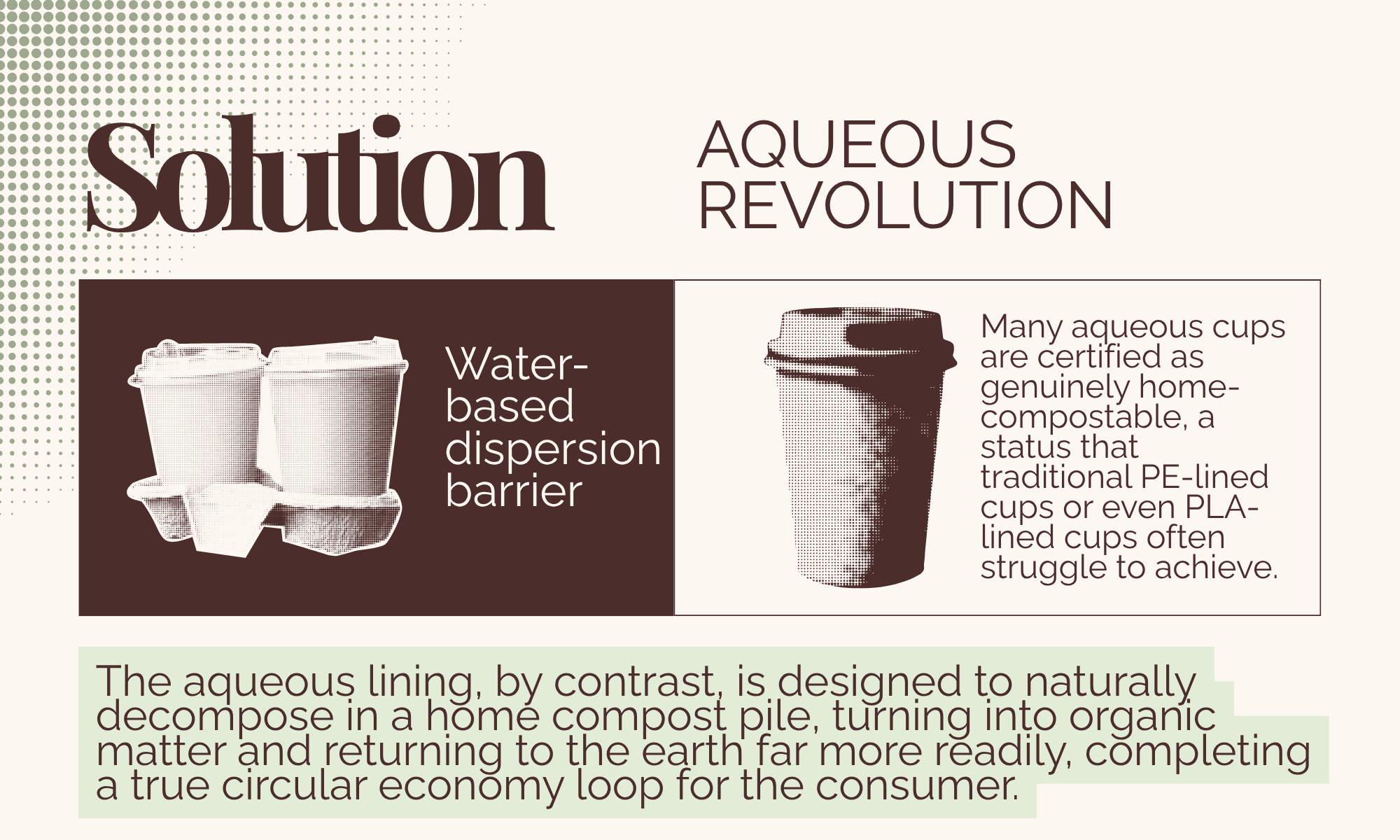
Enter the “Aqueous Revolution.” This is not an incremental improvement; it is a fundamental redesign of the takeaway cup. The name “aqueous” is the key. Instead of a polymer-based lining, these new cups utilise a water-based dispersion barrier. This barrier is a proprietary coating that performs the essential function of repelling liquid and maintaining the cup’s structural integrity, but it does so without relying on petroleum-based plastic.
From a technical standpoint, the difference is critical. When an aqueous cup enters a pulping process at a recycling facility, the water-based lining simply disperses. It does not separate into plastic flakes that ruin the paper batch. Instead, the coating is easily dissolved or integrated into the paper slurry without contaminating the valuable paper fibres. This means that for the first time, takeaway coffee cups can be thrown into the yellow bin alongside cardboard and newspapers in areas where the appropriate infrastructure is in place, dramatically improving their end-of-life pathway.
Furthermore, many aqueous cups are certified as genuinely home-compostable, a status that traditional PE-lined cups or even PLA-lined cups often struggle to achieve. PLA (polylactic acid), a plant-based bioplastic, still requires a specific commercial composting facility to break down effectively, which limits its accessibility to the average Australian consumer. The aqueous lining, by contrast, is designed to naturally decompose in a home compost pile, turning into organic matter and returning to the earth far more readily, completing a true circular economy loop for the consumer.
Policy and Progress: Australia’s Commitment to Sustainable Packaging
The innovation of the aqueous cup aligns perfectly with the Australian government’s aggressive approach to phasing out problematic and unnecessary plastics. Across the nation, state and territory governments are implementing some of the most stringent plastic bans in the world, with single-use items disappearing from circulation rapidly.
The patchwork of bans, while complex, sends a clear market signal: packaging must evolve. States like Queensland, Western Australia, South Australia, and the ACT are progressively legislating against items that are challenging to recycle. The old coffee cup, previously a fixture, is now explicitly targeted.
The aqueous cup is more than just a compliant alternative; it is a future-proof solution. It allows cafes and consumers to remain ahead of the curve, ensuring that their daily choice is not contributing to legislative non-compliance or environmental degradation. This widespread adoption is a testament to the collaborative effort between local manufacturers, who invest in the new technology, and policy makers, who set the high bar for environmental responsibility. This convergence is what gives the “Aqueous Revolution” its unstoppable momentum.
The Role of the Australian Coffee Drinker
Ultimately, the success of this revolution rests in the hands of the consumer, the Australian coffee drinker. The shift to aqueous cups simplifies the consumer’s decision and duty. No longer must one agonise over whether their cup belongs in the recycling bin, the compost bin, or the landfill.
The new message is clear and powerful:
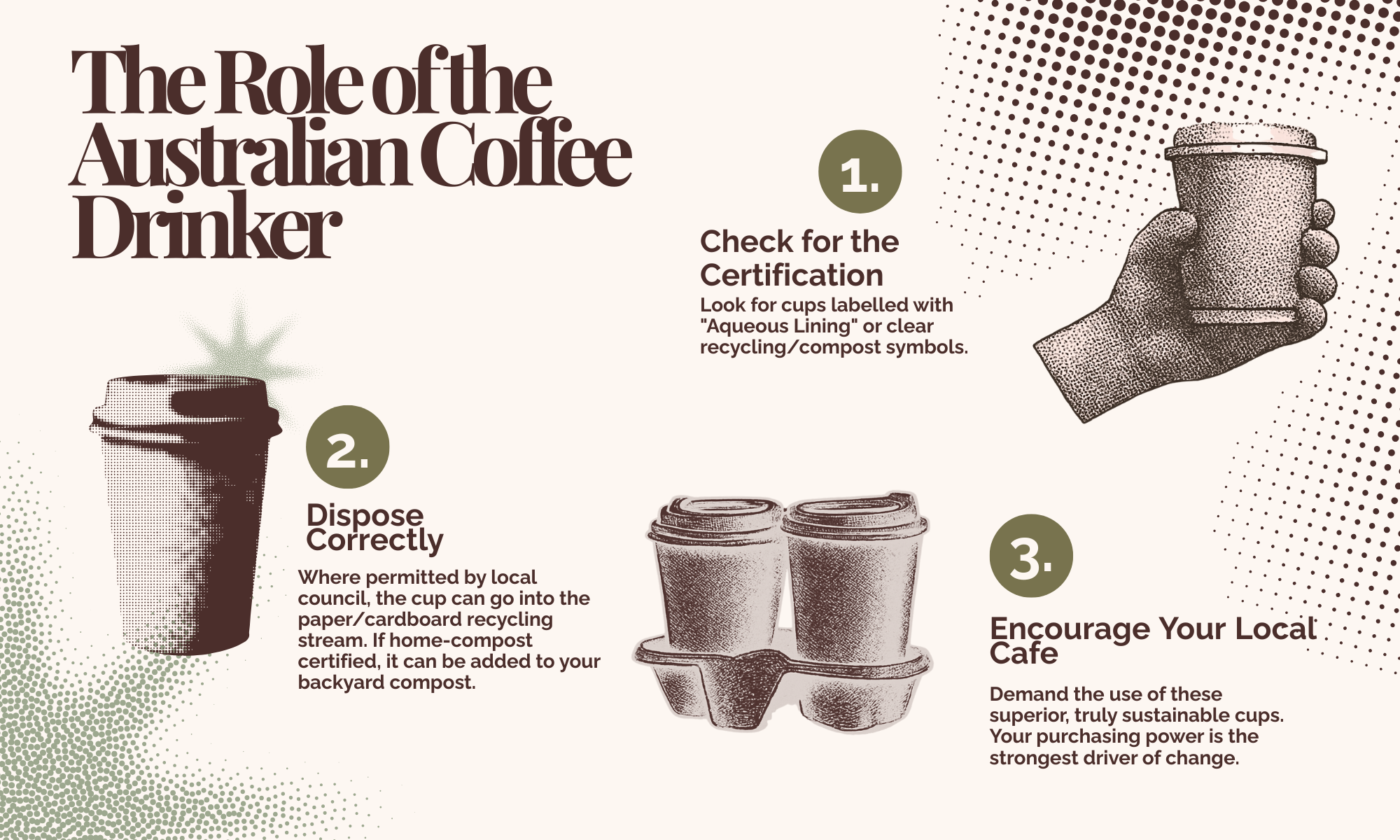
- Check for the Certification: Look for cups labelled with “Aqueous Lining” or clear recycling/compost symbols.
- Dispose Correctly: Where permitted by local council, the cup can go into the paper/cardboard recycling stream. If home-compost certified, it can be added to your backyard compost.
- Encourage Your Local Cafe: Demand the use of these superior, truly sustainable cups. Your purchasing power is the strongest driver of change.
The move to aqueous cups is a reflection of a deeper cultural change in Australia: a collective recognition that sustainability is not a luxury, but a non-negotiable part of modern life. Every purchase is a vote for the world we want. By embracing the aqueous cup, Australians are voting for cleaner beaches, safer marine life, and a circular economy that values resources rather than simply discarding them.
The transition from a plastic-lined world to a water-based one is a quiet but profound victory for sustainability. It’s a testament to human ingenuity solving a human-created problem. As you take your next sip of perfectly brewed coffee, you can do so with the confidence that the container in your hand is part of the solution, not the problem. The Aqueous Revolution is here, and it is set to redefine the Australian takeaway experience for generations to come, ensuring our oceans remain pristine and our paper resources stay clean.

Lynn Martelli is an editor at Readability. She received her MFA in Creative Writing from Antioch University and has worked as an editor for over 10 years. Lynn has edited a wide variety of books, including fiction, non-fiction, memoirs, and more. In her free time, Lynn enjoys reading, writing, and spending time with her family and friends.