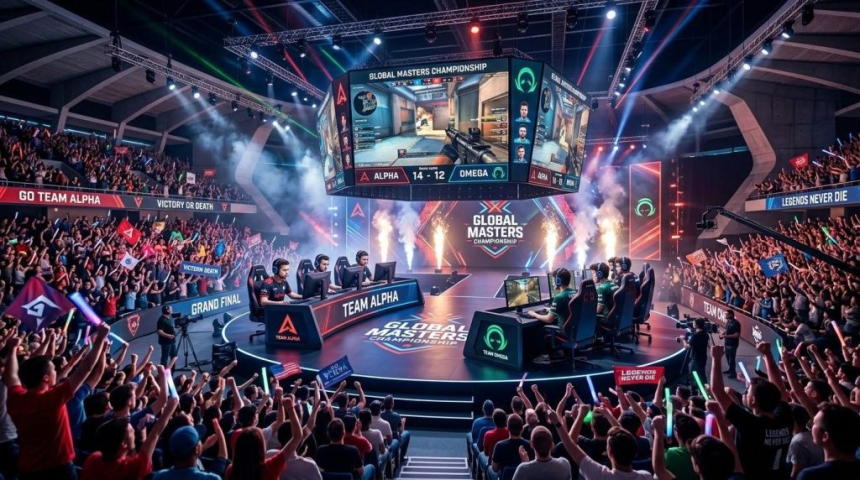
Let’s start with something simple. You’ve probably heard someone say, “It’s just people playing video games.” Sounds fair at first, right? But that idea falls apart pretty quickly once you look closer.
Esports today is more like a hybrid of sports, entertainment, and digital media rolled into one loud, fast-moving ecosystem. Think stadium-level events, millions of live viewers, real-time commentary, sponsorship deals, and athletes who train for hours every single day. Not exactly casual gaming on the couch.
What makes it interesting is how natural it feels for younger audiences. Watching a tournament of games like League of Legends or Counter-Strike doesn’t feel that different from watching football or basketball—except everything is happening on a screen, and the pace is often even faster. Even platforms like Dexsport are tapping into this growing engagement, blending esports culture with interactive digital experiences.
And here’s a small twist that surprises people: the audience isn’t small or niche anymore. We’re talking hundreds of millions globally, across different time zones, watching finals like they’re the Super Bowl. Wild, right?
So when people ask why esports is suddenly a billion-dollar industry, the real answer is simple. It stopped being “just games” a long time ago. It turned into a full entertainment system with its own economy, culture, and, honestly, its own celebrities.
Show me the money: where billions actually come from
Alright, let’s talk numbers—but without making it feel like a boring finance lecture.
Esports money doesn’t come from one place. It’s a mix of several streams working together, kind of like different rivers feeding into a larger lake. Sponsorships sit at the top. Big brands—tech companies, energy drinks, even traditional banks—are investing heavily just to be visible in this space.
Then there’s media rights. Platforms pay for the ability to broadcast tournaments, just like TV networks do with traditional sports. And yes, those deals can get seriously expensive.
Merchandise also plays a role. Jerseys, team gear, limited drops—fans buy them not just for style but to feel connected to teams they follow online. And honestly, that emotional connection is powerful. People don’t just “watch” esports; they belong to it.
Prize pools? They grab headlines, especially in massive tournaments. But here’s a little contradiction: prize money isn’t the main income for most players or teams. It’s flashy, sure, but the real stability comes from sponsors and partnerships.
So when we say “billion-dollar industry,” it’s not one jackpot moment. It’s a layered system where attention equals value, and attention is everywhere.
Why brands can’t ignore esports anymore
Here’s something marketers figured out pretty fast: esports audiences are different.
You’re not just dealing with passive viewers. These are highly engaged communities that follow teams, players, and even individual streamers with surprising loyalty. And they don’t just watch—they talk, react, share clips, and meme everything in real time.
So why do brands care so much? Simple. Attention. But not just any attention—focused, emotional attention.
Think about it. If someone watches a two-hour tournament final, they’re not half-distracted. They’re fully in it. That’s gold for advertisers.
Another factor is age. A large chunk of the audience is younger, digitally native, and harder to reach through traditional media like TV ads. So instead of chasing them elsewhere, brands come directly into their space—sponsoring teams, appearing in broadcasts, or even integrating into the games themselves.
There’s also something subtle happening here: trust. Fans often trust esports personalities more than traditional ads. If a favorite player wears a brand jersey or mentions a product, it carries weight.
It’s not always perfectly clean, though. Some viewers push back against heavy branding, saying it feels intrusive. But the interesting part? They still stay. That tension keeps evolving the whole system in real time.
Behind the screen: players, teams, and the grind
Let’s clear up a misconception: professional esports players aren’t “just good at games.” That’s like saying a pro athlete is “just good at running.”
Training schedules can be intense. Long practice sessions, strategy reviews, reflex training, teamwork drills—you name it. Some teams even bring in coaches, analysts, and psychologists. Yep, mental performance matters just as much as mechanical skill.
And the pressure? It’s real. Matches can swing on a single mistake. One missed click, one wrong decision, and thousands—or millions—of viewers see it instantly.
But there’s also a fascinating team dynamic. Unlike solo gaming, most esports titles depend heavily on coordination. It’s a bit like a jazz band: everyone has their own role, but timing and harmony matter more than individual brilliance alone.
What’s interesting is how fast careers can rise or fall. A player can become famous overnight after a big tournament, then struggle to maintain that level the next season. It’s unstable, exciting, and a bit brutal all at once.
Still, for many, it’s worth it. Fame, sponsorships, global travel, and a community that genuinely cares—that’s a rare mix in any profession.
Streams, clips, and the chaos of online hype
Now, here’s where things get really loud.
Esports doesn’t live only in tournaments. A huge part of its energy comes from streaming platforms and short-form clips. Twitch, YouTube, and similar services turned gaming into something you can watch 24/7, not just during scheduled events.
And honestly, the culture is chaotic—in a good way. A single highlight play can go viral in minutes. Memes are born mid-match. Commentators shout reactions that become internet quotes. It’s messy, fast, and kind of beautiful.
This constant flow of content keeps fans engaged even when no official matches are happening. A player might stream casually, interact with fans, or practice live—and suddenly, that becomes content on its own.
There’s also this feedback loop: fans create content, players react to it, and the cycle continues. It blurs the line between audience and participant.
One interesting tension here is authenticity. Fans value real, unscripted moments. So overly polished content sometimes doesn’t land well. The rough edges—the mistakes, the jokes, the spontaneous reactions—often matter more than perfection.
It feels less like television and more like a living, breathing conversation happening across millions of screens.
So where is all this heading?
Here’s the honest answer: esports is still early in its story.
The infrastructure is growing. Universities are building programs. Cities are hosting major events. Technology is improving how games are broadcast, watched, and even played. And audiences? They’re not shrinking—they’re expanding.
But there’s also uncertainty. Can it stay stable long-term? Will audiences fragment across too many games and platforms? Will burnout among players become a bigger issue?
All fair questions. And there are no simple answers yet.
Still, one thing feels clear: competitive gaming isn’t fading back into a niche hobby. It has already crossed into mainstream entertainment, even if not everyone fully realizes it yet.
Maybe the easiest way to think about it is this: esports is where sports, internet culture, and global media all collide. Sometimes it’s loud, sometimes messy, but it keeps moving forward.
And if you’ve ever watched a final match with a packed arena roaring over a single decisive moment… you probably already know why it works.

Lynn Martelli is an editor at Readability. She received her MFA in Creative Writing from Antioch University and has worked as an editor for over 10 years. Lynn has edited a wide variety of books, including fiction, non-fiction, memoirs, and more. In her free time, Lynn enjoys reading, writing, and spending time with her family and friends.