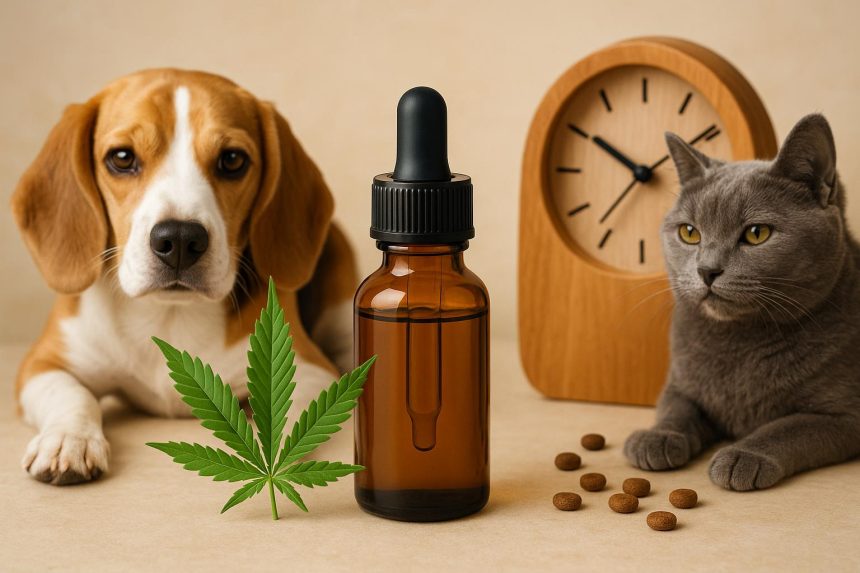
Pet owners across the country are turning to CBD to help their furry friends find calmness or comfort. Whether it is for joint stiffness or situational anxiety, the goal is always the same: relief for a beloved companion. However, once the dropper is administered, a common question arises. People want to know exactly how long those effects will stick around. The duration of CBD in a pet’s system is not a one-size-fits-all number. It shifts based on several key aspects of the animal’s unique physiology and lifestyle.
The Role of Body Weight in Duration
The question, ‘How Long Does CBD Last in a Dog or Cat?’ often finds its answer in the body weight of the pet. Body weight serves as a primary factor in how the body processes CBD. Generally, a smaller animal will metabolize substances at a different rate than a larger one. A tiny Chihuahua has a faster metabolic engine compared to a massive Great Dane. Therefore, the CBD oil may run its course more quickly in a small dog. A larger animal often requires a higher dose to feel the effects, and those effects may linger longer simply because there is more body mass involved. Owners should always calculate dosage based on weight rather than guessing, as this ensures the window of relief matches the pet’s needs.
How Diet Influences Processing Time
What a pet eats throughout the day directly impacts how CBD is absorbed. When CBD is given with a meal, especially one containing healthy fats, it absorbs more efficiently into the bloodstream. This efficient absorption often leads to effects that feel more robust and last longer. On the other hand, giving CBD to a pet on an empty stomach may result in faster absorption but a shorter overall duration. The food acts almost like a timer, slowing down the digestive process. Consequently, a pet with a consistent diet and feeding schedule will likely experience more predictable results.
The Impact of Daily Activity
A pet’s activity level tells a lot about how their body uses energy and compounds. Active dogs that run and play have faster circulation and metabolic rates. This increased blood flow can process and eliminate CBD more rapidly than in a sedentary animal. A couch potato pup, by contrast, may hold onto the compounds for a more-extended period. Exercise stimulates the liver and kidneys, which are the organs responsible for filtering out supplements.
Biochemical Makeup and Individual Differences
Every animal has a unique internal chemistry that dictates how they respond to supplements. Factors like age, liver function, and overall health create a personal fingerprint for metabolism. A young, healthy dog has a robust system designed to process inputs efficiently. An older cat with slower organ function might retain the CBD molecules for a noticeably longer time. Genetics can even play a part in how quickly the body breaks down certain compounds.
Frequency of Use and Build-Up
How often a pet receives CBD changes the equation significantly over time. With regular daily use, CBD can build up in the fatty tissues of the body. This accumulation means the effects may seem to last longer after several weeks of consistent dosing. It creates a baseline of support that intermittent use simply cannot provide. For pets needing continuous relief for chronic issues, this steady state is often the goal.
So, ‘How Long Does CBD Last in a Dog or Cat?’ Well, it depends on these pertinent factors. Body weight sets the stage, while diet and activity level adjust the performance. Biochemical individuality ensures that every pet remains unique in their response. Frequency of use then determines whether the support is a brief moment or a steady presence. Owners should observe their pets closely and take notes on how long relief seems to last. By understanding these variables, a person can tailor the routine to provide the most consistent and effective support for their dog or cat.

Lynn Martelli is an editor at Readability. She received her MFA in Creative Writing from Antioch University and has worked as an editor for over 10 years. Lynn has edited a wide variety of books, including fiction, non-fiction, memoirs, and more. In her free time, Lynn enjoys reading, writing, and spending time with her family and friends.