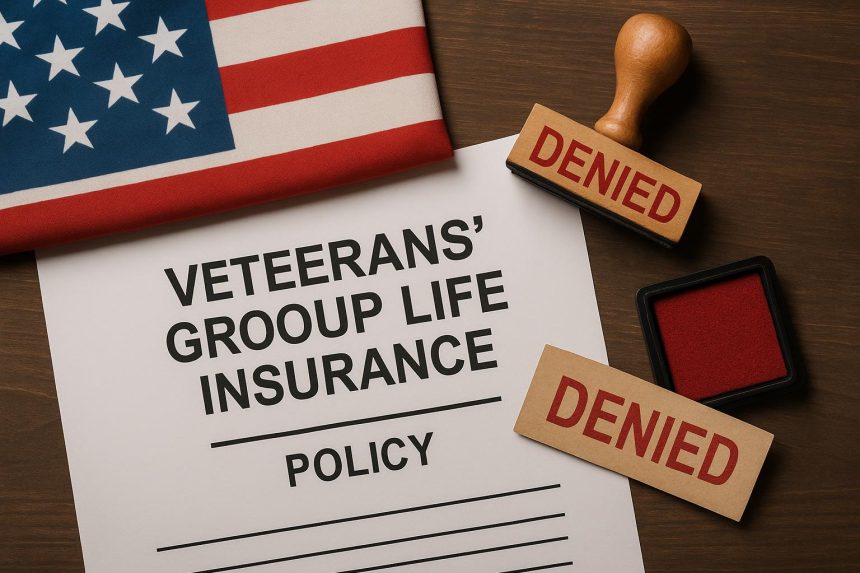
For active duty service members, reservists, and veterans, Veterans’ Group Life Insurance, known as VGLI, provides an important source of financial protection for their families. When a veteran passes away, their family expects that coverage to be paid promptly and without question. It is, after all, coverage that was earned through service to the country. But claim denials do happen, and when they do, the financial impact on grieving families can be severe, adding significant stress to an already devastating loss.
Understanding why VGLI claims are denied, what the appeals and legal options look like, and how an experienced attorney can help is essential information for any family that finds itself in this difficult situation. The process is not always straightforward, but with the right legal support, many denial decisions can be successfully challenged.
How VGLI Works and Who Is Eligible
VGLI is a federal program administered by the Department of Veterans Affairs and underwritten by Prudential Insurance Company of America. Upon separation from military service, veterans who had Servicemembers’ Group Life Insurance, or SGLI, coverage are eligible to convert to VGLI within a specific window of time, generally 1 year and 120 days from the date of separation.
One of the most significant features of VGLI is that veterans who apply within 240 days of separation are guaranteed coverage regardless of their health status, meaning they cannot be turned down due to pre-existing medical conditions. Veterans who apply after that 240-day window must provide evidence of good health to qualify, which can result in coverage denials for those with significant health issues.
Coverage amounts can range from $10,000 up to $500,000 in increments matching the veteran’s SGLI coverage at separation. VGLI coverage can also be increased in certain increments over time without providing additional health evidence, as long as the requests are made within specific time windows tied to the veteran’s birthday.
Common Reasons VGLI Claims Are Denied
Despite the relatively straightforward nature of VGLI as a life insurance product, claims are denied for a variety of reasons that can be difficult for grieving families to navigate without legal assistance. One of the most common is a dispute over whether coverage was properly in force at the time of the veteran’s death. VGLI requires the regular payment of premiums, and if a premium payment was missed or the policy lapsed, the insurer may deny the claim on the basis that coverage had terminated prior to the veteran’s death.
Other common denial reasons include disputes over the cause of death, particularly in cases involving suicide. While VGLI policies do not generally exclude coverage for suicide, the insurer may still raise questions in specific circumstances that require legal challenge. Claims may also be denied based on allegations of material misrepresentation on the original application, particularly for veterans who applied after the 240-day guaranteed issue window and provided health information.
Beneficiary designation disputes can also lead to complications, particularly in cases where a veteran failed to update their beneficiary designation after a divorce, remarriage, or major family change, creating conflicts between competing claimants. These disputes can become complex legal matters that require careful navigation of both insurance law and family law principles.
Legal Options for Families Facing a VGLI Denial
Because VGLI is a federal program governed by federal law, disputes over denied claims are handled differently than typical state court insurance litigation. Claims disputes are governed by federal common law, and lawsuits must be filed in federal court. This makes having an attorney with specific experience in federal insurance litigation and veterans’ benefits law essential to any serious challenge of a denial.
The legal process typically begins with a thorough review of the denial letter and the policy terms to identify the specific basis for the denial and any procedural or substantive errors in the insurer’s decision. The attorney will then gather relevant evidence, which may include military service records, premium payment histories, medical records, and documentation of the beneficiary designation at the time of the veteran’s death.
“Losing a loved one who served our country is devastating enough without having to fight an insurance company for benefits that were earned through their service,” says a representative from J. Price McNamara. “Families dealing with a denial should consult a Veterans’ Group Life Insurance claim denial attorney who understands the specific legal framework governing VGLI, knows how to build a strong federal case, and is committed to fighting for every benefit these families are owed.”
Steps Families Should Take After a Denial
If your family has received a denial of a VGLI claim, there are several immediate steps to take. First, preserve all documentation related to the claim, including the denial letter, any correspondence with the insurer, premium payment records, and all documents provided at the time of the veteran’s separation from service. Do not discard any paperwork, even if it seems routine or unrelated to the denial.
Second, do not assume the denial is final or that there is nothing to be done. Insurance companies sometimes issue denials knowing that many claimants will not challenge them, relying on the fact that grief and unfamiliarity with the legal system will discourage action. A denial letter is the beginning of a legal dispute, not necessarily the end of one. Third, consult with an attorney who has specific experience with VGLI and federal life insurance litigation as soon as possible, as statutes of limitations apply to federal insurance claims and delaying legal action can close off options that would otherwise be available.

Lynn Martelli is an editor at Readability. She received her MFA in Creative Writing from Antioch University and has worked as an editor for over 10 years. Lynn has edited a wide variety of books, including fiction, non-fiction, memoirs, and more. In her free time, Lynn enjoys reading, writing, and spending time with her family and friends.