Cash handling has a reputation for being simple. Count the money, record the total, balance the till, lock up the safe. It sounds like the kind of thing that takes fifteen minutes and requires minimal thought. Anyone who has actually worked a busy closing shift knows that reputation is not especially well-earned.
The problems that slow down end-of-day cash reconciliation are rarely about people being bad at math. They are about the nature of handling physical currency by hand, at the end of a long day, under pressure to get out of the building at a reasonable hour. That combination produces a very specific and very familiar set of frustrations, and they tend to compound quickly.
A Physical Problem Needs a Physical Solution
Physical currency creates physical problems. A stack of polymer notes that keep sticking together, a mixed coin tray that takes forever to sort, a subtotal written down incorrectly under pressure. These are not process failures or training gaps. They are just what happens when human beings handle cash at the end of a long shift.
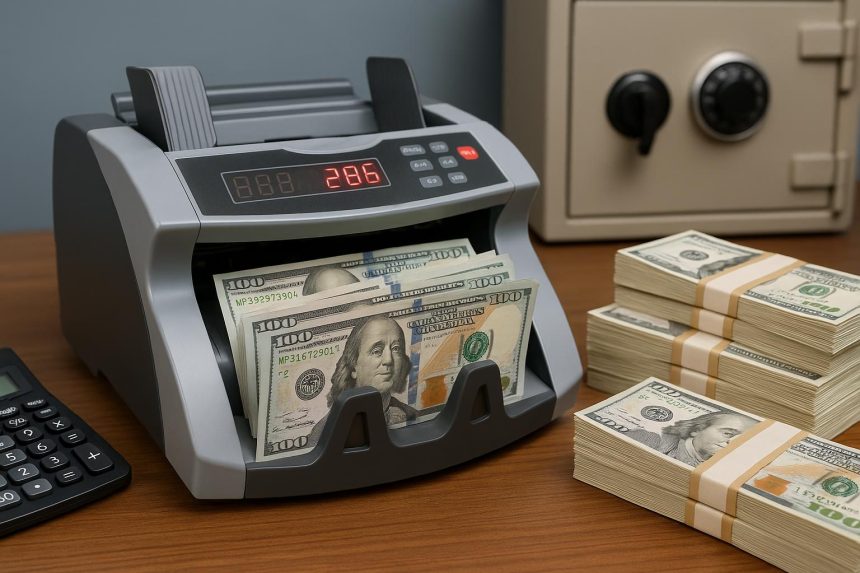
That is exactly what a dedicated set of money counters is designed to address. The machine handles the mechanical side of the count quickly, consistently, and without the variables that make manual counting so unreliable. Once the count is fast and accurate, everything else in the closing routine tends to fall into place around it.
Where Manual Counting Actually Falls Apart
The failure points in a manual cash handling process are pretty consistent across different types of operations. They tend to show up in the same places every time.
Polymer banknotes are an underappreciated nuisance. Unlike older paper currency, modern plastic notes cling to each other in a way that makes it genuinely easy to count two as one. Unless someone is carefully fanning every single note in a stack, an undercount can happen without anyone doing anything obviously wrong. It is just a feature of the material.
Tired eyes misread denominations. Late in a closing shift, after a long day of physical work, the difference between certain note values becomes less obvious than it should be. Someone writes down the wrong subtotal, the final figure does not match, and now the entire count has to be run again from the beginning.
Mixed coin trays eat time. Sorting loose change by denomination before you can even start counting is one of those tasks that always takes longer than it seems like it should. It is not difficult, but it is slow, and it adds unnecessary minutes to a process that is already dragging.
And then there is distraction. Cash rooms at closing time are not quiet, focused environments. There are other tasks happening simultaneously, people asking questions, things that need to be locked or checked or dealt with. Every interruption to a manual count risks losing the thread entirely, which means starting over.
What a Counter Actually Changes
The most immediate difference is time. Modern counting machines process notes at a rate that makes manual counting look almost comical by comparison. A stack that takes a person ten to fifteen minutes of careful, uninterrupted work gets handled in under a minute. Across multiple tills in a busy location, that difference reshapes the entire closing routine.
But the speed is almost secondary to the consistency. A machine does not count differently depending on who is operating it, how tired they are, or what else is going on around them. It runs the same process every single time, which means the results are comparable across different staff members, different shifts, and different locations. That consistency is genuinely valuable when you are trying to trace a discrepancy or audit a particular shift.
The counterfeit detection is also worth mentioning, because it is something manual counting simply cannot replicate reliably. Built-in UV and magnetic sensors flag suspicious notes automatically, in real time, without requiring anyone to remember the specific security features of current currency. A tired employee at midnight is not your most reliable line of defense against a convincing fake. A sensor that checks every single note is considerably more dependable.
The Effect on the People Doing the Work
This part tends to get overlooked in the operational conversation, but it matters more than most managers realize.
End-of-shift cash reconciliation is widely considered the worst part of working a closing shift, and the reason is not that it is hard. It is that it is stressful in a specific, low-grade way. The numbers have to balance. If they do not, nobody goes home until they do. That pressure, applied night after night to people who are already tired, does real damage to morale over time.
When the counting process becomes fast and reliable, that stress largely disappears. If there is a discrepancy, it shows up immediately and everyone understands it happened on the floor during trading, not in the counting room at closing. That shifts the dynamic considerably. It stops the reconciliation process from feeling like an accusation and turns it into a straightforward piece of information.
Keeping Things Consistent Across Multiple Sites
For anyone overseeing more than one location, the consistency argument becomes even more compelling. Left to develop their own habits, different store managers will handle cash in subtly different ways. Different stacking methods, different sorting approaches, different levels of rigor. That variation makes cross-site comparison difficult and auditing more complicated than it needs to be.
Standardizing the counting process across every location removes that variation entirely. Every site runs the same routine, produces results in the same format, and trains new staff using the same straightforward process. It is one of those operational changes that seems modest in isolation but has a fairly significant effect on how cleanly the whole business runs.

Lynn Martelli is an editor at Readability. She received her MFA in Creative Writing from Antioch University and has worked as an editor for over 10 years. Lynn has edited a wide variety of books, including fiction, non-fiction, memoirs, and more. In her free time, Lynn enjoys reading, writing, and spending time with her family and friends.